

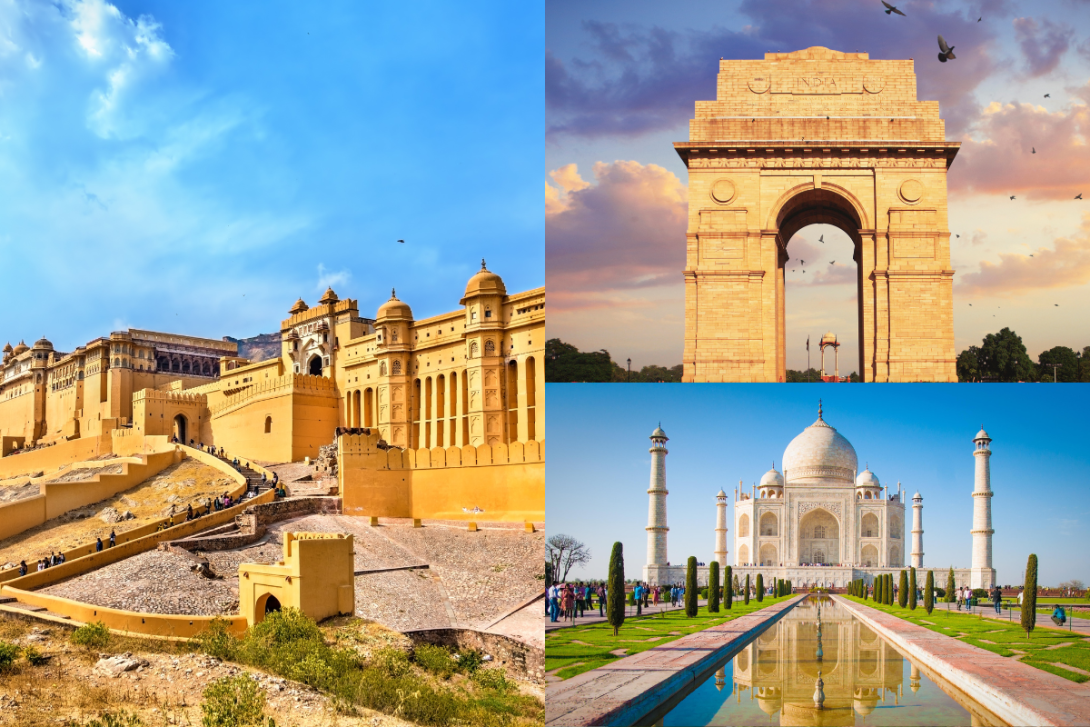
India's Golden Triangle stands as the country's most iconic travel circuit, offering visitors an unparalleled introduction to the subcontinent's rich cultural tapestry. This legendary route, connecting Delhi, Agra, and Jaipur, represents more than just a tourist itinerary—it's a transformative journey through centuries of Indian civilization, architecture, and traditions. For travelers seeking to understand India's soul, a golden triangle tour India provides the perfect gateway to experiencing the nation's most profound cultural treasures.
The Golden Triangle derives its name from the triangular shape formed by these three magnificent cities on the map, each representing distinct yet interconnected chapters of India's grand narrative. Together, they showcase the evolution of Indian culture from ancient Hindu traditions through the Mughal empire to the British colonial period, making this golden triangle tour India experience essential for anyone seeking to comprehend the complexity and beauty of Indian heritage.
The Historical Significance of India's Golden Triangle
Delhi: The Seat of Power Through Millennia
Delhi, the starting point of most Golden Triangle tour itineraries in India, serves as a living museum of Indian history. As the capital of numerous empires and dynasties, Delhi has witnessed the rise and fall of kingdoms, the arrival of foreign invaders, and the birth of modern India. The city's layered history is visible everywhere, from ancient ruins to Mughal monuments to British colonial architecture.
The transformation of Delhi from the ancient Indraprastha mentioned in the Mahabharata to today's bustling metropolis tells the story of India itself. Each dynasty that ruled from Delhi left its mark, creating a palimpsest of cultures that makes every golden triangle tour India begin with a comprehensive lesson in Indian civilization.
Historical Layers of Delhi:
- Ancient period: Indraprastha and early settlements
- Medieval period: Delhi Sultanate and multiple capitals
- Mughal era: Shahjahanabad and Red Fort
- British colonial period: New Delhi and Lutyens' architecture
- Modern era: Independent India's capital
Agra: The Pinnacle of Mughal Grandeur
Agra represents the zenith of Mughal architectural achievement and cultural refinement. During the golden triangle tour India, visitors witness how the Mughal emperors transformed this city into a showcase of Islamic art, Persian influence, and Indian craftsmanship. The city's monuments tell stories of love, power, and artistic vision that defined an entire era of Indian history.
The Mughal period in Agra (1526-1707) marked a golden age of cultural synthesis, where Persian, Central Asian, and Indian traditions merged to create something entirely unique. This cultural fusion is visible in every aspect of Agra's monuments, from architectural styles to decorative arts, making it an essential stop on any golden triangle tour India.
Jaipur: The Living Heritage of Rajput Culture
Jaipur, the Pink City, completes the golden triangle tour India with its celebration of Rajput culture and architectural brilliance. Founded in 1727 by Maharaja Sawai Jai Singh II, Jaipur represents the pinnacle of Rajput city planning and design. The city serves as a bridge between medieval Rajput traditions and colonial-era modernization.
The Rajput culture preserved in Jaipur offers visitors insights into India's warrior traditions, courtly customs, and artistic achievements. The city's palaces, forts, and markets continue to function as living cultural spaces, making the golden triangle tour India experience immersive and authentic.
Architectural Marvels: A Journey Through Styles
Mughal Architecture in Delhi and Agra
The golden triangle tour India showcases the evolution of Mughal architecture from its early experimental phase to its classical perfection. In Delhi, monuments like Humayun's Tomb demonstrate early Mughal architectural principles, while the Red Fort represents the mature Mughal style.
Key Mughal Architectural Elements:
- Indo-Islamic synthesis combining Islamic geometric patterns with Indian decorative traditions
- Use of red sandstone and white marble in harmonious proportions
- Charbagh (four-garden) layout symbolizing paradise
- Innovative structural techniques, including double domes and pointed arches
- Intricate inlay work and calligraphy as decorative elements
Agra's Taj Mahal represents the absolute pinnacle of Mughal architectural achievement. This golden triangle tour of India highlights demonstrates how the Mughals perfected the art of creating monuments that are simultaneously grand and intimate, powerful and delicate.
Rajput Architecture in Jaipur
Jaipur's architectural heritage showcases the distinctive Rajput style, characterized by its harmony with the natural environment and integration of defensive and aesthetic elements. The golden triangle tour India reveals how Rajput architects created structures that were both beautiful and functional.
Distinctive Rajput Architectural Features:
- Integration with natural topography and landscape
- Use of local pink sandstone creating visual harmony
- Jharokhas (overhanging enclosed balconies) for ventilation and privacy
- Courtyards and gardens providing relief from desert climate
- Fortification elements combined with palace architecture
Colonial Architecture: The British Legacy
The golden triangle tour India also encompasses the British colonial architectural legacy, particularly visible in New Delhi's government buildings and Delhi's civil lines area. This architectural layer adds another dimension to India's cultural narrative, showing how colonial powers left their mark on Indian cities.
Cultural Experiences: Living Traditions
Religious and Spiritual Dimensions
The golden triangle tour India offers profound insights into India's religious diversity and spiritual traditions. Each city presents different aspects of Indian spirituality, from Islamic heritage in Delhi and Agra to Hindu and Jain traditions in Jaipur.
Delhi's Religious Landscape:
- Jama Masjid: One of India's largest mosques
- Lotus Temple: Modern Bahai architecture and inclusive spirituality
- Akshardham Temple: Contemporary Hindu temple complex
- Gurudwara Bangla Sahib: Sikh religious center
- Various churches representing Christian communities
Agra's Spiritual Heritage:
- Taj Mahal as a monument to eternal love and Islamic paradise concept
- Jama Masjid showcasing Mughal Islamic architecture
- Various Hindu temples maintaining ancient traditions
- Sufi shrines reflecting India's syncretic religious traditions
Jaipur's Religious Traditions:
- City Palace temples maintaining royal worship traditions
- Govind Dev Ji Temple: Important Krishna worship center
- Birla Mandir: Modern Hindu temple architecture
- Various Jain temples reflecting Rajasthan's Jain heritage
Arts and Crafts: Living Cultural Traditions
The golden triangle tour India provides unparalleled access to India's traditional arts and crafts, many of which have been practiced for centuries. Each city specializes in different crafts, offering visitors the opportunity to witness master artisans at work and purchase authentic handmade items.
Delhi's Craft Traditions:
- Dilli Haat: Showcase of crafts from across India
- Chandni Chowk: Traditional bazaar culture
- Connaught Place: Modern shopping with traditional elements
- Karol Bagh: Textile markets and traditional clothing
Agra's Artistic Heritage:
- Marble inlay work (Pietra Dura): Technique perfected for the Taj Mahal
- Leather crafts: Traditional shoe-making and leather goods
- Carpet weaving: Persian-influenced rug making
- Jewelry making: Mughal-inspired designs and techniques
Jaipur's Craft Specializations:
- Block printing: Traditional textile printing techniques
- Jewelry making: Kundan and Meenakari work
- Blue pottery: Distinctive Jaipur ceramic art
- Gemstone cutting: Traditional lapidary skills
- Miniature painting: Rajasthani school of painting
Culinary Journey: Flavors of Three Cultures
Delhi's Diverse Food Scene
The golden triangle tour India begins with Delhi's incredibly diverse culinary landscape, which reflects the city's role as a cultural melting pot. From Mughlai cuisine to street food, Delhi offers a comprehensive introduction to Indian flavors.
Delhi's Culinary Highlights:
- Chandni Chowk street food: Paranthe Wali Gali, Karim's, and traditional sweet shops
- Mughlai cuisine: Biryani, kebabs, and rich curries
- Modern fusion: Contemporary Indian restaurants
- Regional specialties: Food from across India available in the capital
Agra's Mughlai Heritage
Agra's culinary traditions during the golden triangle tour India focus on Mughlai cuisine, which represents the sophisticated court culture of the Mughal emperors. The city's food reflects the same cultural synthesis visible in its architecture.
Agra's Signature Dishes:
- Petha: The city's famous translucent sweet
- Mughlai biryani: Aromatic rice dishes with meat or vegetables
- Tandoori breads: Naan, roti, and kulcha varieties
- Rich curries: Korma, curry, and dal preparations
- Traditional sweets: Rabri, kulfi, and various milk-based desserts
Jaipur's Rajasthani Cuisine
Jaipur completes the golden triangle tour India culinary experience with authentic Rajasthani cuisine, adapted to the desert environment and royal court traditions. The food reflects both the resourcefulness required by the harsh climate and the refinement of royal kitchens.
Jaipur's Traditional Foods:
- Dal Baati Churma: Rajasthan's signature dish
- Laal Maas: Spicy red meat curry
- Gatte ki Sabzi: Gram flour dumplings in spicy gravy
- Ker Sangri: Desert beans and berries preparation
- Traditional sweets: Ghewar, Malpua, and Feeni
Festivals and Celebrations: Cultural Calendar
Delhi's Festival Celebrations
Delhi's position as India's capital makes it a focal point for national festivals and celebrations. The golden triangle tour India during festival seasons offers visitors the opportunity to witness how different communities celebrate their traditions.
Major Delhi Festivals:
- Diwali: The festival of lights celebrated across all communities
- Holi: The spring festival of colors
- Dussehra: Celebration of good over evil with elaborate Ramlila performances
- Eid: Islamic festivals celebrated with special prayers and feasts
- Christmas: Christian celebrations in various churches
Agra's Cultural Events
Agra's festivals during the golden triangle tour India often center around its Mughal heritage and local traditions. The city's events frequently incorporate its architectural marvels as backdrops.
Agra's Special Events:
- Taj Mahotsav: Annual cultural festival celebrating local arts and crafts
- Sharad Purnima: Full moon festival with special Taj Mahal viewing
- Mughal heritage festivals: Celebrating the city's Islamic cultural heritage
- Local Hindu festivals: Incorporating both traditional and Mughal influences
Jaipur's Royal Celebrations
Jaipur's festivals reflect both its royal heritage and folk traditions. The golden triangle tour India during Jaipur's festival seasons offers insights into Rajasthani culture and royal customs.
Jaipur's Festival Calendar:
- Jaipur Literature Festival: International literary celebration
- Elephant Festival: Colorful celebration during Holi
- Teej Festival: Monsoon celebration important to Rajasthani women
- Kite Festival: Makar Sankranti celebrations
- Gangaur Festival: Celebration of marital bliss and harvest
Transportation and Connectivity: The Journey Itself
Traditional Transportation Methods
The golden triangle tour India can be experienced through various transportation methods, each offering different cultural perspectives. Traditional options provide more authentic cultural immersion.
Rail Travel:
- Palace on Wheels: Luxury train experience
- Shatabdi Express: Modern efficient service
- Local trains: Authentic Indian railway experience
- Heritage railway experiences: Connecting past and present
Road Travel:
- Private car with driver: Personalized cultural interactions
- Bus services: Integration with local communities
- Auto-rickshaws: Local transportation experience
- Bicycle tours: Environmental and cultural sensitivity
Modern Transportation Infrastructure
Contemporary transportation options make the golden triangle tour India accessible while maintaining cultural authenticity. Modern infrastructure supports sustainable tourism development.
Seasonal Considerations: When Culture Comes Alive
Winter Season (November-February)
The peak tourist season for golden triangle tour India offers the most comfortable weather and numerous cultural events. This season sees the highest concentration of festivals and cultural activities.
Winter Cultural Advantages:
- Pleasant weather for outdoor cultural activities
- Peak festival season with maximum celebrations
- Comfortable conditions for exploring architectural sites
- Optimal conditions for cultural photography
Summer Season (March-May)
While challenging weather-wise, summer golden triangle tour India offers unique cultural experiences with fewer crowds and more authentic local interactions.
Summer Cultural Opportunities:
- Authentic local experiences with minimal tourist presence
- Traditional cooling methods and architecture appreciation
- Local festival celebrations away from tourist crowds
- Deeper cultural immersion opportunities
Monsoon Season (June-September)
The monsoon transforms the golden triangle tour India experience, offering different perspectives on Indian culture and architectural adaptation to climate.
Monsoon Cultural Insights:
- Architectural appreciation of water management systems
- Monsoon festivals and cultural celebrations
- Traditional seasonal foods and customs
- Understanding of climate's influence on Indian culture
Impact on Local Communities
Economic Benefits
The golden triangle tour India generates significant economic benefits for local communities, supporting traditional craftspeople, guides, drivers, and hospitality workers. This economic impact helps preserve cultural traditions by making them economically viable.
Community Economic Support:
- Direct employment in tourism services
- Support for traditional craft industries
- Preservation of cultural skills through economic demand
- Development of cultural infrastructure
Cultural Preservation
Tourism through golden triangle tour India creates incentives for cultural preservation, as communities recognize the economic value of maintaining their heritage. This creates a positive cycle of cultural conservation.
Preservation Initiatives:
- Restoration of historical monuments
- Support for traditional arts and crafts
- Documentation of cultural practices
- Training programs for cultural guides
Planning Your Cultural Journey
Duration and Itinerary Options
The golden triangle tour India can be experienced in various durations, from quick introductory visits to comprehensive cultural immersion programs.
Standard Itineraries:
- 5-7 days: Essential cultural highlights
- 7-10 days: Comprehensive cultural exploration
- 10-14 days: Deep cultural immersion
- Extended programs: Integration with regional cultural sites
Cultural Preparation
Maximizing the cultural benefits of golden triangle tour India requires some preparation to appreciate the historical and cultural contexts of the sites visited.
Recommended Preparation:
- Basic understanding of Indian history
- Familiarity with major cultural and religious traditions
- Awareness of local customs and etiquette
- Appreciation for architectural styles and significance
Sustainable Cultural Tourism
Responsible Travel Practices
Sustainable golden triangle tour India experiences require mindful travel practices that respect local cultures and contribute positively to community development.
Sustainable Practices:
- Respectful photography and cultural interaction
- Support for local artisans and businesses
- Environmental consciousness in travel choices
- Cultural sensitivity in behavior and dress
Supporting Local Communities
Responsible golden triangle tour India experiences actively support local communities through conscious choices in accommodation, dining, and shopping.
Community Support Strategies:
- Choosing locally-owned accommodations
- Eating at local restaurants
- Purchasing authentic local crafts
- Using local guides and services
The Transformative Power of Cultural Travel
Personal Growth Through Cultural Exposure
The golden triangle tour India offers transformative experiences that broaden perspectives and deepen understanding of human diversity and creativity. The journey provides insights into different ways of life, values, and artistic expression.
Transformative Aspects:
- Exposure to different architectural philosophies
- Understanding of religious and spiritual diversity
- Appreciation for traditional craftsmanship
- Recognition of cultural continuity and change
Building Cultural Bridges
International visitors on golden triangle tour India often become cultural ambassadors, sharing their experiences and building understanding between different cultures and nations.
Future of Cultural Tourism
Technology Integration
Modern golden triangle tour India experiences increasingly integrate technology to enhance cultural understanding while preserving authenticity.
Technological Enhancements:
- Audio guides with cultural context
- Virtual reality experiences of historical periods
- Mobile apps for cultural information
- Digital documentation of cultural practices
Sustainable Development
The future of golden triangle tour India focuses on sustainable development that preserves cultural heritage while providing economic benefits to local communities.
Conclusion: Why the Golden Triangle Matters
The golden triangle tour India represents far more than a simple sightseeing journey—it's an essential cultural pilgrimage that provides profound insights into one of the world's most complex and fascinating civilizations. Through its combination of architectural marvels, living traditions, diverse cuisine, and vibrant festivals, this iconic circuit offers visitors an unparalleled introduction to Indian culture.
The enduring appeal of the golden triangle tour India lies in its ability to present Indian civilization in all its complexity and beauty. From the power and grandeur of Mughal architecture to the colorful traditions of Rajput culture, from the ancient spiritual practices to the vibrant contemporary arts scene, this journey encompasses the full spectrum of Indian cultural expression.
For first-time visitors to India, the golden triangle tour India provides the perfect foundation for understanding the country's cultural landscape. For repeat visitors, each journey reveals new layers of meaning and appreciation. The circuit's carefully balanced combination of historical significance, architectural beauty, and living culture creates an experience that is both educational and transformative.
The cultural significance of the golden triangle tour India extends beyond individual travel experiences to contribute to broader cultural understanding and preservation. By visiting these sites mindfully and respectfully, travelers become part of a larger effort to preserve and celebrate India's magnificent cultural heritage for future generations.
Whether you're drawn by the romance of the Taj Mahal, the majesty of Mughal monuments, or the vibrant colors of Rajasthani culture, the golden triangle tour India offers a journey that will forever change your understanding of India and its people. It's not just a trip—it's a cultural awakening that reveals the soul of one of the world's greatest civilizations.