

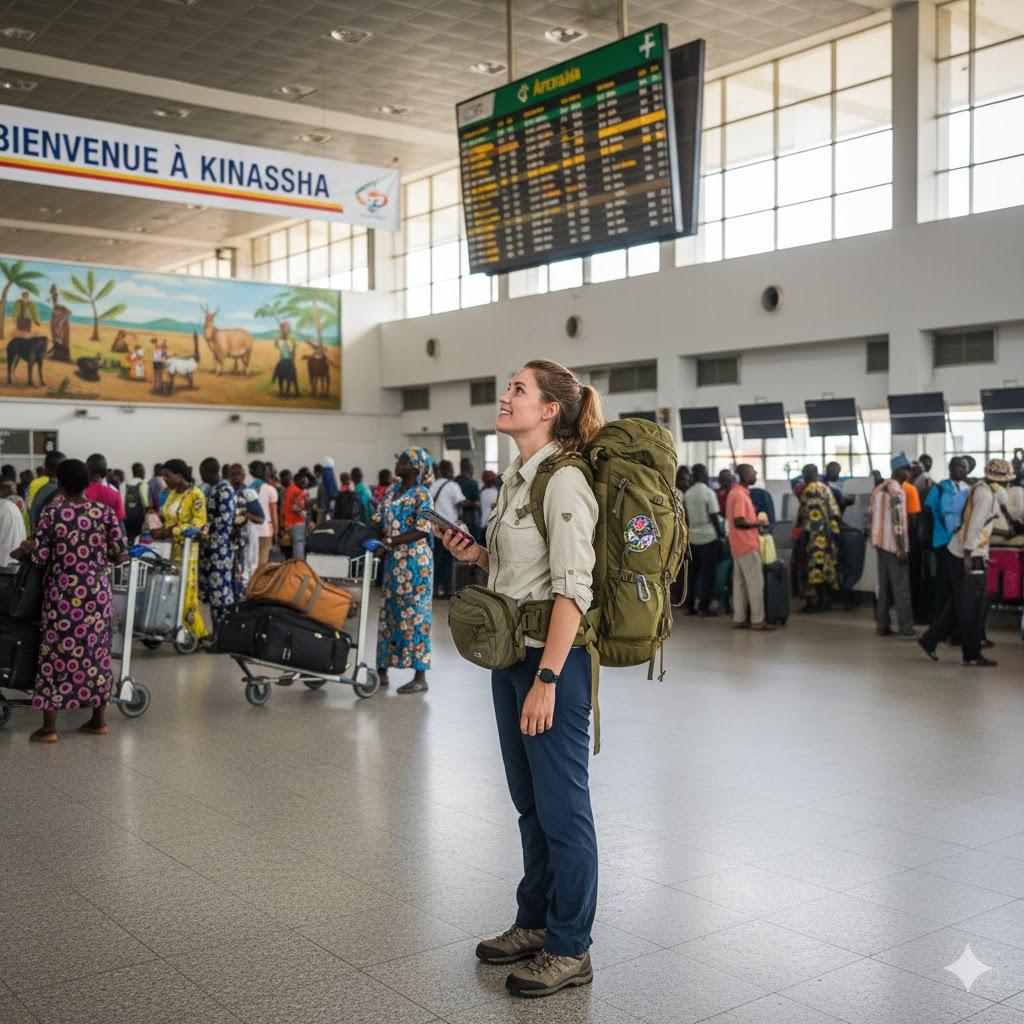
The Democratic Republic of the Congo (DRC), which has its capital city in Kinshasa, is a nation of incredible size, scope, and potential. As one of the biggest Central African countries, the DRC has one of the most robust immigration and entry systems in the region. Visitors who apply for DRC e-Visa (also known as the regular visa or Visa Régulier) need to prepare carefully, and no document may be as important—or under closer scrutiny—than your Proof of Accommodation.
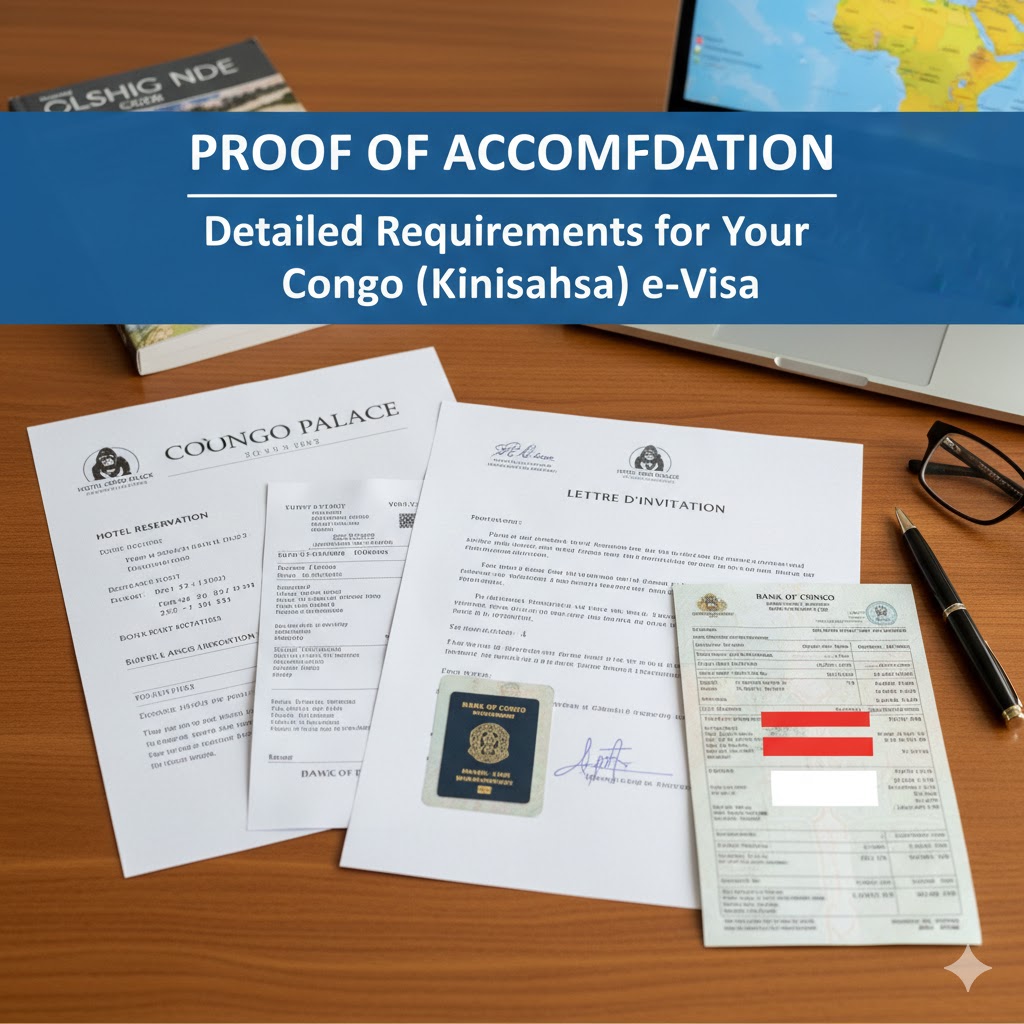
In the DRC, this evidence is much more than a mere formality. It is an essential security requirement that determines where you will be based during your visit to Kinshasa, Lubumbashi, or Goma. Any inconsistency, vagueness, or absence of corroborating evidence will virtually inevitably result in a delay or outright refusal of your e-Visa application.
This all-inclusive manual dissects the exact, comprehensive specifications for your accommodation document, so your paperwork passes the stringent requirements of the DRC government in case you are staying commercially, with a personal host, or on business for work.
1. The Central Role of Accommodation for DRC Entrance
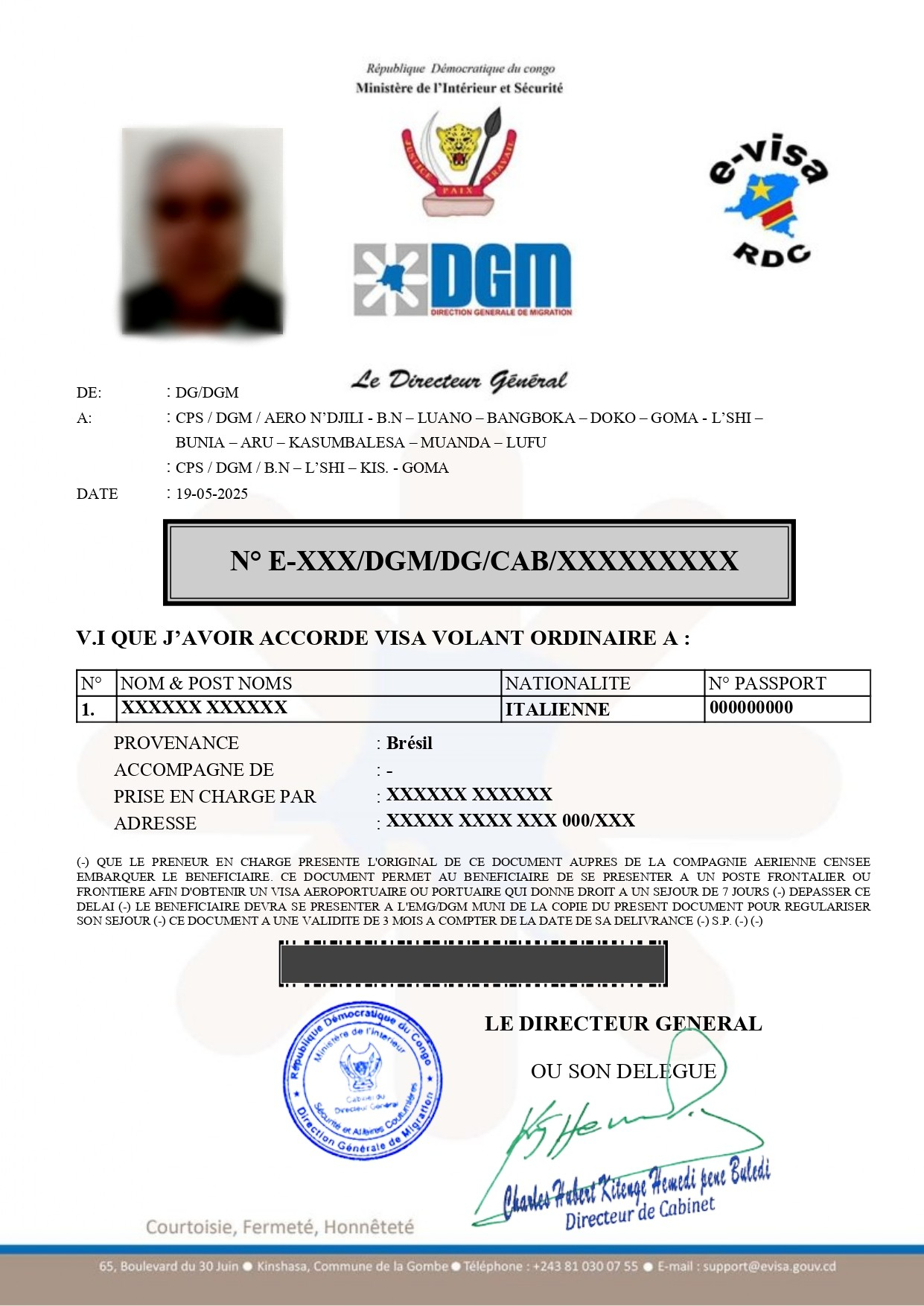
Government concern in DRC with confirmed accommodation is driven by some key needs around accountability, security, and fiscal management. Your accommodation proof serves as the required security anchor for your stay with the DRC e-Visa.
Why the DRC is Unforgiving on Accommodation Proof
- Fixed Location Required: The DRC wants to ensure you have a well-defined location of residence throughout your stay. Your proof dates must exactly match your intended entry and departure dates.
- Host Responsibility: In the case of private stays, the government makes the host or inviting party responsible for your presence and mobility in the nation.
- Consistency with Invitation Letter: Details of your accommodation should be the same as the address and contact details given in your Letter of Invitation or Mission Letter—a requirement for nearly all DRC Tourist e-Visa applications.
- Important Warning: Avoid using general easy-to-cancel bookings. Immigration authorities are familiar with this. If your actual plan is to visit more than one city, you need to provide documentation for each leg, or at least a booked ticket for the first destination of entry.
2. The definition of Acceptable Proof to Tourist and Private Stays
To the travelers visiting the DRC, you need to present your records in the way that it can be seen that you are financially stable and legally sponsored.
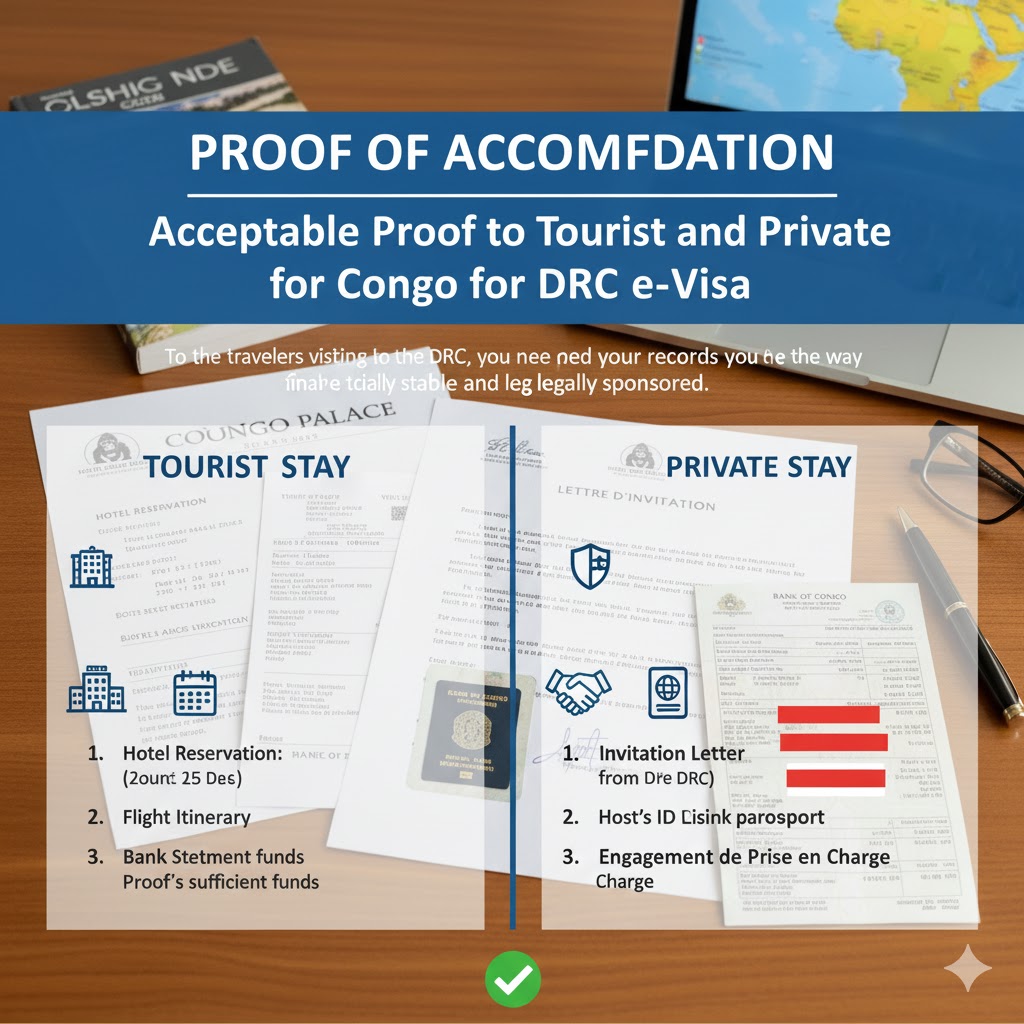
A: A Hotel or Commercial Guesthouse.
This is the simplest and most direct path that e-Visa applicants take, especially when entering via N'djili International Airport (FIH) in Kinshasa.
Mandatory Documents:
- Official Hotel Confirmation (Voucher): This should be issued by the hotel and not by the third-party booking confirmation which is easily cancelable.
- Important Content Requirements: The confirmation must expressly indicate the following four things:
- Full Name of the Applicant: Must be a perfect match of your passport (no initials or nickname).
- Full Dates of stay: You will need to cover all the days that you intend to spend in the DRC.
- Contact Information of Hotel: Full physical address, telephone number and official email on the letter head of the hotel.
- Status of payment: Ideally the confirmation must show that the stay is prepaid or non refurbishable deposit.
Evidence of Hotel Registration: There are situations when the consulate might demand a copy of the hotel local business registration documents to ensure that it is real. Though this is the role of the hotel, make sure that your hotel is a well-known one.
Scenario B: Staying with a Private Host or Relative (The Complex Route)
If you are hosted by a private citizen in the DRC, the documentation required is significantly higher, often requiring notarization or official stamping by local authorities.
Mandatory Documents:
- Formal Invitation Letter (Lettre d'Invitation): This letter must be written, signed, and dated by the host. It must clearly state:
- The purpose and duration of the visit.
- The full residential address where the applicant will be staying.
- A clear declaration that the host takes full financial and legal responsibility for the applicant’s entire stay.
- Host’s Identity and Legal Status: A clear copy of the host's valid Congolese National Identity Card or their official Residence Permit (Carte de Séjour) if they are a foreign national legally residing in the DRC.
- Proof of Host’s Residence: A copy of a recent (within 3 months) utility bill or rental contract in the host’s name, showing the address listed in the invitation letter.
- Notarization/Legalization: This is the most crucial step: The Invitation Letter must often be legalized or notarized at the local town hall (commune) or by a recognized Congolese notary. This official stamp verifies the host's identity and commitment and is frequently requested by the e-Visa processing center.
Process Note: Due to the complexity of the notarization step, many travelers find it much simpler to utilize a verified local travel agency to handle the accommodation/invitation process, even if they plan to stay with family.
3. Business and Mission Travel: The Employer Guarantee
For those traveling to the DRC on an official mission or for extended business activity, your accommodation proof must be seamlessly linked to your professional purpose and guaranteed by the inviting entity.
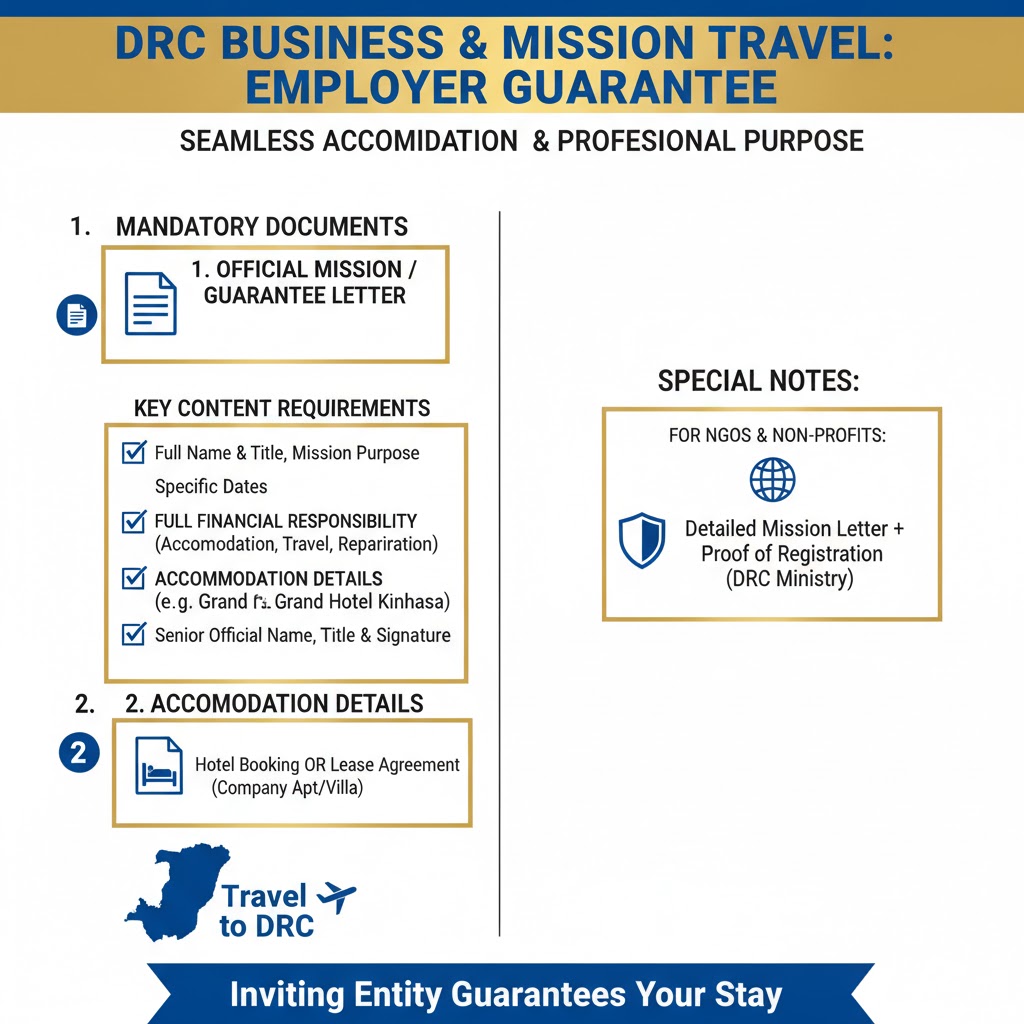
Mandatory Documents:
- Official Mission or Guarantee Letter: This must be on the official, stamped letterhead of the inviting DRC organization (company, NGO, government ministry, or religious body).
- Key Content Requirements: The letter must serve as a legal guarantee, clearly stating:
- The full name and title of the traveler and the purpose of the mission.
- The specific dates of the business trip.
- A clear statement that the inviting entity will assume full financial responsibility for all costs incurred in the DRC, including accommodation, travel, and any necessary repatriation.
- Accommodation Details: It must state where the applicant will be staying (e.g., "Guest will be housed at the Grand Hotel Kinshasa, paid for by [Company Name]").
- The name, title, and signature of a senior official within the inviting organization.
- Hotel Booking or Lease Agreement: If a hotel is booked, the confirmation must be attached. If the company is providing housing (a company apartment or villa), a copy of the lease or title deed proving the company’s right to use the property must be attached.
For NGOs and Non-Profits: Your mission letter must be especially detailed, often requiring proof of your organization’s registration with the DRC government's relevant ministry (e.g., Health, Education, or Interior).
4. Common Pitfalls That Stop Your DRC e-Visa Application
The DRC e-Visa system imposes technical and practical requirements strictly. Failure most often reduces to these simple avoidable errors:
Pitfall 1: Non-Contiguous Dates
- Problem: You provide a 7-night hotel reservation, yet your flight schedule indicates that you stay in the DRC for 10 nights, or you have a gap between two different reservations.
- Outcome: Instant Request for Clarification/Rejection. This implies an unaccounted period of stay, which the DRC avoids strictly.
- Solution: Make sure each and every night between your arrival and departure is filled by confirmed, submitted accommodation evidence.
Pitfall 2: Scanned vs. Notarized Private Invitation
- Problem (Private Stays): Providing a plain PDF scan of a host's invitation letter without the official stamp or notarization from a local authority (Mairie or Notary).
- Result: Inadequate Documentation. The letter does not carry official legal strength.
- Solution: The host needs to present the letter and their ID to a local authority and have the signature and intention officially legalized prior to forwarding to you.
Pitfall 3: The Unreadable Digital Scan
- Problem: Scanning a document with an old scanner that has a worn out glass plate, scanning in a twirly motion.
- Result: Technical Rejection. The immigration officer cannot recognize the document.
- Correction: Check the scanner's glass plate for dust or wear. Make sure it can scan properly. Use a flatbed scanner or a professional scanning company. Be sure the final file is clear, high-contrast, and in the proper PDF or JPEG format.
Pitfall 4: The Financial Liability Gap
- Problem (Business/Mission): The company invitation letter guarantees your business meetings but does not clearly state that the company takes financial responsibility for your accommodation and stay.
- Result: Rejection. The DRC insists on a clear promise that you will not be a financial burden.
- Correction: Have the letter include clear wording: "We confirm full responsibility for the accommodation and financial costs of [Applicant Name] during their mission from [Date] to [Date]."
5. Digital Submission Technical Requirements
All documents should be uploaded properly to the DRC e-Visa website.
- Format and Size: Documents are normally in PDF or JPEG format, frequently with file size restrictions (e.g., less than 1MB). You might need to combine several pages (such as the host ID and utility bill) into a single PDF file for upload.
- Language: The documents should preferably be submitted in French or with a certified translation in English. Although English documents are normally received, French tends to accelerate the administrative process.
- Verification: Make sure that all documents uploaded bear clear titles (e.g., Hotel_Confirmation_Kinshasa.pdf or Host_Invitation_Notarized.pdf).
By approaching your Proof of Accommodation for the DRC e-Visa as an official security guarantee rather than a reservation, and making certain that any necessary documents are properly stamped and certified, you greatly improve the potential for an approved and timely application to allow your travel to the Democratic Republic of the Congo.