

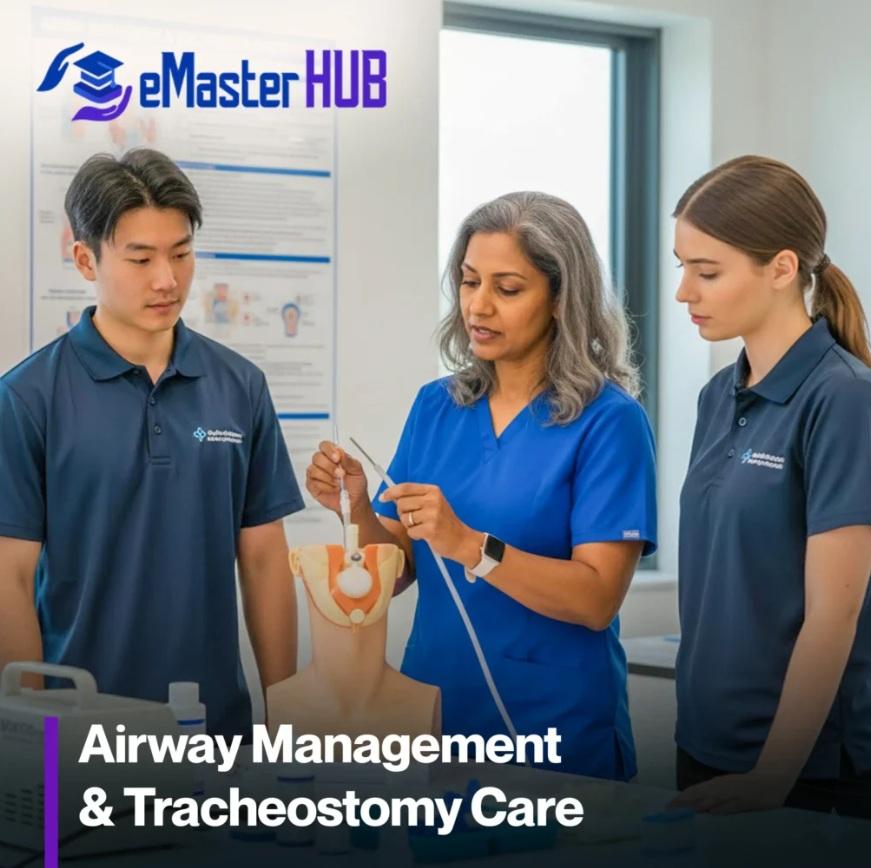
Airway management is an essential part of providing complex care and support to people with complex health needs. Knowledge of airway management techniques can build confidence and enhance preparedness to respond to different airway management needs among disability support workers. The eMaster HUB provides online learning opportunities to empower care professionals with practical knowledge and deepen their understanding of required support practices.
Understanding Airway Management in Disability Support
Airway management involves recognizing and responding to different situations that may affect an individual’s ability to breathe safely. Some people with disability may require respiratory care, support with managing secretions, or use of specialized equipment because of their health condition and support requirements.
Support workers need to understand their responsibilities, comply with established standard operating procedures, and recognize when they need to call for medical assistance.
Education should help professionals identify issues and concerns and support them to provide care within their authorized scope of practice.
Airway Management Training
Knowledge of airway management is essential for workers supporting individuals with high support needs. It prepares care workers to identify potential respiratory risks and helps them understand the rationale behind care practices and infection control measures. Completing NDIS airway management training can prepare support workers to recognize changes in a participant’s breathing and respond according to agreed emergency response procedures.
Possible content areas of airway management training include:
· Acquiring knowledge of basic airway anatomy and respiratory functions.
· Identifying signs of respiratory distress and airway obstruction.
· Becoming familiar with available airway management support equipment and its safe use.
Following infection control and prevention practices:
· Understanding individual support plans and related documentation.
· Identifying and responding to emergency situations.
· Communicating with clients and families, and members of the healthcare team.
· Competency to perform required skills may require additional training, equipment, and/or assessment.
Who Should Receive This Training?
Healthcare workers (i.e., disability support workers, personal care workers, and nurses) supporting clients with respiratory care needs would benefit from training in basic airway management. Employers may also use relevant training to update and strengthen their workforce’s knowledge to support safer care practices.
Learn about the format of the course, the type of assessment, and any practical competency assessment prior to enrolling. Completing this training will give learners a theoretical foundation to perform airway management procedures, but it may not build competency to perform all airway management procedures.
eMaster HUB Is Designed to Help You Develop Your Professional Skills
Selecting the right training is one way disability support workers can broaden their knowledge and skills and maintain professional standards. Training should be aligned with the support worker’s role and workplace policies. It should also be relevant to the needs of the people being supported.
If you are researching NDIS airway management training, eMaster HUB is one place to start to find relevant options. Before enrolling in a training course, review the details of the course and the competency requirements. This will help you determine the relevance of the training for your professional and workplace needs. For more info, kindly visit https://emasterhub.com.au/product/airway-management-and-tracheostomy-care-in-disability-services/