

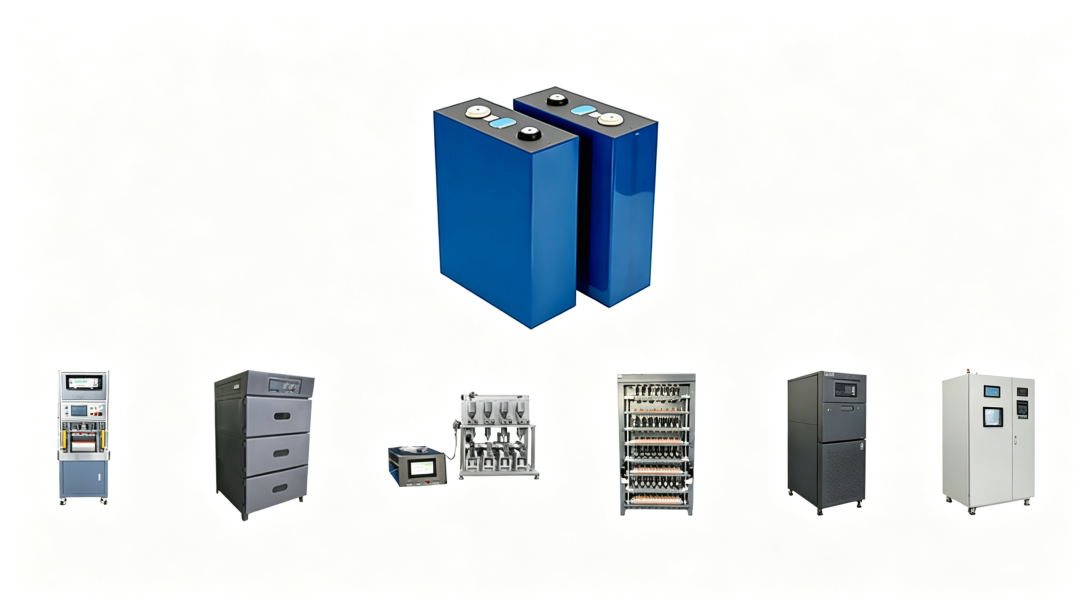
- What Should You Check Before Choosing a Lithium Battery Production Line Supplier?
- Look beyond the price. Check the supplier's experience, machine quality, customization options, safety standards, and after-sales service. These five points can help you avoid poor equipment, unexpected costs, and production delays.
Introduction
Planning to build a lithium battery factory? Or maybe you want to upgrade your current production line?
Either way, choosing the right equipment supplier is a big decision. After all, you are not just buying a few machines. You are investing in equipment that needs to work day after day, produce consistent batteries, and help your business grow.
But here's the problem: many suppliers look similar when you first visit their websites. They all claim to offer good quality, competitive prices, and professional service. So how do you know which one is actually reliable?
From a buyer's point of view, the best choice is not always the cheapest one or the company with the most impressive product photos.
Here are five things worth checking before you make a decision.
1. Does the Supplier Really Understand Battery Manufacturing?
Let's start with experience.
A company may be good at making machines, but does it really understand how lithium batteries are produced? That's an important difference.
Battery manufacturing involves several steps, from mixing and coating electrode materials to cell assembly, electrolyte filling, testing, and battery pack assembly. If a supplier only understands one part of the process, it may be difficult for them to help you plan a complete production line.
When comparing a lithium battery production line supplier, don't just ask how many years the company has been in business. Ask what kind of battery projects it has actually completed.
For example:
- Has it worked with cylindrical, pouch, or prismatic batteries?
- Can it provide equipment for the production process you need?
- Does it have experience with projects similar to yours?
- Can you see real machine demonstrations or factory videos?
A supplier with relevant project experience is more likely to understand the problems you may face during installation and production.
My suggestion: Ask for real examples, not just company introductions. A short video of a machine running can tell you more than a page full of marketing claims.
2. Are the Machines Reliable, or Do They Just Look Good?
A machine can look impressive in a photo, but what really matters is how it performs when you start using it.
Imagine buying a coating machine that cannot maintain an even coating, or a welding machine that needs constant adjustment. These problems can slow down your production and create unnecessary waste.
When checking equipment, focus on the things that affect your daily work:
- Working accuracy: Can the machine produce stable results?
- Production speed: Can it keep up with your planned output?
- Ease of operation: Can your workers learn to use it without too much difficulty?
- Maintenance: Are parts easy to replace? Is daily maintenance simple?
- Compatibility: Can it work with your other machines?
A good lithium battery production line supplier should be able to explain what each machine can do and where its limits are. Don't hesitate to ask for detailed specifications or arrange a machine test before purchasing.
Also, remember that one machine does not work alone. The coating machine, roller press, slitting machine, assembly equipment, and testing machines all need to fit into the same production plan.
A low purchase price may look attractive at first. But if the machine keeps stopping or causes quality problems, the money you save can disappear very quickly.
3. Can the Supplier Offer a Solution That Fits Your Factory?
Not every battery factory needs the same equipment. This is something buyers sometimes overlook.
For example, if you're running a small laboratory, you may only need a few flexible machines for material testing and sample production. If you're preparing for mass production, you'll probably need automated equipment that can handle larger volumes with less manual work.
So, before asking for a quotation, think about what you actually want to produce.
A few questions can help:
- What type of battery will you manufacture?
- What capacity do you want to reach?
- Are you starting with a laboratory, pilot line, or mass-production factory?
- How much factory space do you have?
- Do you plan to expand production later?
The right lithium battery production line supplier should listen to these requirements before recommending equipment. Be careful if a company immediately sends you a standard quotation without asking about your project.
Xiaowei New Energy provides lithium battery manufacturing equipment and production-line solutions for different project needs. Whether you are setting up a small production line or planning a larger factory, you can discuss your battery type, production goals, and equipment requirements before deciding on a solution.
The key is to buy what your factory really needs—not equipment that looks impressive but may never be fully used.
4. Does the Supplier Take Quality and Safety Seriously?
This point deserves special attention because battery manufacturing is not an ordinary production process.
A small mistake in equipment operation or production control can affect battery quality. That's why you should check whether the supplier pays attention to safety and quality from the beginning.
For example, ask how the equipment controls important settings such as temperature, pressure, speed, and welding conditions. Find out whether the production process includes suitable inspection and testing equipment.
You should also consider the factory environment. Depending on the battery type and process, your project may need a dry room, dust control, ventilation, fire protection, or other safety facilities.
You don't need to understand every technical detail before buying. But you should expect the supplier to explain these requirements in simple language.
A trustworthy lithium battery production line supplier will not just tell you that everything is fine. They should point out possible risks and help you understand what your factory needs.
5. What Happens After You Pay? Check the After-Sales Service!
Here's a question many buyers forget to ask: What happens after the machines arrive?
Buying equipment is only the beginning. You still need to install it, connect it, test it, and train your workers. If something goes wrong during operation, you need someone who can help.
Before signing a contract, ask the supplier:
- Is installation guidance included?
- Will engineers help with commissioning?
- Is operator training available?
- How long is the warranty?
- Can you purchase spare parts when needed?
- How quickly can the technical team respond to problems?
These questions may seem simple, but they can save you a lot of trouble later.
Xiaowei New Energy also provides engineering support for lithium battery equipment and production-line projects. Buyers should discuss installation, training, and technical assistance in advance so that both sides understand what support is included.
A good supplier should care about whether your production line runs smoothly, not just whether the equipment has been delivered.
6. A Simple Checklist Before You Make Your Decision
Before choosing your supplier, take a few minutes to compare these five points:
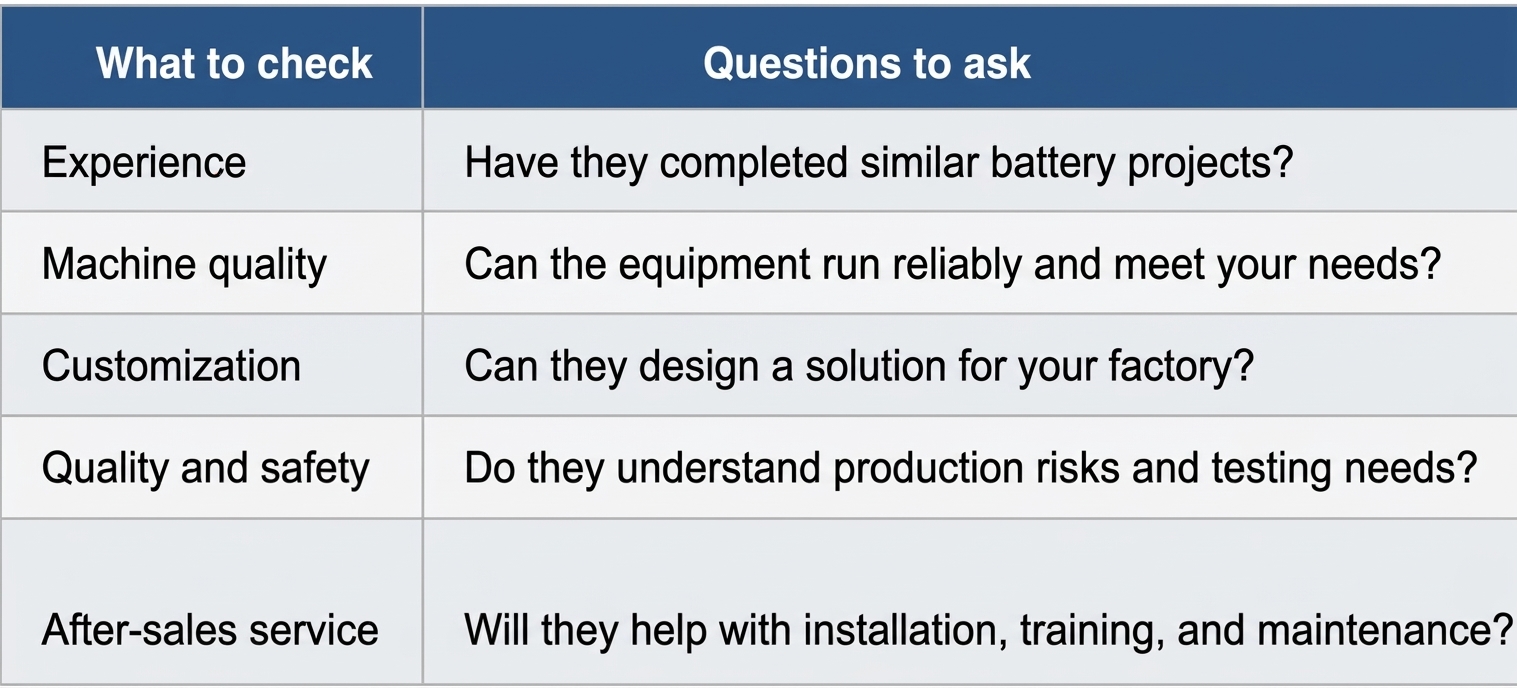
One more tip: compare at least two or three quotations, but don't compare prices alone. Check exactly what each quotation includes. A cheaper offer may exclude installation, spare parts, or important accessories.
7. FAQs
1. How do I know if a supplier is reliable?
Check its industry experience, completed projects, machine demonstrations, technical documents, and after-sales commitments. Ask specific questions instead of relying only on website descriptions.
2. Should I choose the cheapest equipment?
Not necessarily. A cheaper machine may cost more in the long run if it has frequent breakdowns, poor production consistency, or limited technical support.
3. Can I buy only part of a production line?
Yes. If you already have some equipment, you can purchase individual machines. Just make sure the new equipment is compatible with your existing production process.
4. What information should I prepare before asking for a quotation?
Prepare your battery type, planned production capacity, cell specifications, factory space, automation requirements, and approximate budget. This helps the supplier recommend more suitable equipment.
5. Is after-sales service really that important?
Absolutely. Installation, training, maintenance, and troubleshooting all affect how quickly your factory can start production and keep running smoothly.
8. Conclusion
Choosing a battery equipment supplier doesn't have to be complicated. Start with five basic questions: Do they have real experience? Are their machines reliable? Can they meet your production needs? Do they take safety seriously? And will they support you after delivery?
Take your time, ask questions, compare quotations, and check the details before signing a contract.
A reliable lithium battery production line supplier should be more than a company that sells machines. It should be a partner that understands your project and helps you turn your production plans into reality.