

Retail operations today aren’t failing because of competition—they’re failing because of inefficiency.
Up to 70% of retail tasks can be automated, yet only a small percentage of retailers operate with mature omnichannel systems. This gap leads to inventory mismatches, slow fulfillment, rising operational costs, and inconsistent customer experiences.
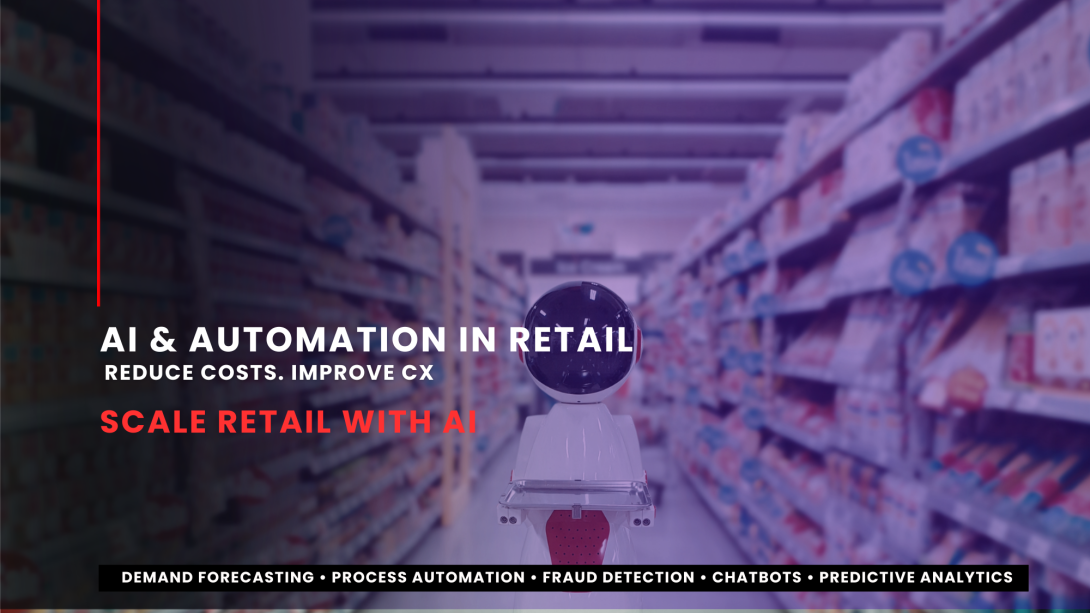
This blog breaks down how AI and automation are transforming retail—not as a buzzword, but as a system of execution, intelligence, and real-time data.
From AI-based demand forecasting to retail process automation, fraud detection, conversational AI, and predictive analytics, modern retailers are moving from reactive decision-making to proactive, data-driven operations.
The result is measurable:
- Reduced operational costs (up to 40–60%)
- Faster and more reliable fulfillment
- Improved customer experience across channels
- Better demand visibility and inventory accuracy
More importantly, AI allows retailers to scale without increasing complexity. Instead of adding more manual processes, businesses build intelligent systems that continuously optimize themselves.
This is not about innovation anymore—it’s about survival, scalability, and profitability in modern retail.
If you’re evaluating how to reduce inefficiencies, improve margins, and future-proof your retail operations, this guide provides a clear breakdown of where AI delivers the highest impact.