

Microsoft Fabric is quickly becoming a strategic platform for modern analytics, business intelligence, and data management. Many organizations view Fabric as the natural evolution of Power BI, Azure Data Factory, Synapse Analytics, and broader Microsoft data workloads. However, enterprise adoption often reveals challenges that are not immediately visible during evaluation or pilot phases.
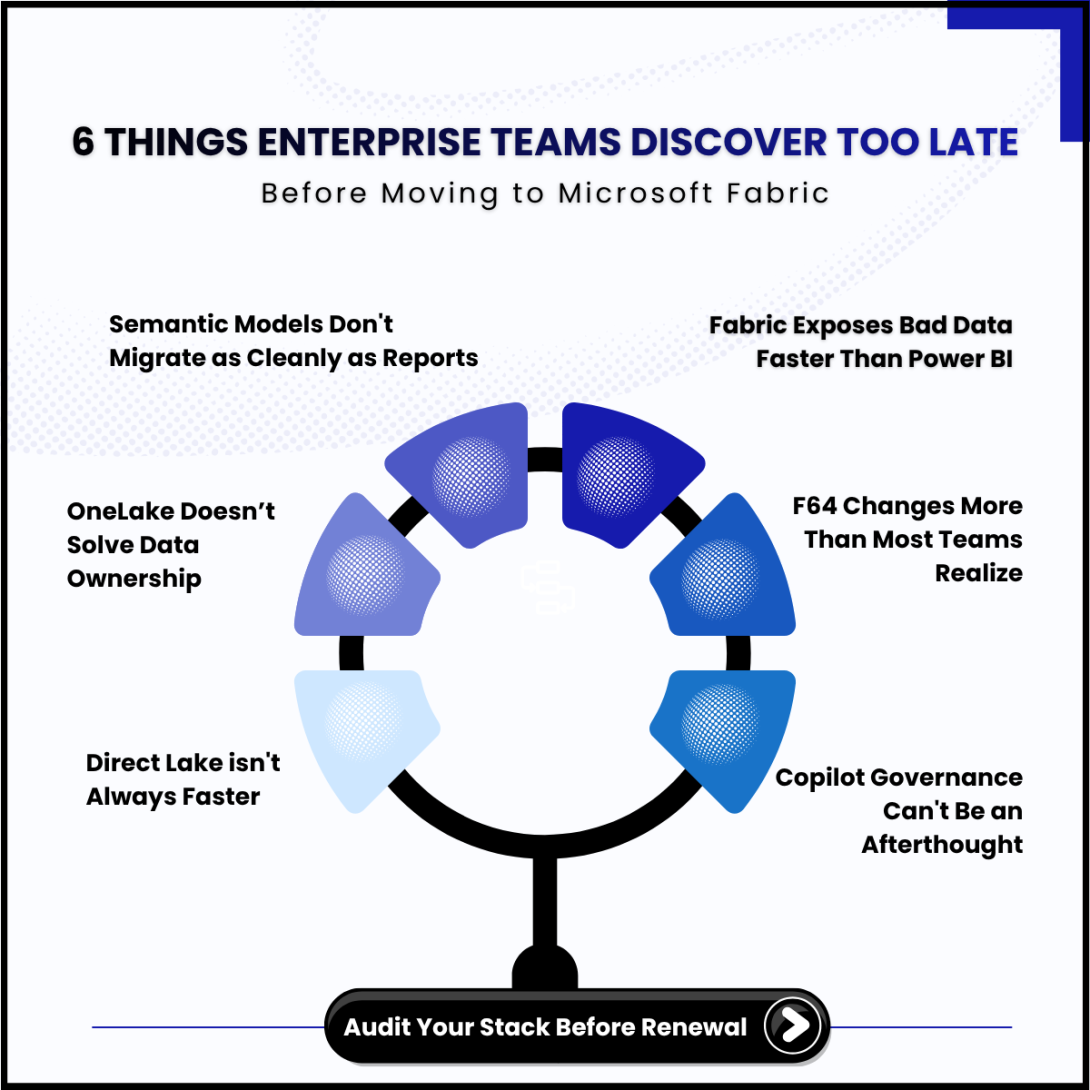
One of the most common misconceptions is that semantic models migrate as smoothly as reports. In reality, enterprise environments frequently encounter issues involving dependencies, model complexity, governance requirements, and performance optimization. Similarly, many organizations assume OneLake automatically resolves long-standing data ownership challenges, only to discover that governance and accountability still require careful planning.
Performance expectations can also create surprises. Features such as Direct Lake promise faster analytics experiences, but results often depend on workload design, data volume, refresh patterns, and organizational architecture decisions. Capacity planning is another area where assumptions can lead to unexpected outcomes. F64 and higher capacity tiers introduce considerations around licensing, scaling, workload distribution, and operational management that many teams underestimate.
As organizations expand their use of Microsoft Fabric, data quality becomes increasingly important. Fabric's integrated architecture can expose underlying data issues more quickly than traditional reporting environments, making governance and data stewardship essential. The rapid adoption of AI and Copilot capabilities further increases the need for clear governance policies, access controls, and oversight frameworks.
The most successful Fabric migrations are rarely driven by technology alone. They combine architecture planning, governance readiness, cost management, data quality initiatives, and long-term operational strategy.
This visual highlights six lessons enterprise teams frequently discover after beginning their Fabric journey. Understanding these considerations early can help organizations reduce risk, improve adoption outcomes, and maximize the value of their Microsoft data investments.
For a deeper analysis, implementation considerations, and enterprise best practices, visit the full article on Infosprint Technologies.