


In today’s hyper‑connected marketplace, a single interaction can make or break a brand’s reputation. Contact centers sit at the front line of that battle, fielding everything from routine inquiries to high‑stakes complaints. Yet many organizations still rely on manual monitoring, sporadic coaching, and fragmented feedback loops—processes that are costly, time‑consuming, and prone to bias.
Enter AI‑Powered Quality Management (QMS) software and voice‑of‑customer (VoC) platforms. Together they form a data‑driven engine that not only measures performance but also fuels continuous improvement, delivering the level of customer service quality assurance that modern consumers expect.
Below, we explore how these technologies reshape contact centers, the tangible benefits they deliver, practical steps for implementation, and what the future holds.
The Traditional Quality Assurance Challenge
Historically, quality assurance (QA) in contact centers has been a manual, labor‑intensive exercise:
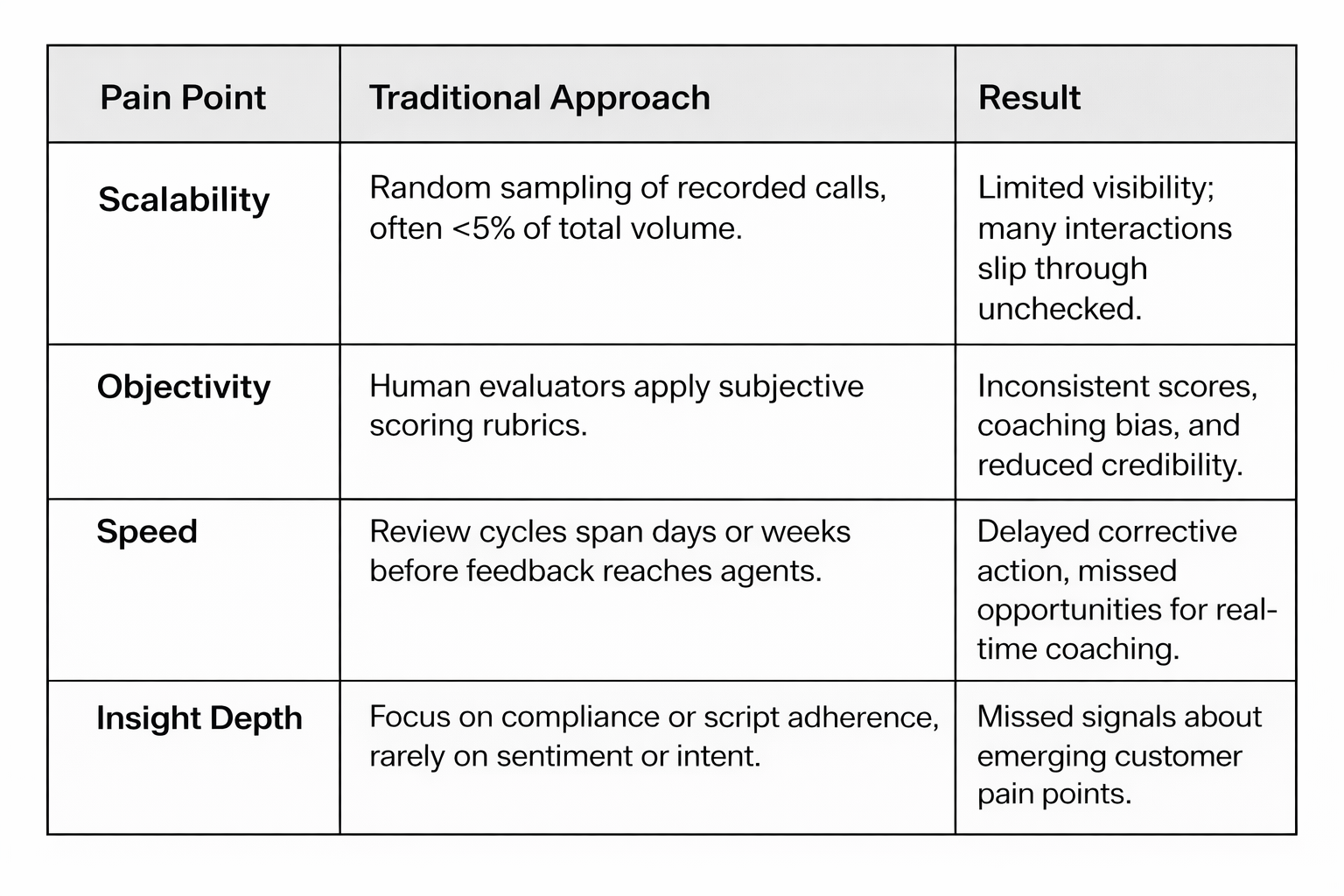
These constraints hinder a contact center’s ability to maintain high‑quality service, especially as call volumes surge and omnichannel expectations rise.
AI‑Powered Quality Management Software: A Paradigm Shift
AI‑Powered Quality Management software replaces the manual bottleneck with intelligent automation. By ingesting audio, text, and metadata from every interaction, the platform can evaluate performance at scale and in near real‑time.
Core Capabilities
- Automatic Speech & Text Transcription
Natural language processing (NLP) converts voice calls, chats, and emails into searchable text, creating a unified data pool. - Sentiment & Emotion Detection
Machine‑learning models identify anger, frustration, satisfaction, or confusion, assigning a sentiment score to each interaction. - Compliance & Script Adherence Scoring
Rules‑based engines flag missing disclosures, policy violations, or deviations from approved scripts. - Root‑Cause Analytics
Pattern recognition uncovers recurring issues—e.g., “long hold times” or “repeated transfers”—that may not be obvious from isolated calls. - Real‑Time Coaching Recommendations
When a live interaction drifts off‑track, the system can surface suggested prompts or escalation paths to the agent’s desktop.
Business Impact
- Scale without Added Headcount – AI can evaluate 100% of interactions, turning a 5% sampling model into a comprehensive quality view.
- Objective, Consistent Scoring – Algorithms apply the same rubric every time, eliminating evaluator drift.
- Faster Feedback Loops – Insights are available within minutes, enabling on‑the‑spot coaching that improves first‑call resolution rates.
- Reduced Operational Costs – Studies show up to 40% lower QA labor expenses while increasing error detection rates by 25‑30%.
Voice‑of‑Customer Software: Turning Feedback into Action
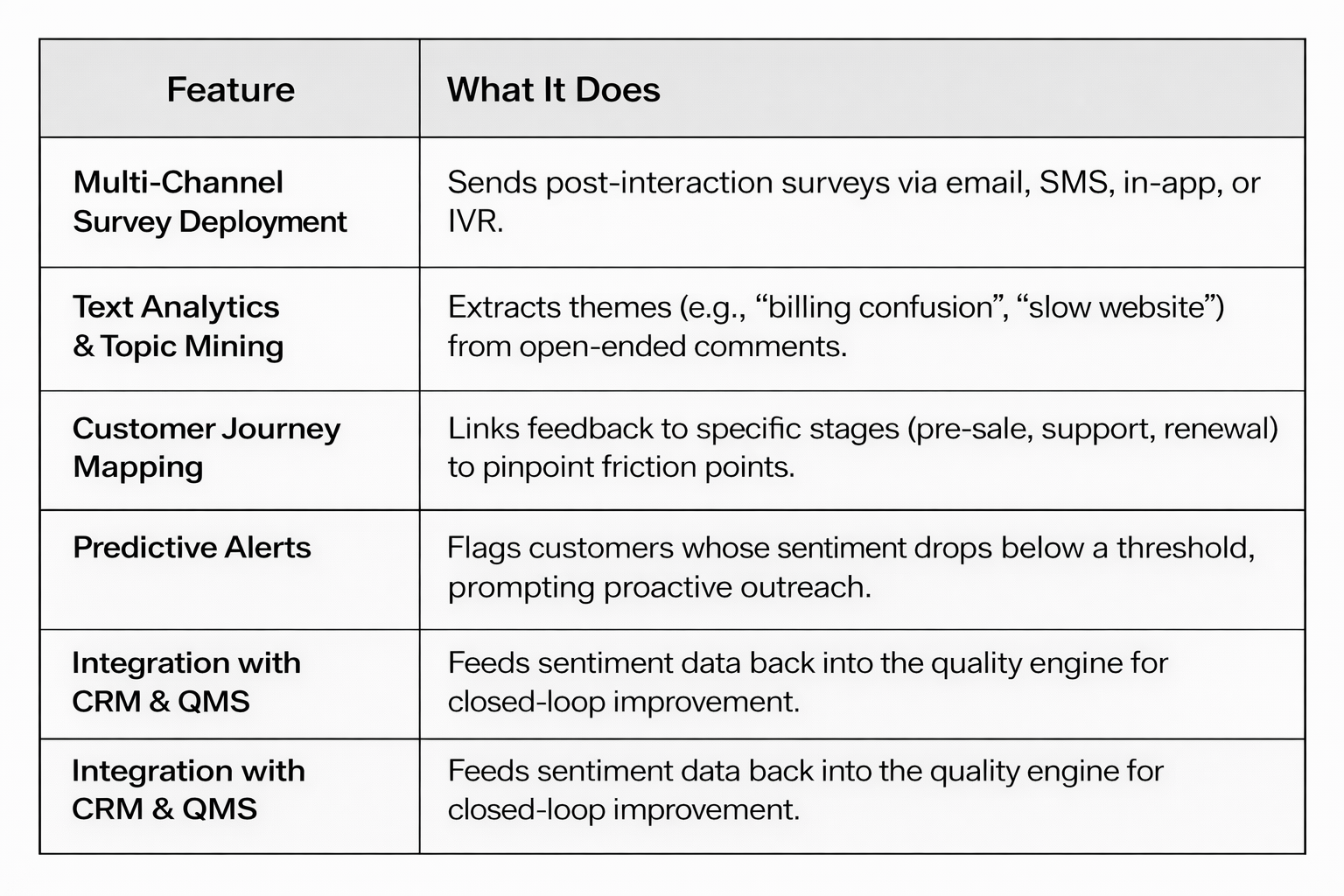
While AI QMS focuses on the process of service delivery, voice‑of‑customer (VoC) software captures the customer’s perspective across all touchpoints. It aggregates surveys, social media mentions, NPS scores, and textual feedback, giving a holistic view of sentiment.
Key Features
Business Benefits
- Customer‑Centric Prioritization – VoC data surfaces the issues that matter most to customers, guiding product and process enhancements.
- Improved Loyalty Metrics – Companies that close the loop on VoC insights see NPS lifts of 5‑10 points on average.
- Cross‑Functional Visibility – Marketing, product, and support teams can collaborate on shared insights, breaking down silos.
The Power of Integration: A Unified Quality Assurance Engine
When AI‑Powered QMS and VoC software operate in isolation, each delivers a piece of the puzzle. Integrated, they provide a 360° view of performance and perception, allowing contact centers to:
- Correlate Sentiment Scores with Agent Behavior – Does a high sentiment score align with agents following best‑practice scripts?
- Prioritize Coaching Based on Business Impact – If a VoC trend indicates churn risk, QA can fast‑track coaching for agents handling those accounts.
- Automate KPI Dashboards – Combine compliance scores, sentiment metrics, and NPS into a single executive dashboard.
Real‑World Example
Acme Telecom deployed an AI QMS alongside its VoC platform. Within six months:
- First‑Call Resolution rose from 71% to 84% (thanks to real‑time prompts).
- Average Handle Time dropped 12 seconds as agents avoided unnecessary escalations.
- NPS increased by 8 points after the company addressed the top‑ranked VoC theme: “long wait times for technical support.”
The integration turned raw data into actionable insight, directly boosting both operational efficiency and customer happiness.
Implementation Blueprint – From Planning to Success
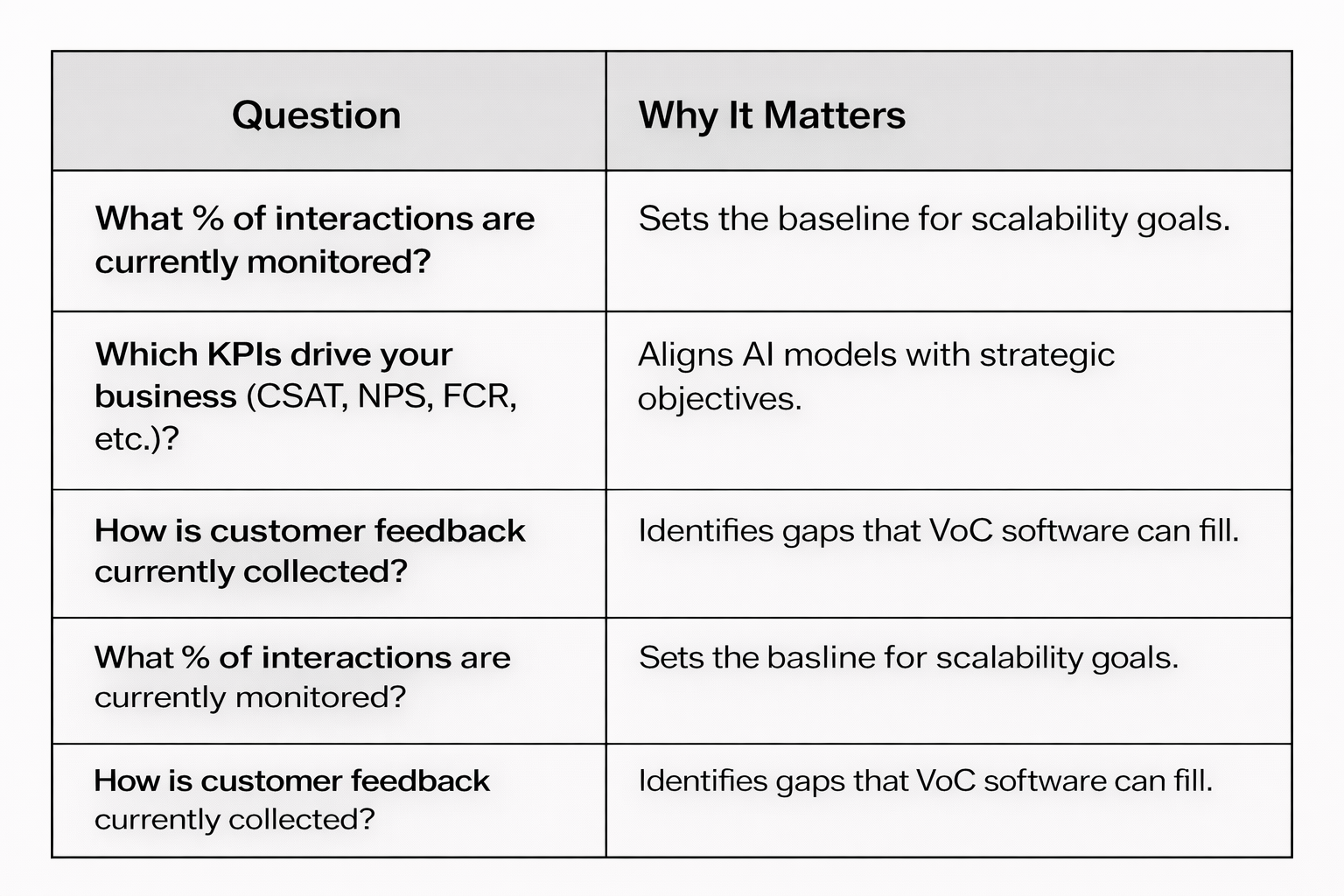
Assess Your Starting Point
Choose the Right Technology Stack
- AI QMS Vendor – Look for multilingual speech recognition, customizable scoring models, and robust analytics APIs.
- VoC Platform – Prioritize omni‑channel survey distribution, AI‑driven text analytics, and seamless CRM integration.
- Integration Layer – Middleware or native connectors that synchronize data in real time.
Pilot, Refine, Scale
- Pilot Phase (30‑60 days) – Deploy AI QMS on a single queue, run parallel manual QA for validation, and launch a short‑form post‑call survey.
- Model Tuning – Adjust sentiment thresholds, add new compliance rules, and fine‑tune topic extraction based on pilot feedback.
- Roll‑out – Expand coverage channel‑by‑channel, gradually increasing automation percentages.
Establish Governance & Continuous Learning
- Scorecard Governance – Define who owns the scoring rubric, how changes are approved, and the frequency of reviews.
- Coaching Playbooks – Translate AI insights into standardized coaching scripts and knowledge‑base updates.
- Feedback Loop – Use VoC findings to retrain AI models, ensuring they stay aligned with evolving customer expectations.
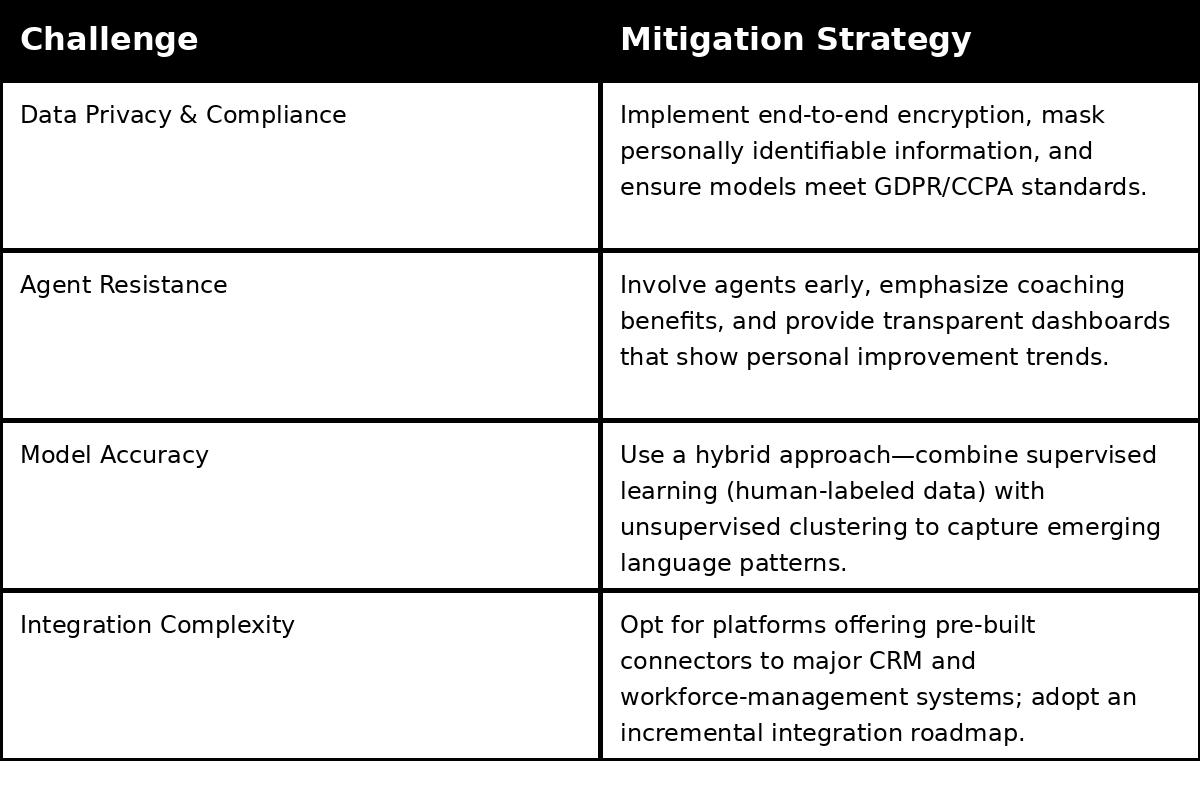
Overcoming Common Challenges
The Future Landscape: What’s Next for Quality Assurance?
- Generative AI Coaching – Real‑time, AI‑generated suggestions that adapt to the flow of conversation, akin to a virtual mentor beside the agent.
- Emotion‑Aware Routing – Leveraging sentiment detection to route angry callers to senior agents or specialized de‑escalation teams.
- Predictive Workforce Management – Using QA and VoC insights to forecast staffing needs, aligning peak sentiment periods with optimal agent availability.
- Unified Customer Experience (CX) Platforms – Seamless convergence of QMS, VoC, CRM, and analytics into a single, user‑friendly cockpit for CX leaders.
These advances promise an era where customer service quality assurance is not a periodic audit but a living, breathing component of every interaction.
Conclusion
In a world where customers expect instant, empathetic, and flawless support, contact centers can no longer depend on manual quality checks and ad‑hoc surveys. AI‑Powered Quality Management software provides the scalability, objectivity, and speed needed to monitor every interaction, while voice‑of‑customer software captures the pulse of the market, translating raw feedback into strategic action.
When integrated, these technologies create a virtuous cycle: AI identifies performance gaps, VoC signals why those gaps matter to customers, and the organization responds with targeted coaching, process improvements, and product refinements. The result is a measurable uplift in key metrics—higher NPS, faster resolution, lower churn—and, most importantly, stronger brand loyalty.
For contact centers ready to elevate their customer service quality assurance, the path is clear: adopt an AI‑first QMS, complement it with robust VoC capabilities, and embed a culture of continuous learning. The payoff is not just a better scorecard; it’s a competitive advantage that can set your brand apart in an increasingly crowded marketplace.
Ready to transform your contact center? Start by evaluating your current QA process against the checklist above, and take the first step toward an AI‑driven, customer‑centric future.