
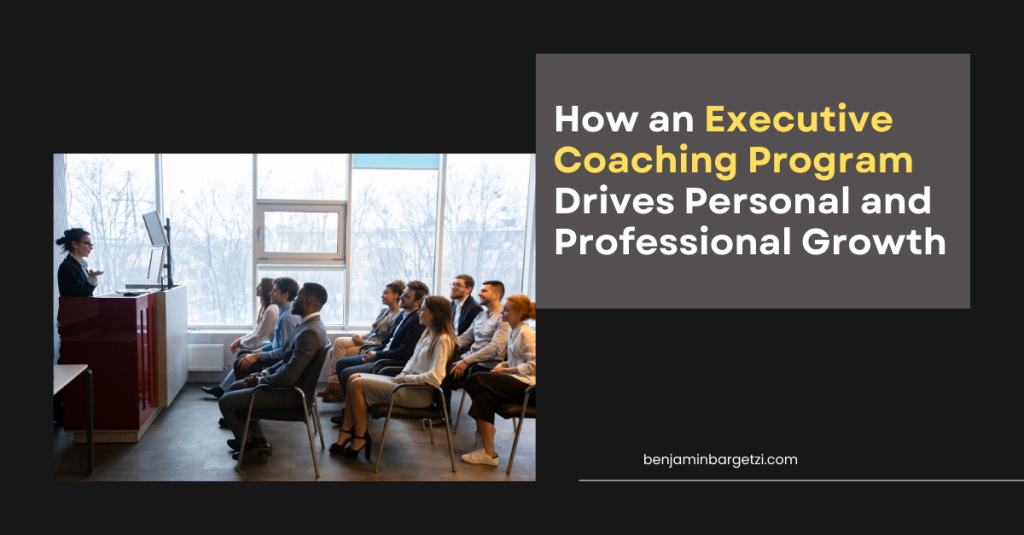
Leadership is more than just a set of skills; it’s a mindset, a series of learned behaviors, and a deep understanding of human potential. An Executive Coaching Program is one of the most effective tools to help executives reach their highest potential in both personal and professional spheres. But how does it truly drive growth? Let’s explore how this type of coaching catalyzes success for individuals at the helm of organizations.
The Science Behind Executive Coaching and Personal Growth
The brain is an incredible organ, especially when it comes to leadership. Neuroscience research has proven that continuous learning, self-reflection, and emotional intelligence development directly influence leadership capacity. When you engage in an Executive Coaching Program, you’re not just working on strategies or decision-making skills you’re literally reshaping how your brain processes challenges, interacts with others, and learns from experience.
Neuroplasticity: Changing Your Brain for Success
Neuroplasticity refers to the brain’s ability to rewire itself, adapting to new experiences. Executive coaching leverages this principle by encouraging behavior changes that align with leadership excellence. With personalized coaching, leaders challenge old habits, rethink reactions to stress, and adjust decision-making processes. As a result, they don’t just perform better in their roles; they actually evolve into more effective leaders.
Emotional Intelligence: The Key to Relationship-Building
An Executive Coaching Program emphasizes the development of emotional intelligence (EQ), a crucial component of leadership. EQ involves understanding and managing one’s own emotions, as well as recognizing and influencing the emotions of others. Leaders who possess high EQ are better equipped to navigate complex interpersonal dynamics, make informed decisions under pressure, and inspire trust in their teams.
By focusing on EQ, coaching programs help leaders break through emotional barriers, reduce stress, and cultivate healthier, more productive work environments. This skill set doesn’t just elevate one’s leadership; it drives personal growth by fostering self-awareness, empathy, and conflict-resolution abilities.