
A radiator leak may look like a small problem at first, especially if you only notice a few drops of coolant under your car. However, ignoring it can turn into a much bigger repair and leave you stranded on the road. Understanding when radiator leak repair is necessary can help you protect your engine, avoid overheating, and prevent damage that could cost far more than fixing the original leak.
What Does a Radiator Do?
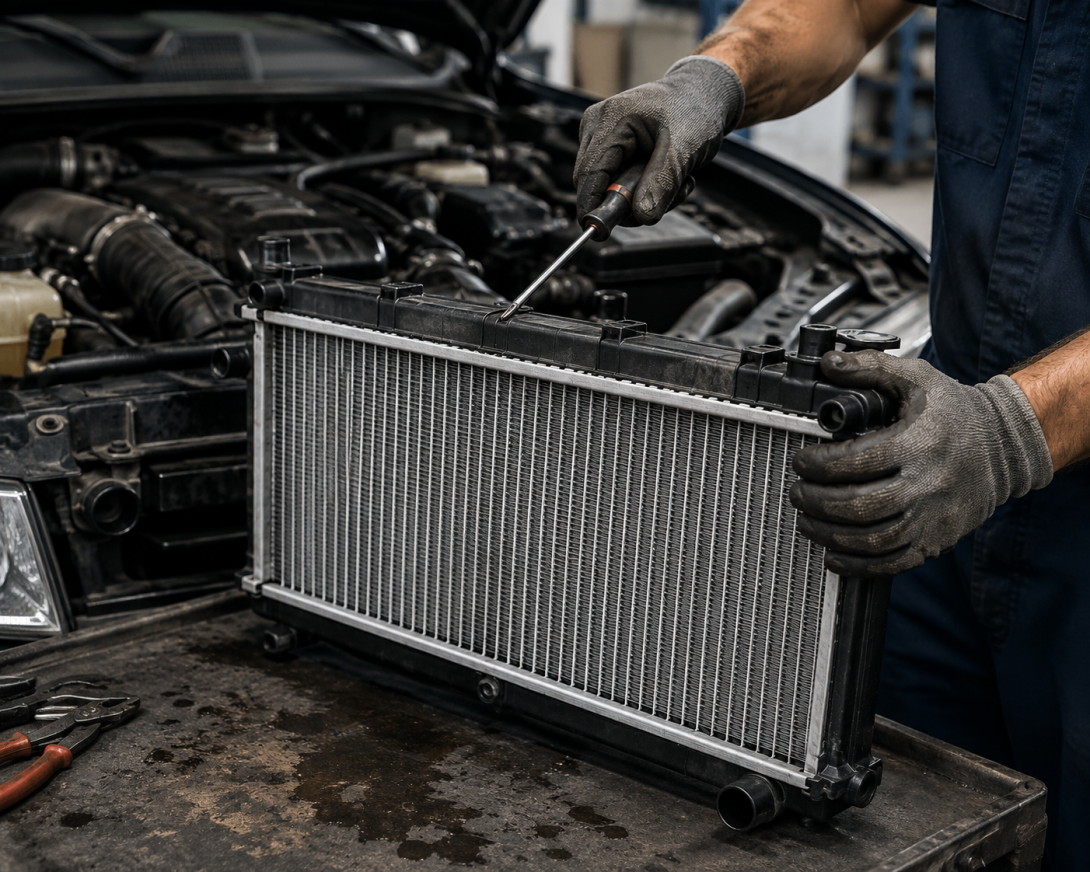
The radiator is an important part of your vehicle’s cooling system. Your engine produces a tremendous amount of heat while it runs. Coolant absorbs some of that heat and carries it away from the engine. The hot coolant then travels through the radiator, where air passing through the radiator fins helps lower its temperature.
After being cooled, the coolant returns to the engine and the process starts again. This continuous cycle keeps the engine operating within a safe temperature range.
When the radiator develops a leak, the cooling system may lose coolant faster than it can circulate it. As the coolant level drops, the engine has a harder time getting rid of excess heat.
Can You Drive With a Radiator Leak?
The short answer is it depends on the size and location of the leak, but driving with a radiator leak is generally not safe.
A very small leak may not cause immediate overheating. You might be able to drive a short distance to a repair shop if the temperature gauge remains normal and the coolant level is maintained. Even then, there is no guarantee that the leak will remain small.
A leak can become worse as the engine heats up and the cooling system builds pressure. A damaged radiator hose, cracked plastic tank, corroded radiator core, or loose connection can suddenly release a large amount of coolant.
Once that happens, the engine temperature can rise quickly.
For that reason, a radiator leak should be treated as a problem that needs attention rather than something to monitor indefinitely.
What Happens If You Keep Driving?
Continuing to drive with a leaking radiator can create several problems. The most serious is engine overheating.
When coolant becomes too low, the engine loses an important source of temperature control. Excessive heat can damage components such as the head gasket, cylinder head, pistons, and other internal engine parts.
In severe cases, an overheated engine can suffer major mechanical damage and may require an expensive rebuild or replacement.
There are also other concerns. Coolant can leak onto belts, electrical components, or other areas under the hood. A large puddle of coolant may create a slippery surface if it reaches the road. In addition, an overheated vehicle can leave you stuck in traffic or far from home.
A repair that might have involved a radiator hose or radiator itself can become much more expensive if overheating causes secondary engine damage.
Warning Signs of a Radiator Leak
Not every radiator leak is immediately obvious. Knowing the common warning signs can help you catch the problem early.
1. Coolant Under the Vehicle
One of the easiest signs to notice is a puddle or wet spot beneath the front portion of the vehicle. Coolant can come in different colors depending on the type used, including green, orange, pink, yellow, or blue.
However, color alone should not be used to identify a leak because different manufacturers use different coolant formulas.
2. Rising Engine Temperature
Keep an eye on the temperature gauge while driving. If the needle starts moving higher than its normal position, the cooling system may not be doing its job properly.
A temperature warning light can also indicate a serious issue. If the engine begins overheating, pull over safely and turn it off as soon as possible.
3. Low Coolant Level
If you repeatedly need to add coolant to the reservoir, there is a reason for the loss. Coolant does not normally disappear from a properly functioning cooling system.
Frequent topping off may indicate a radiator leak, damaged hose, failing water pump, faulty radiator cap, or another cooling-system problem.
4. Sweet Smell
Engine coolant often has a noticeable sweet smell. If you smell coolant around the vehicle, particularly after parking, it may indicate a leak.
Be careful around the engine compartment because hot coolant can cause serious burns.
5. Steam or Vapor
Steam coming from under the hood is a major warning sign. It can happen when coolant contacts hot engine components or when the cooling system becomes severely overheated.
Never remove the radiator cap while the engine is hot. The system can be pressurized, and hot coolant may spray out.
Common Causes of Radiator Leaks
Radiators can leak for several reasons. Age is one of the most common. Over time, metal components can corrode, while plastic radiator tanks can become brittle and crack.
Physical damage can also cause leaks. A radiator is positioned toward the front of the vehicle, making it vulnerable to road debris, minor impacts, and other forms of damage.
Loose or damaged connections are another possibility. Radiator hoses can become hardened, swollen, cracked, or weakened with age. Clamps may also loosen or fail to provide a proper seal.
Excessive cooling-system pressure can contribute to leaks as well. A faulty radiator cap or another cooling-system problem may prevent pressure from being regulated correctly.
In some situations, the radiator itself is not the source of the coolant loss. A professional inspection can help identify the exact location instead of replacing parts unnecessarily.
What Should You Do If Your Radiator Is Leaking?
If you notice a coolant leak, first find a safe place to stop. Turn off the engine and allow it to cool before checking the coolant level.
Do not open the radiator cap while the engine is hot. Wait until the engine has cooled completely before inspecting the system.
If the leak is significant, the temperature gauge is high, or steam is coming from under the hood, avoid driving the vehicle. Having it towed is usually safer than risking severe engine damage.
If the leak appears minor and the vehicle is not overheating, you may be able to drive a short distance to a repair facility. Even in that situation, keep the trip as short as possible and stop immediately if the temperature starts rising.
How Is a Radiator Leak Diagnosed?
A proper inspection involves more than simply looking for a puddle. A technician may examine the radiator, hoses, clamps, reservoir, radiator cap, water pump, and other cooling-system components.
A pressure test can be useful for locating leaks that are difficult to see when the engine is cold. The system is pressurized under controlled conditions, allowing coolant to escape from a weak point.
The technician may also check the condition of the coolant and look for signs of corrosion or contamination.
Finding the actual source of the leak is important because replacing the radiator will not solve the problem if the coolant is escaping from a hose, connection, water pump, or another component.
How to Prevent Radiator Problems
Regular cooling-system maintenance can reduce the chance of unexpected trouble. Check your coolant level according to the vehicle manufacturer's recommendations and use the correct coolant type for your vehicle.
During routine maintenance, inspect hoses and connections for cracking, swelling, or other visible damage. Pay attention to changes in the temperature gauge and investigate any unexplained coolant loss.
It is also important to follow the manufacturer's recommended coolant replacement schedule. Old coolant can lose some of its protective properties, increasing the risk of corrosion and other cooling-system problems.
Do not ignore small leaks simply because the car continues to run normally. A minor leak can worsen without much warning.
When Should You Stop Driving Immediately?
There are several situations where continuing to drive is not worth the risk. Stop the vehicle if the temperature gauge reaches the overheating range, a temperature warning appears, steam comes from under the hood, or you notice a large amount of coolant leaking.
You should also stop if the engine begins running unusually rough or you notice strange noises along with rising temperatures.
Once safely parked, switch off the engine and allow it to cool. If you are unsure about the vehicle's condition, arrange for professional assistance rather than attempting to drive farther.
Frequently Asked Questions
Can a radiator leak cause an engine to overheat?
Yes. A radiator leak can reduce the amount of coolant available to remove heat from the engine. If enough coolant is lost, the engine may overheat and suffer serious damage.
How long can I drive with a small radiator leak?
There is no reliable time or mileage limit. A small leak can become significantly worse as the cooling system heats up and builds pressure. If possible, have the vehicle inspected as soon as you notice the problem.
Can I temporarily fix a radiator leak?
Some products are marketed as temporary leak sealers, but they are not a dependable substitute for proper diagnosis and repair. They may also create additional problems in some cooling systems. A professional inspection is the safer approach.
Is it expensive to fix a radiator leak?
The cost depends on the source of the leak. A damaged hose or clamp may be relatively simple to replace, while a cracked radiator or damage caused by overheating can require more extensive work.
Can I add water instead of coolant?
In an emergency, water may help temporarily prevent the coolant level from becoming dangerously low, but it should not be considered a permanent solution. The correct coolant mixture should be restored according to the vehicle manufacturer's specifications.
What should I do if my car overheats because of a radiator leak?
Pull over safely, turn off the engine, and allow it to cool. Do not remove the radiator cap while the engine is hot. If the leak is severe or the vehicle continues to overheat, arrange for professional assistance.
Final Thoughts
A radiator leak is not something to ignore simply because your vehicle still starts and drives normally. Losing coolant can quickly affect engine temperature, and overheating can cause damage that is far more serious than the original cooling-system problem. Paying attention to coolant loss, temperature changes, puddles, unusual smells, and steam can help you catch trouble early. If you notice any of these warning signs, getting the vehicle inspected promptly can save you from a breakdown and costly engine damage. When the cooling system needs attention, timely radiator repair is one of the best ways to keep your vehicle running safely and reliably.