
You download a fitness app, follow its suggested workouts for a week, and feel motivated by the progress tracker. Then work gets busy, a session gets skipped, and the reminders become easier to ignore.
For NYC residents trying to maintain a consistent fitness routine, this raises an important question: is a workout app enough, or would live virtual personal training provide more useful support?
Neither option is automatically better. The right choice depends on how independently you exercise, how much guidance you need, and which obstacles repeatedly interrupt your progress.
What Workout Apps Do Well
Workout apps can be convenient tools for people who already understand basic exercises and enjoy managing their own schedules.
Many offer exercise demonstrations, suggested routines, workout logs, reminders, and progress-tracking features.
Some also provide adaptable plans, although the level of personalization varies significantly by product.
Research on gamified health applications has found modest improvements in certain physical activity measures compared with applications without gamification features.
That suggests digital tools can offer genuine value. However, the findings don't establish that any particular app guarantees lasting exercise adherence.
The useful question is whether an app's features address the reasons you struggle to exercise.
When App Reminders Aren't Enough
A missed workout doesn't always happen because someone forgot to exercise.
A Brooklyn professional might know exactly when their session is scheduled but feel uncertain about choosing appropriate weights. Someone else might repeatedly restart programs because workouts become too demanding.
In these situations, another reminder may not solve the underlying problem.
Try identifying what happens immediately before you skip a session.
Are workouts too long? Do you find certain exercises confusing? Is your schedule unpredictable? Are you unsure whether you're making progress?
Your answers can help determine whether you need better planning, clearer instructions, or ongoing coaching.
How Live Virtual Training Differs
Live coaching adds a scheduled interaction with another person.
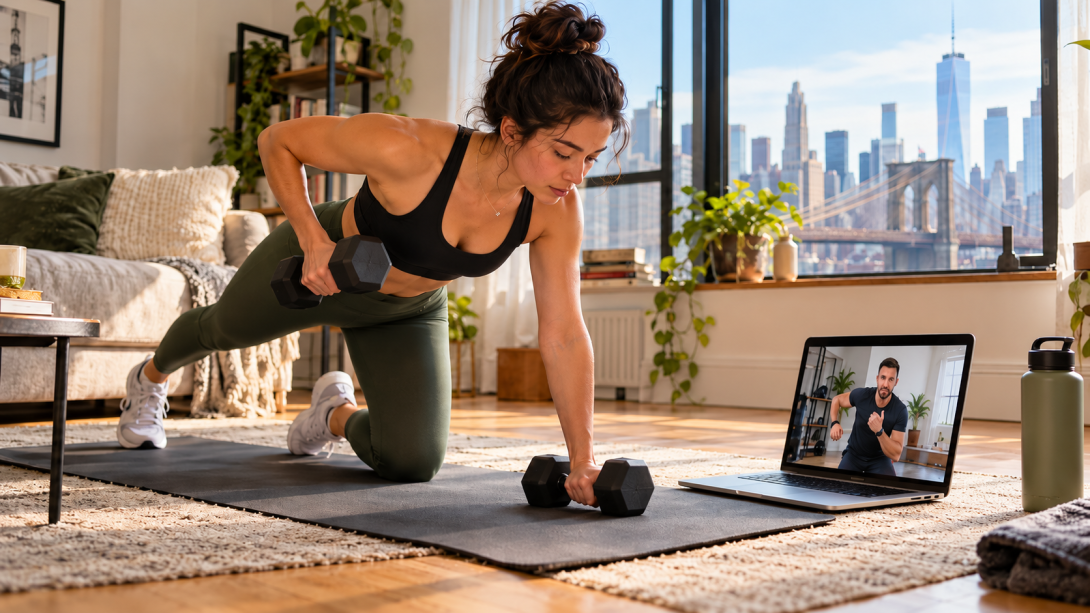
Unlike prerecorded workouts, live one-to-one virtual personal training allows a trainer to observe movements through video, explain exercises, answer questions, and make adjustments during the session. This provides individualized interaction while allowing clients to exercise using their available space and equipment.
That doesn't guarantee better results. Screen visibility, internet quality, trainer expertise, and communication all influence the experience.
However, it creates opportunities for feedback that a standard prerecorded video cannot provide during the session.
Consider Your Need for Personalization
Not everyone requires extensive exercise modifications.
Someone comfortable with strength training may prefer an app that tracks sets, repetitions, and gradual increases in resistance.
A beginner with limited exercise experience may need more explanation about movement technique, selecting suitable exercises, and adjusting intensity.
People with injuries or medical conditions may require assessment by an appropriate healthcare professional before following either format.
A useful training plan should reflect individual ability and goals rather than assume everyone can follow identical progression.
This distinction matters more than whether the program is delivered through a phone or laptop.
Accountability Means More Than Booking a Session
A scheduled appointment can provide useful structure, but sustainable exercise habits also depend on realistic expectations.
If a person regularly misses sessions because of long commutes or changing work hours, scheduling the same inconvenient appointment every week may not help.
Instead, choose training times that match the hours you can actually protect.
Set a reasonable weekly target and review it after several weeks.
If your routine repeatedly becomes unmanageable, adjust its duration or frequency rather than interpreting every missed workout as a lack of discipline.
When Combining Coaching and Technology Makes Sense
Apps and live coaching aren't mutually exclusive.
Some people use an app to record workouts and monitor progression while receiving periodic guidance from a trainer.
Others combine an in-home personal trainer with independent workouts between appointments. The trainer visits the client's home and adapts the session to their equipment, available space, and individual goals. For Manhattan residents, this offers another coaching format without requiring gym visits.
The important factor is ensuring that the activities between coached sessions remain appropriate to your fitness level.
Using more technology doesn't automatically create a better program.
How to Choose the Right Format
Before committing, ask what the service includes.
Before choosing, check whether the program includes live instruction, individualized exercise adjustments, progress reviews, and suitable scheduling options. If considering an app, determine whether it adapts your training or primarily provides prerecorded routines.
Compare the answers with your actual needs and budget.
An inexpensive app you use consistently may be more valuable than coaching you rarely attend. Conversely, guidance may be worthwhile when uncertainty repeatedly prevents you from exercising.
Final Thoughts
The difference between workout apps and live virtual training isn't simply technology versus personal attention.
It's how much structure, feedback, and independent decision-making you need.
Choose the format that addresses your biggest obstacle, fits your schedule, and helps you follow a realistic exercise plan.