

A beautiful, confident smile can shape a child’s self-esteem for years to come. Today, orthodontic technology has evolved far beyond the days of bulky metal braces. One of the most popular modern alternatives is Invisalign, a clear aligner system designed to correct alignment and bite issues discreetly. Parents are increasingly exploring Invisalign for their children because it combines effective results with comfort and convenience. But is it really the right choice for young patients? Let’s explore expert orthodontist insights and essential care tips for Invisalign treatment in children.
Understanding Invisalign for Kids
Invisalign is an advanced orthodontic treatment that uses custom-made, transparent aligner trays to gradually move teeth into their correct positions. Made from smooth, BPA-free plastic, these aligners are comfortable and nearly invisible, making them a popular choice for children and parents alike.
For younger patients, Invisalign First is designed specifically for growing mouths, addressing early orthodontic concerns. It is suitable for children typically aged seven or older, depending on individual assessment by an orthodontist.
Key features include:
- Gentle, consistent pressure to guide tooth movement
- Sets of aligners replaced every 1–2 weeks
- Corrects spacing, crowding, and bite issues
- Less invasive and more comfortable than traditional braces
This approach ensures effective treatment while maintaining a child-friendly experience.
Why Parents Choose Invisalign for Children
Parents often prefer Invisalign because of its unique combination of practicality and aesthetics. Clear aligners blend effortlessly into the child’s natural smile, allowing them to feel more confident in school and social settings. But there’s more to Invisalign than just appearance.
Benefits include:
- Enhanced comfort: Smooth trays eliminate the irritation caused by wires and brackets.
- Ease of cleaning: Since aligners are removable, children can brush and floss normally, maintaining better oral hygiene.
- No food restrictions: Kids can enjoy all their favourite foods without worrying about damaging braces.
- Fewer appointments: Invisalign requires fewer adjustments than traditional orthodontic systems.
Quick Tip: Invisalign aligners need to be worn for 20–22 hours daily to achieve optimal results. Consistency is key to a successful treatment outcome.
Orthodontist Insights: Is Invisalign Right for Every Child?
While Invisalign provides many benefits, it may not be suitable for every child. An orthodontist Salford evaluates each patient carefully before recommending treatment to ensure effectiveness and safety. Children need sufficient dental maturity and responsibility to wear aligners consistently, as irregular use can reduce results.
Considerations include:
- Compliance: Aligners must be worn as prescribed
- Case complexity: Severe misalignment or jaw discrepancies may need traditional braces
- Individual assessment: Orthodontist determines suitability based on dental needs
A thorough consultation ensures that the chosen treatment whether Invisalign or another option best addresses the child’s orthodontic requirements.
Comparing Invisalign with Traditional Braces
The table below highlights the key differences between Invisalign and conventional braces, helping parents understand why many families lean towards clear aligners for their children.
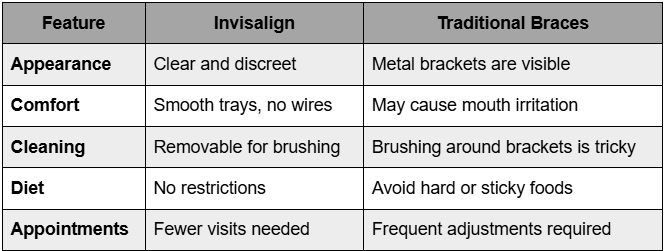
Both systems achieve excellent results, but the experience differs. Invisalign focuses on flexibility and comfort, while braces may offer more control in complex corrections.
Caring for Aligners: Orthodontist-Approved Tips
Proper care is essential to maintain aligner hygiene and effectiveness. Parents and children should follow these practical steps:
- Clean aligners daily using a soft toothbrush and lukewarm water never hot water, as it can warp the plastic.
- Store aligners safely in their case when not being worn to prevent loss or damage.
- Avoid eating or drinking anything except water while wearing them, as coloured or sugary drinks can stain trays.
- Rinse after meals before reinserting aligners to prevent bacteria buildup.
By teaching children to follow these steps, parents can help them develop responsible dental care habits early on.
Managing Discomfort and Common Challenges
Like all orthodontic treatments, Invisalign can cause mild discomfort particularly when switching to a new set of aligners. This is a sign that the treatment is working, as gentle pressure helps teeth shift into position.
Common adjustment tips include:
- Encourage soft foods like mashed potatoes, soups, or yoghurt for the first few days.
- Reassure your child that mild tightness is temporary and typically subsides within 48 hours.
- Orthodontists can recommend relief wax or gels to reduce gum sensitivity if needed.
If pain persists or aligners crack or warp, an emergency dentist in Salford should be contacted immediately. Prompt care ensures the treatment stays on track and prevents unnecessary discomfort.
The Role of Parental Support
Parental involvement is a major factor in the success of Invisalign treatment for children. Parents should monitor daily wear time and remind children to keep their aligners in place for the required duration.
Ways to support your child include:
- Using smartphone reminders or apps to track wear time.
- Encouraging positive reinforcement when they follow the routine.
- Supervising oral hygiene to make sure aligners are cleaned properly.
- Staying in touch with the orthodontist to track treatment progress.
A supportive environment ensures that children remain consistent, motivated, and excited about their smile transformation.
When to Consult an Orthodontist
Experts recommend that children have their first orthodontic assessment by around age seven. Early evaluation helps identify potential issues before they worsen, making treatment more effective.
Signs that warrant a consultation with an orthodontist Salford include:
- Crowding or misaligned teeth
- Difficulty chewing or biting
- Thumb-sucking habits
- Irregular tooth eruption
In certain situations, an emergency dentist in Salford may be involved if orthodontic problems lead to pain, swelling, or broken appliances. Coordinated care between dental professionals ensures that young patients receive timely, safe, and appropriate treatment, supporting healthier smiles and more successful long-term orthodontic outcomes.
Conclusion
Invisalign offers a modern, comfortable, and discreet orthodontic solution for children who want a beautiful smile without the inconvenience of traditional braces. With proper guidance, consistent care, and the support of both parents and professionals, young patients can enjoy effective results and long-term confidence. For families seeking personalised orthodontic care that prioritises comfort and convenience, Salford provides trusted professionals ready to help every child smile brighter.