

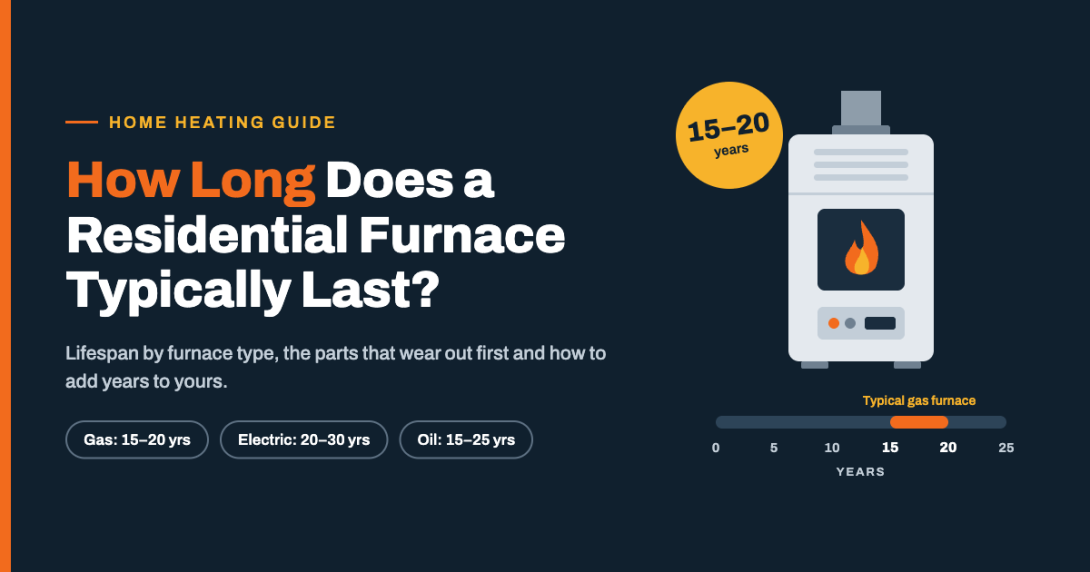
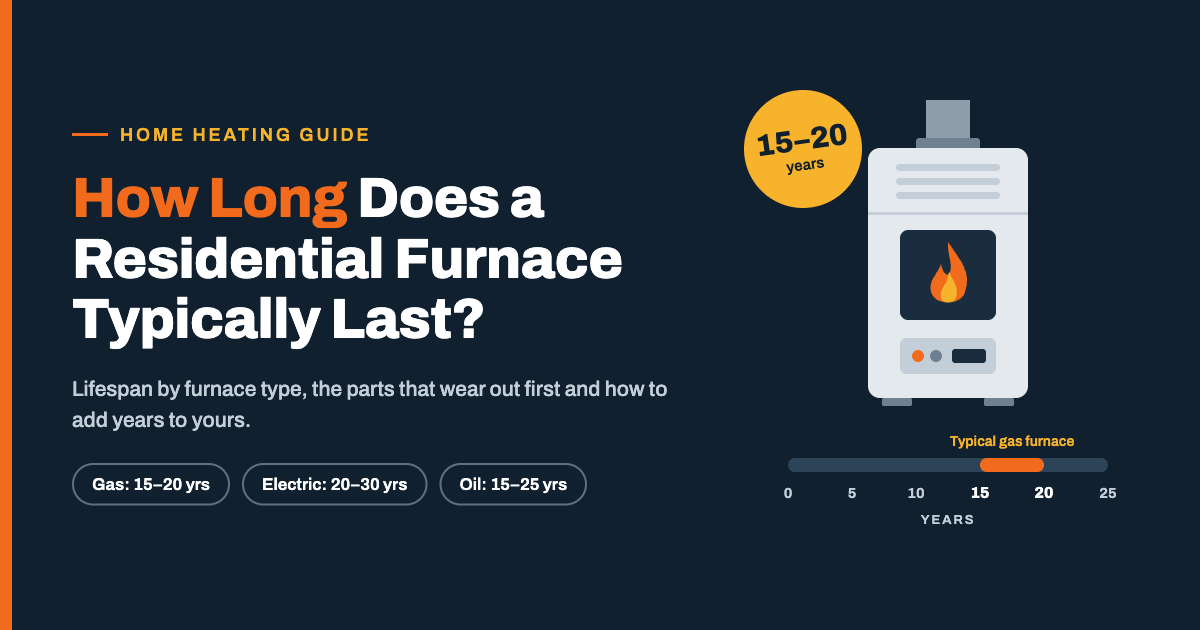
A residential gas furnace typically lasts 15 to 20 years, according to the U.S. Department of Energy. Electric furnaces often last longer, around 20 to 30 years, because they have no burners or combustion stress. With yearly maintenance, a well-installed furnace can reach the top of its range; with neglect, it may fail years early.
Knowing roughly where your furnace sits in that lifespan helps you budget, plan a replacement on your own terms, and avoid a breakdown on the coldest night of the year.
Furnace Lifespan by Type
How long your furnace lasts depends first on what kind it is.
Furnace type
Typical lifespan
Why
Electric furnace
20–30 years
No flame, no combustion byproducts, fewer moving parts
Natural gas furnace (standard, ~80% AFUE)
15–20 years
Heat exchanger slowly fatigues from heating and cooling cycles
High-efficiency condensing gas furnace (90%+ AFUE)
15–20 years, longer with care
Acidic condensate needs a clean drain and good maintenance
Oil furnace
15–25 years
Burns dirtier, so it needs more frequent cleaning to reach the upper range
To find your furnace's age, look at the data plate inside the furnace door. The manufacture date is often coded into the serial number, and most brands explain how to read it on their websites.
What Shortens or Extends a Furnace's Life
Two identical furnaces can reach very different ages. These five factors make the biggest difference.
- Installation quality. A correctly sized furnace with proper venting and gas pressure runs in long, steady cycles. An oversized unit turns on and off constantly, which wears out parts faster.
- Annual maintenance. A yearly tune-up catches dirty burners, weak igniters and failing motors before they cause bigger damage.
- Air filter habits. A clogged filter makes the blower work harder and lets the heat exchanger run hotter than designed.
- Ductwork condition. Leaky or undersized ducts force the furnace to run longer to heat the same space.
- Climate and runtime. A furnace in a cold, long heating season simply runs more hours each year than one in a mild climate.
Parts Wear Out Before the Furnace Does
A furnace is not one part that lasts 15–20 years. It is a set of parts that wear out on their own schedules. Replacing a worn part is often a normal repair, not a sign the whole system is finished.
Cracks, soot, rust, carbon monoxide risk
The heat exchanger is the one to watch. When it cracks on an older furnace, replacement of the whole unit is usually the safer and more cost-effective choice.
Why Altitude Matters for Furnaces in Aurora
Aurora sits more than a mile above sea level, and that changes how a gas furnace burns.
Thinner air holds less oxygen per cubic foot, which shifts the balance of air and fuel inside the burners. According to ACHR News, most gas furnaces need their input reduced, or "derated," by about 4% for every 1,000 feet above 2,000 feet, though some newer models need less. A furnace that is not set up for altitude can overfire, burn with a sooty flame and produce more carbon monoxide.
Over years, that extra strain can shorten a furnace's life. Long, cold heating seasons along the Front Range add runtime too. If your furnace was installed by someone unfamiliar with high-altitude setup, ask your technician to confirm the gas pressure and orifice sizing at the next tune-up.
Signs Your Furnace Is Nearing the End
Age alone does not mean a furnace has to go. These signs, especially on a furnace past 15 years, suggest it is close:
- Repairs are needed every heating season
- Heating bills keep rising while your usage stays the same
- Some rooms stay cold no matter the thermostat setting
- A yellow, flickering flame or soot around the burners
- Rust, cracks or water around the cabinet
- A carbon monoxide alarm, which means leaving the home first
If you notice two or more, have the system inspected before winter. For homeowners searching for a furnace repair service Aurora residents rely on, the most useful request is simple: ask for a full safety inspection, including a combustion test and a heat exchanger check, plus an honest estimate of how many years the furnace has left. That gives you facts to decide between a repair and a planned replacement.
How to Help Your Furnace Last Longer
- Replace the air filter every 1–3 months during the heating season.
- Book a professional tune-up every autumn, before the first cold snap.
- Keep supply vents and return grilles open and unblocked.
- On a high-efficiency furnace, check that the condensate drain line flows freely.
- Keep the area around the furnace clear of storage, paint and chemicals.
- Install carbon monoxide detectors near sleeping areas and test them twice a year.
- Use a programmable or smart thermostat to avoid constant on-off cycling.
Frequently Asked Questions
Can a furnace last 30 years?
Some do, especially electric furnaces and well-maintained gas units. But a 30-year-old gas furnace is usually far less efficient than a modern one and carries a higher risk of heat exchanger cracks.
What is the most common reason a furnace dies early?
Poor maintenance and clogged filters top the list, followed by an oversized unit or a poor installation.
Does a high-efficiency furnace last longer than a standard one?
Not necessarily. Lifespans are similar, but condensing furnaces depend on a clean condensate drain and regular servicing to reach their full life.
Do furnace rules change in 2028?
Yes. From December 18, 2028, new U.S. residential gas furnaces must meet a 95% AFUE minimum. This does not require you to replace a working furnace, but your next one will likely be a condensing model.
How do I know how old my furnace is?
Check the data plate inside the furnace door for a manufacture date or serial number, or ask a technician to look it up during your next service.