
Excavation work can move fast. Crews dig, install pipe, and backfill in tight time frames. But one risk always stays the same—soil collapse.
That is why trench safety equipment matters.
Tools like shoring boxes, trench boxes for rent, and overhead crane systems help crews work faster while keeping workers safe. These systems support trench walls, help move heavy gear, and make job sites run smoother.
Let’s break down why they matter and how they help contractors every day.
The Real Risk Inside a Trench
The trench appears stable because it stays intact for multiple hours. The trench remains in danger because soil can shift at any moment. Trench walls become weaker when water enters the ground and traffic passes by and heavy machinery operates nearby. The wall failure leads to soil collapse which happens within seconds. Workers inside the trench have little time to react. Workers must use trench protection systems because they need to keep their workplace safe. Workers must use proper trench protection systems which become necessary when they excavate to specific trench depth requirements. The equipment which includes trench shields and hydraulic shoring systems protects workers inside the trench by preventing cave-ins. The project and crew remain protected through correct equipment usage.
What Are Shoring Boxes?
Shoring boxes are strong metal structures which operators use for trench work. The structures function as protective barriers which enable workers to complete their pipe and cable and drainage system installations.
Think of them as a shield.
Excavation work continues around the box which protects workers standing inside it. The box takes the entire load when the trench wall shifts because it protects the crew from danger.
The construction of modern shoring systems requires high-strength steel and aluminum materials. The systems contain hydraulic supports which push against trench walls to prevent soil movement.
The systems find usage in projects which include these activities:
- Sewer line repairs
- Water main work
- Gas line installation
- Fiber and utility trenching
Trench protection becomes necessary because an ordinary repair without it can create hazardous conditions.
Why Many Contractors Choose Trench Boxes for Rent
Buying trench equipment can be expensive. Not every contractor needs it every day.
That is why many companies look for trench boxes for rent.
Rental options make sense for several reasons.
Lower Cost
Large trench shields are heavy steel structures. Buying several sizes can cost a lot. Renting allows contractors to get what they need only when the job requires it.
Access to the Right Size
Trenches come in many shapes and depths. Rental providers often carry a wide range of box sizes and styles. This helps contractors match equipment to the project.
No Storage Problems
Trench shields take up space. When the job ends, rental units go back to the supplier. Crews do not need large storage areas.
Quick Job Planning
Rental companies have the capability to deliver equipment directly to job sites. The delivery system enables workers to complete their tasks without interruptions. The majority of contemporary trench shields include lifting lugs and stacking systems as standard features. The design of these features enables machines and cranes to safely lift and move the boxes.
Different Types of Trench and Shoring Systems
Not every trench needs the same type of support. Contractors often choose equipment based on soil type, trench depth, and pipe size.
Here are a few common options.
Steel Trench Boxes
Steel boxes are heavy and strong. They work well in deep trenches or large utility projects.
They also handle repeated use on busy construction sites.
Aluminum Trench Boxes
Aluminum shields are lighter. Smaller crews can move them more easily.
Some modular aluminum systems can even be assembled by two workers, which makes them ideal for quick repair jobs.
Hydraulic Shoring Systems
Hydraulic systems use pressurized cylinders to push against trench walls.
They install from the top of the trench, so workers do not need to enter an unprotected area during setup.
This adds an extra layer of safety.
How Overhead Crane Systems Improve Job Sites
Trench equipment is heavy.
Some shields weigh several thousand pounds. Moving them by hand is not possible.
This is where overhead crane systems come in.
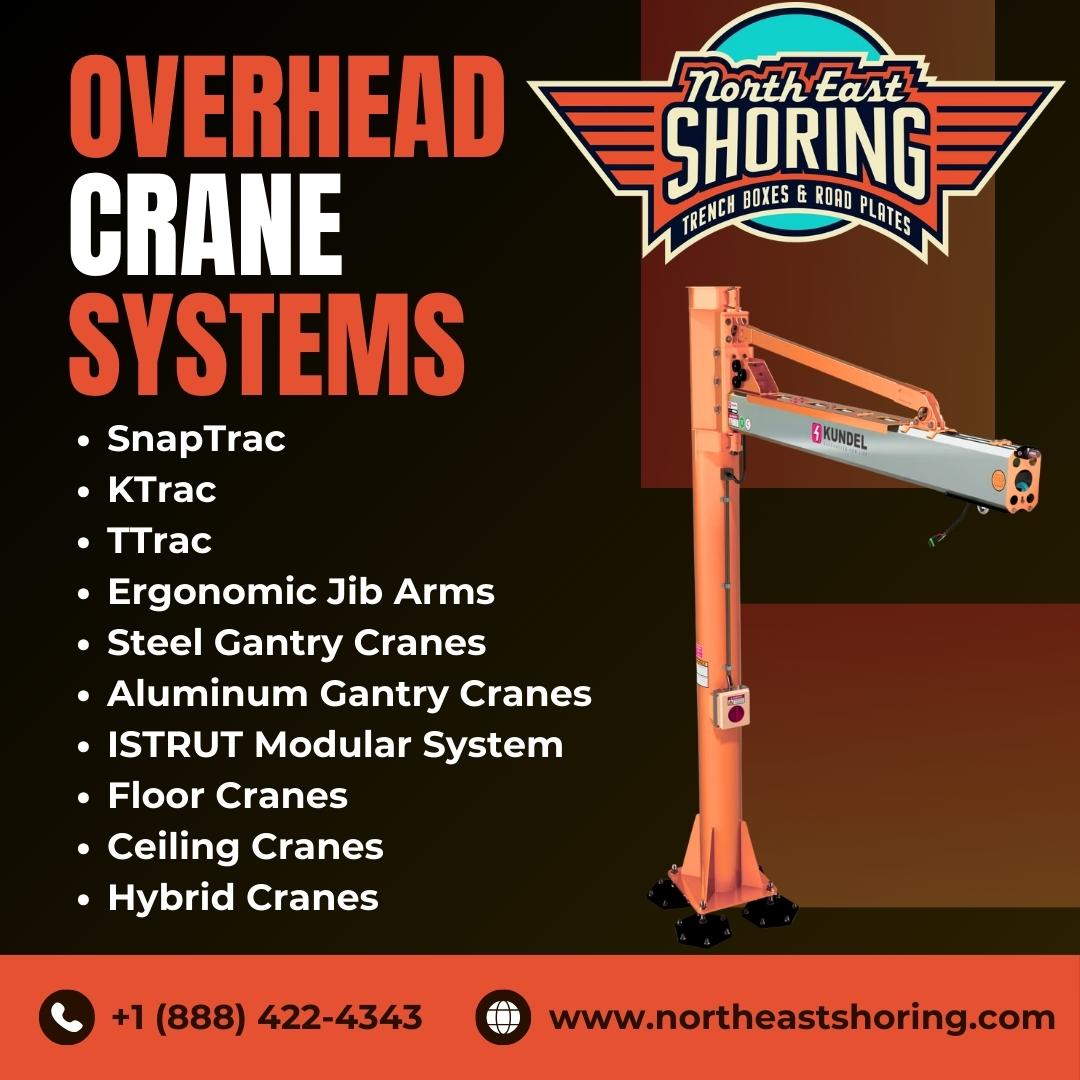
These cranes help lift, position, and remove trench boxes safely. They also help transport steel plates, pipes, and other heavy materials.
Using cranes offers several advantages.
Faster Setup
Cranes can lower trench boxes directly into place. This saves time during installation.
Less Manual Labor
Workers do not need to struggle with heavy equipment. The crane handles the load.
Safer Lifting
Controlled lifting reduces the chance of dropped materials or injuries.
Some equipment manufacturers even build crane systems designed to work with trench safety tools. These cranes improve efficiency across the entire job site.
Better Safety Means Better Productivity
Some contractors think safety equipment slows down a project.
The opposite is usually true.
When crews use proper trench protection:
- Workers feel safer inside the trench
- Projects pass inspections faster
- Work continues without shutdowns
- Job delays are less likely
A trench collapse can stop a project for days or even weeks. Proper equipment keeps work moving forward.
Safety tools are not just protection—they are part of a smart work plan.