

If you’ve spent any significant time behind the wheel of a lifted 4x4, you know the sensation: you hit a pothole or a rock, and the steering wheel jerks in your hands. On the highway, the truck feels "darty," requiring constant correction. On the trail, your steering linkage hangs low like a target for every boulder in your path.
These aren't just quirks of a lifted vehicle—they are symptoms of compromised steering geometry. For those running the legendary Dana 44 axle, the solution is a professional-grade Dana 44 high steer kit.
In this comprehensive guide, we will break down why high-steer and crossover conversions are the most impactful upgrades you can make to your front end. We’ll cover the engineering behind the components, compatibility across Jeep, Chevy, and Ford platforms, and why settling for anything less than Dana 44 steering parts USA made is a risk you shouldn't take on the rocks.
The Core Problem: Why Stock Steering Fails Post-Lift
When a vehicle is manufactured, the steering geometry is designed to work at a specific ride height. The drag link (which connects the steering box to the wheels) and the track bar (which centers the axle) are engineered to be parallel.
When you install a 4-inch, 6-inch, or even larger suspension lift, these angles become extreme.
1. The Geometry Gap (Bump Steer)
As the drag link angle steepens, its effective length changes as the suspension travels up and down. This causes the axle to "steer itself" when you hit a bump, a phenomenon known as bump steer. It’s not just annoying; at highway speeds, it’s dangerous.
2. Tie Rod Vulnerability
In a factory Dana 44 setup, the tie rod typically sits below the leaf springs or low on the knuckles. When you’re navigating deep ruts or rock gardens, this bar is the first thing to make contact with obstacles. A bent tie rod ruins your "toe-in" alignment and can leave you stranded with tires pointing in opposite directions.
3. Binding and Stress
Extreme angles put immense pressure on tie rod ends (TREs). Instead of pushing and pulling the wheels side-to-side, the drag link starts pushing "down" on the knuckle, leading to premature wear and potential failure of the steering box.
Defining the Solution: Crossover vs. High Steer
Before you buy Dana 44 knuckles online, it’s vital to understand which setup your rig requires.
Crossover Steering
Crossover steering is the first level of correction. It involves moving the drag link from its factory location to a new, higher mounting point on top of the passenger-side knuckle. This "crosses" the drag link over the axle, allowing for a longer bar and a much flatter angle.
High Steer
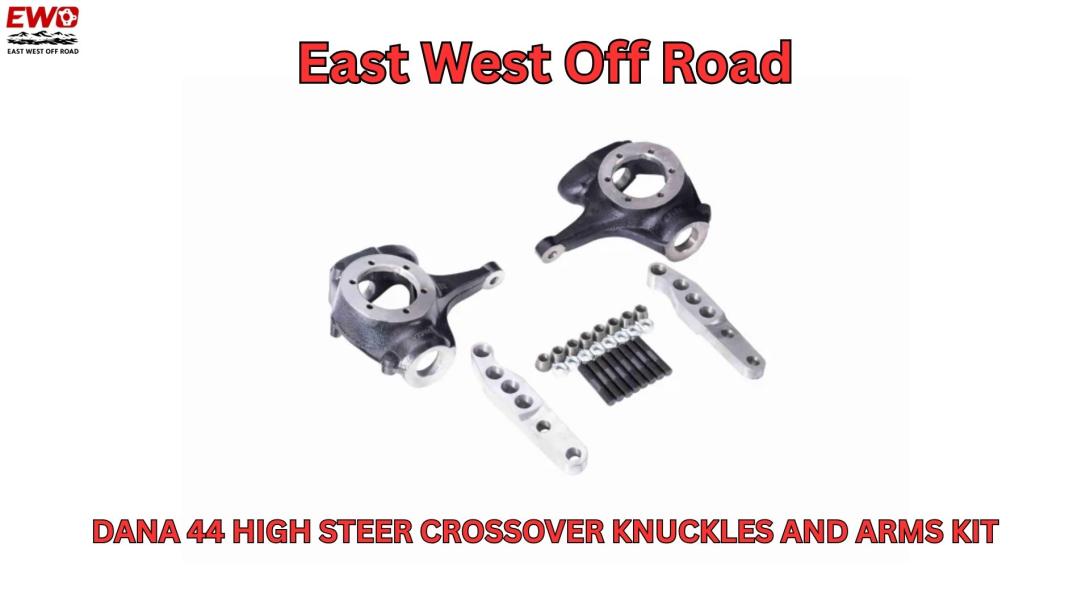
A full high steer Dana 44 kit goes a step further. It moves both the drag link and the tie rod to the top of the knuckles. This requires two high-steer arms and specialized knuckles.
Why choose High Steer?
- Total Protection: Your tie rod is moved above the springs/axle, safe from rocks.
- Perfect Geometry: It allows the drag link and track bar to return to a parallel state.
- Maximum Clearance: Essential for rock crawling where every inch of under-axle clearance counts.
Anatomy of a Premium Dana 44 Complete Steering Kit
Not all kits are created equal. A high-performance kit should be viewed as a system, not just a collection of parts. When looking for Dana 44 knuckles for sale, ensure the following components meet heavy-duty standards:
1. Heavy-Duty Steering Knuckles
Replacement knuckles are the foundation. Most stock knuckles aren't "flat-top," meaning they lack the machined surface necessary to bolt on a high-steer arm. Aftermarket knuckles are cast from high-strength ductile iron, which is significantly more resilient than the gray iron used in OEM parts.
2. CNC Machined High Steer Arms
These arms bolt to the top of the knuckles. They must be precision-machined to ensure the mounting surface is perfectly flat. Any "rocking" or gap between the arm and the knuckle will eventually lead to sheared mounting studs.
3. Chromoly Studs and Cone Washers
This is where many budget kits fail. Because the steering arm is subjected to massive shearing forces, you cannot use standard bolts. A Dana 44 complete steering kit must utilize high-tensile Chromoly studs and specialized cone washers that "lock" the arm to the knuckle, preventing any lateral movement.
4. Steering Linkage (Tie Rod & Drag Link)
The links themselves should be made from heavy-wall DOM (Drawn Over Mandrel) tubing or solid 7075 aluminum to resist bending.
Component
Standard/Budget
Professional Grade (East West Offroad)
Knuckle Material
Standard Cast Iron
65-45-12 Ductile Iron
Arm Construction
Cast or Mild Steel
CNC-Machined Billet/Cold Rolled Steel
Fasteners
Grade 8 Bolts
Chromoly Studs with Cone Washers
Compatibility
Limited
Universal 8-bolt/Flat-top Patterns
Vehicle Specifics: Jeep, Chevy, and Ford
The Dana 44 has been used in dozens of configurations over the decades. Your choice of a Dana 44 high steer kit near me depends on your specific axle outers.
Chevy Dana 44 Steering Knuckles
Chevy "Open Knuckle" axles (found in K10, K20, and Blazers) are the most popular candidates for high steer. Many 1970s-era Chevy trucks actually came with "flat-top" knuckles on the passenger side, though they still required machining. Modern Chevy Dana 44 steering knuckles come pre-machined, drilled, and tapped, making the conversion a bolt-on affair.
Dana 44 Jeep High Steer Kit
For the Jeep community (especially those with TJ, XJ, or ZJ swaps), a high steer kit is the only way to maintain road-worthy handling with tires larger than 35 inches. Because Jeeps often use a track bar, the high steer kit must be carefully aligned to ensure the drag link and track bar don't interfere with each other during full suspension cycle.
The Ford High-Pinion "Wedge" Axle
Ford Dana 44s from the 1970s often feature integrated "wedges" for radius arms. High steer kits for these axles must account for the proximity of the coil buckets. Using Dana 44 crossover steering knuckles is often the best way to clear these obstacles while gaining the benefits of modern geometry.
Why "Made in the USA" Matters for Steering
In the off-road industry, there is a dangerous trend of "white-label" steering parts imported from overseas. While they may save you $100 today, the cost of failure on the trail is much higher.
Choosing Dana 44 steering parts USA made ensures:
- Metallurgical Consistency: You know exactly what grade of iron or steel is in your knuckles.
- Precision Tapers: Tie rod ends rely on a specific 7-degree taper. USA-made parts are held to much tighter tolerances, preventing "death wobble" caused by loose joints.
- Accountability: Companies like East West Offroad stand behind their engineering because they wheel the same trails you do.
Installation Strategy: Doing it Right the First Time
Installing a Dana 44 high steer kit is a significant mechanical undertaking. Here is the professional roadmap for a successful install:
1. Preparation and Ball Joints
Since you have to pull the knuckles anyway, always replace your ball joints. The added leverage of high-steer arms and larger tires will quickly expose any weakness in old ball joints.
2. The Machining Myth
Many forum posts suggest you can "DIY" a flat-top knuckle with a hand grinder. Do not do this. The mating surface between the knuckle and the arm must be perfectly flat (within thousandths of an inch). If you don't have a factory flat-top knuckle, it is always safer and cheaper in the long run to buy a dedicated aftermarket knuckle.
3. Torque and Re-torque
After the first 50 miles of driving—and again after your first trail ride—you must check the torque on your high-steer arm studs. As the components "seat" into each other, the tension on the studs can change. A loose steering arm is a recipe for disaster.
4. Steering Stabilizers
With a high steer kit, you can often relocate your steering stabilizer higher up, away from rocks. However, a properly designed high-steer system often reduces the "need" for a stabilizer by fixing the underlying geometry issues that cause wobbles.
Performance Gains: What to Expect
Once you've installed a Dana 44 complete steering kit, the difference is immediate:
- On-Road: The vehicle will track straighter. The "vague" feeling in the center of the steering wheel disappears.
- Off-Road: You can take more aggressive lines over rocks without worrying about your tie rod.
- Turning Radius: By optimizing the drag link length, many users find they regain some of the turning radius lost to oversized tires and lift kits.
Conclusion: Take Control of Your Rig
Your steering is the most critical safety system on your vehicle. If you are struggling with bump steer, vulnerable linkages, or poor handling, a Dana 44 high steer kit is the ultimate solution. By moving your components "high and dry" and correcting your steering angles, you unlock the true potential of your Dana 44 axle.
Whether you're building a dedicated rock crawler or a capable overlander, investing in Dana 44 crossover steering knuckles and USA-made hardware is the smartest move you can make.
Ready to transform your steering?
Shop the Dana 44 High Steer / Crossover Knuckles and Arms Kit at East West Offroad today and drive with confidence.
Technical Support & Inquiries:
Email: info@eastwestoffroad.com
Frequently Asked Questions (FAQs)
1. Does a high steer kit require a dropped pitman arm?
In many cases, no. Because the high steer arm raises the attachment point on the knuckle, you can often go back to a standard (flat) pitman arm, which reduces stress on the steering box sectorshaft.
2. Will this kit work with my 15-inch wheels?
It depends on the "backspacing" of your wheels. Some high steer arms may interfere with the inner lip of a 15-inch wheel if it has deep backspacing. 17-inch wheels generally offer plenty of clearance.
3. Is "High Steer" legal for street use?
Yes, provided the kit is installed correctly with high-quality hardware. In fact, by eliminating bump steer, it makes a lifted vehicle much safer for public roads.
4. Can I use Heim joints instead of Tie Rod Ends (TREs)?
Most high steer arms can be drilled for either. While Heim joints offer more articulation, TREs are generally preferred for street-driven rigs as they have grease seals to protect against road salt and grime.
5. How do I know if I have "flat-top" knuckles?
Look at the top of your passenger-side knuckle. If it has a cast-in "mound" with no flat surface or bolt holes, it is not a flat-top. Aftermarket knuckles are almost always the better choice for a clean install.