

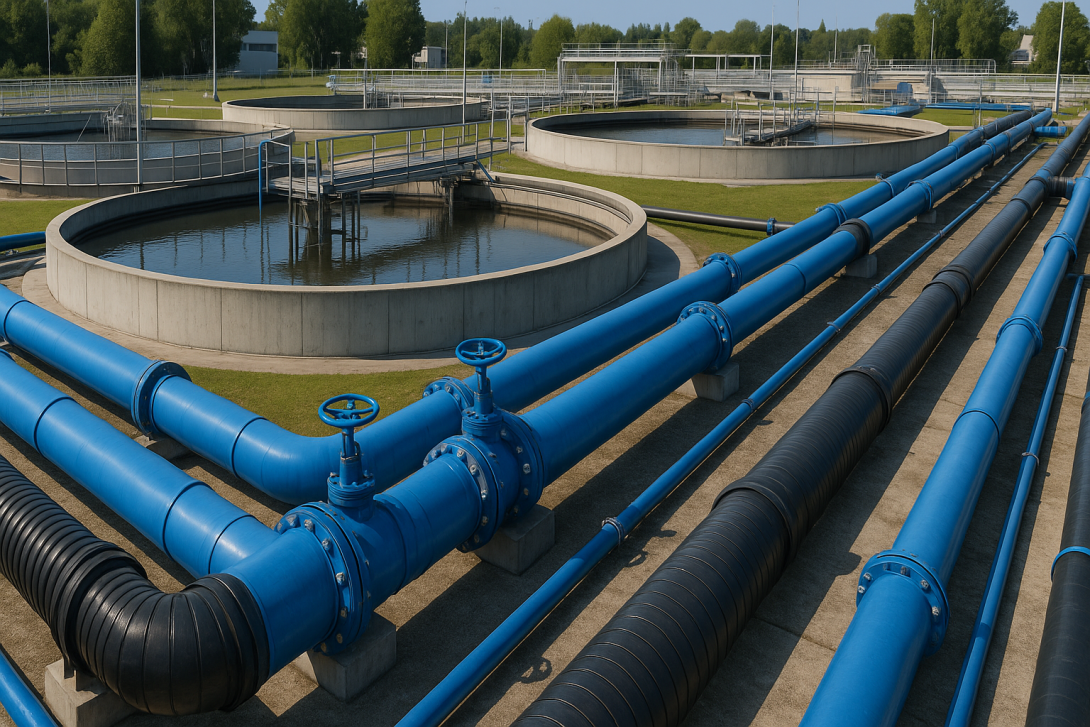
Cities in India are booming and along with the population increase a catastrophic increase in the level of sewage every day. This growth exerts overwhelming strain on already strained and in most cases obsolete sanitation systems within cities which are unable to process daily waste production effectively. Modern Sewage treatment plants are very vital in preserving hygiene to the people, averting sewer overflow, and having the wastewater treated prior to release.
The cities of India are changing their old and energy consuming sewage systems to more advanced and automated and sustainable treatment solutions. The existence of such modern STPs guarantees easier processes, increased efficiency, and the increase in the quality of water. This requires a well-built underground pipeline system, particularly MDPE and HDPE pipelines, which can aid in the transportation of raw sewage and treated water without any leakage or failure. Efficient mdpe pipe installation in India supports safe sewage transfer across cities, while a reliable hdpe pipe service ensures strong, long-life wastewater pipelines in high-pressure zones.
Why Modern STPs Are Critical for Urban Sanitation
Reduced Water Contamination
Modern STPs are effective in assuring that no dangerous pollutants, chemicals, pathogens, and poisonous waste gets into the water bodies and this makes lakes, rivers, and ground water purer.
Lower Risk of Waterborne Diseases
Proper sewage treatment largely minimizes diseases like cholera, dysentery, typhoid, and diarrhoea and all these tendencies are especially prevalent in overpopulated areas.
Supports Smart Cities & AMRUT 2.0
The government programs have necessitated the adoption of new STPs by the city so as to comply with the Urban development and sustainability objectives.
Clean Rivers & Groundwater Protection
Treated water minimizes river pollution such as the Ganga, Yamuna, and Narmada rivers towards long-term ecological health.
How Modern Sewage Treatment Plants Work
Primary Treatment
- Sedimentation tanks remove large solids
- Grit chambers filter sand, plastics, stones
- Removes 30–40% of physical impurities
Secondary Treatment
- Aeration tanks support bacterial decomposition
- Biological digestion breaks down organic waste
- Removes 85–90% of contaminants
Tertiary Treatment
- UV and ozone disinfection for pathogen removal
- Activated carbon and membrane filtration for fine impurities
- Produces high-quality, reuse-ready water
Sludge Management
- Dewatering units reduce moisture
- Sludge converted to compost or fuel
- Ensures safe waste disposal
Advanced Technologies Used in Today’s STPs
MBBR (Moving Bed Biofilm Reactor)
Enhances biological treatment efficiency and requires low maintenance.
SBR (Sequencing Batch Reactor)
Performs aeration, settling, and discharge in cycles—ideal for fluctuating sewage loads.
UV & Ozone Disinfection
Eliminates harmful microorganisms without adding chemicals.
IoT & AI-Based Monitoring
Real-time tracking of flow, BOD, COD, pH levels, and energy consumption.
Energy-Saving Aeration Systems
Reduces electricity consumption and increases oxygen transfer efficiency.
Upgrading old water networks? This tier-2 city water infrastructure goflo solution will transform supply efficiency in growing towns.
Role of MDPE & HDPE Piping in Efficient STP Operations
Why MDPE Pipelines Are Ideal for Sewage Conveyance
- High flexibility
- Leak-proof design
- Suitable for underground movement of sewage
- Strong resistance to chemicals and corrosion
- mdpe pipe installation in india helps build reliable and durable sewage lines across expanding cities
Why HDPE Pipes Are Preferred in High-Pressure Zones
- High-strength design
- Long lifespan (50+ years)
- Handles strong water pressure
- Ideal for STP inflow/outflow pipelines
- A dependable hdpe pipe service ensures continuous and safe wastewater transport
Ensuring Zero Leakage & Smooth Flow
Combined MDPE and HDPE networks support:
- No blockages
- No contamination
- Improved flow of wastewater and treated water
- Minimal repair requirements
Benefits of Modern Sewage Treatment Plants for Cities
Cleaner Drains & Reduced Odor
Modern STPs reduce the foul smell caused by untreated sewage stagnation.
Safe Discharge of Treated Water
Ensures compliance with CPCB norms and protects the environment.
Treated Water Reuse
Suitable for:
- Gardening
- HVAC cooling towers
- Construction work
- Road cleaning
Reduced Sewage Overflow During Monsoons
High-capacity STPs prevent flooding and clogged drains.
Improved Public Health & Urban Hygiene
Cleaner surroundings → better quality of life for citizens.
STPs in India’s Urban Development Mission
Role in Smart City Mission
Every Smart City is required to integrate sustainable sewage networks and modern treatment plants.
Compliance With CPCB Norms
Modern STPs meet strict discharge standards and improve city rankings.
Municipal Adoption of New Technologies
Cities like Delhi, Pune, Hyderabad, Indore, and Surat are rapidly upgrading old STPs.
Conclusion
The Contemporary Sewage treatment plants are fundamental in the provision of hygienic, healthy, and sustainable urban habitation. They are used to treat increasing sewage in the cities, safeguard water bodies, mitigate pollution, and promote population health. Together with modern technologies in the classification of STP, the adoption of durable pipelines based on MDPE and HDPE is essential because it contributes to the organic flow of sewage, zero leakage, and long durability.
A strong underground pipeline network—supported by quality mdpe pipe installation in india and expert hdpe pipe service—ensures that treatment plants operate at their highest efficiency. Together, these systems build a cleaner, healthier urban environment for the future.
Read More: HDPE Pipe Service: Tailored Solutions for Large-Scale Water Supply Networks