

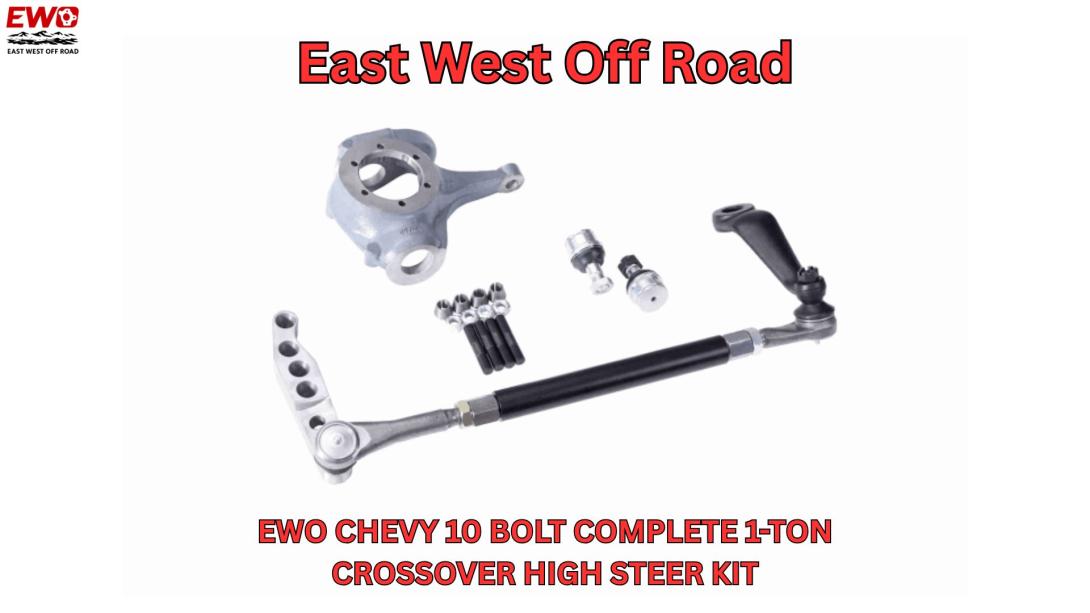
When your lifted Chevy truck develops dangerous bump steer, wandering on pavement, and a general feeling of instability, you're experiencing the direct consequences of incorrect steering geometry. This isn't a simple parts failure—it's a fundamental system flaw that occurs when suspension modifications alter critical angles that factory steering was never designed to accommodate. The only permanent solution requires a professional off-road steering correction kit that systematically addresses these geometric flaws, starting with a complete Chevy 10 bolt crossover steering kit engineered from the ground up for lifted applications.
The Science Behind Steering Correction: Why Geometry Matters
True correction begins with understanding what went wrong. When you lift your Chevy with Dana 44 or 10-bolt axles, you change the operating angles of your pitman arm, drag link, and tie rod. These components no longer move in harmony with your suspension, creating geometric conflicts that manifest as bump steer, poor return-to-center, and accelerated wear. A genuine off-road steering correction kit doesn't just strengthen components—it recalculates and repositions the entire steering linkage. This process begins with a flat top knuckle conversion kit, which provides the necessary foundation for a Dana 44 to 10 bolt steering swap that places every component in its optimal position for corrected geometry.
Complete Correction System: Engineering Over Guesswork
Attempting to correct steering geometry with individual components is like trying to fix a misaligned foundation by replacing doors—it addresses symptoms, not causes. The Dana 44 High Steer Kit with Knuckle represents engineered correction where every component is calculated to work in geometric harmony. This complete system includes a GM 1 Ton Tie Rod Upgrade, a heavy duty drag link kit Chevy trucks require, and all components for a proper Squarebody Crossover Steering Conversion. The precision-machined flat-top knuckle and 1.25" thick billet arms aren't just stronger—they're positioned to create the correct angles that eliminate geometric conflicts permanently.
The Correction Difference: From Problematic to Predictable
When you implement this comprehensive correction system, the transformation affects every aspect of your driving experience. The primary correction—the ability to eliminate bump steer lifted Chevy trucks suffer from—restores safety and confidence. Steering becomes precise and predictable, with improved feedback and stability whether you're navigating highway curves or technical trails. For those building a K5 Blazer high steer system, this correction provides the geometric precision needed for both aggressive off-roading and comfortable daily driving. This is the difference between living with steering problems and enjoying professionally corrected steering geometry.
Precision Installation: Making the Correction Real
While engineered for enthusiasts, achieving perfect geometric correction requires precision installation. The process involves carefully removing factory components, installing the new knuckle with exacting preload specifications, mounting the high-steer arm at the correct orientation, and fabricating the drag link to precise length calculations. The requirement for a 2WD steering box is essential for achieving target geometry. Professional alignment equipment and expertise are crucial for the final tuning that ensures all corrected angles work together perfectly. This isn't just bolting on parts—it's executing a geometric correction plan.
Technical Questions About Steering Correction
What specific geometric parameters does this system correct?
The system corrects steering axis inclination, caster angle relative to suspension travel, Ackermann angle for proper tire scrub in turns, and the parallel relationship between drag link and tie rod movement. These corrections address the root causes of bump steer, wandering, and poor return-to-center.
How does this correction differ from simply adding a steering stabilizer?
Steering stabilizers dampen symptoms (wheel shake) but don't address geometric causes. This correction system fixes the underlying geometry so stabilizers become optional rather than necessary, and your steering behaves correctly even without damping.
Can this correction be tuned for different driving preferences?
While the core geometric corrections are engineered for optimal performance, aspects like caster can be slightly adjusted during alignment to fine-tune steering feel—more caster for highway stability or slightly less for lighter off-road steering effort.
How does corrected geometry affect component wear?
By eliminating binding angles and parallelizing suspension and steering movement, corrected geometry dramatically reduces wear on ball joints, tie rod ends, and drag link components. This extends service life even with aggressive off-road use.
What measurement verification ensures proper correction?
Critical verification includes checking that the drag link and tie rod are parallel at ride height, confirming proper Ackermann through full steering travel, and ensuring bump steer is minimized through full suspension compression and droop during a chassis cycle check.
Can this corrected geometry accommodate different suspension types?
The correction principles work with various suspension systems—leaf spring, coil spring, or even aftermarket coilover setups. The key is establishing the correct geometric relationships regardless of the specific suspension components.
How does correction affect performance in extreme off-camber situations?
Corrected geometry provides more predictable and consistent steering response when your vehicle is at extreme angles. The steering system maintains better control and feedback compared to compromised factory geometry in these situations.
What if my truck has additional modifications affecting geometry?
The correction system establishes an optimal baseline. Additional modifications like differential drops or control arm changes should be evaluated to ensure they don't reintroduce geometric conflicts, but the corrected steering system provides the best possible foundation.
How does professional correction impact vehicle safety ratings?
While not officially rated, professionally corrected steering geometry significantly improves real-world safety by eliminating unpredictable bump steer, improving stability, and providing consistent steering response in emergency maneuvers compared to compromised factory geometry in lifted trucks.
Stop accepting dangerous steering geometry as the price of a lifted truck. Invest in professional correction that delivers safety, performance, and precision.
https://www.eastwestoffroad.com/product/ewo-chevy-10-bolt-complete-crossover-high-steer-kit