

The successful performance of any off-road vehicle upgrade depends not only on the quality of the components but equally on the precision of their installation. Professional-grade off road suspension parts like chromoly rod ends and weld-in tube adapters are engineered to withstand extreme forces, but their full potential is only realized through correct fabrication and assembly practices. This guide outlines critical installation procedures and maintenance protocols that ensure your upgraded steering and suspension systems deliver both the safety and performance intended by their design.
Pre-Installation Planning and Component Verification
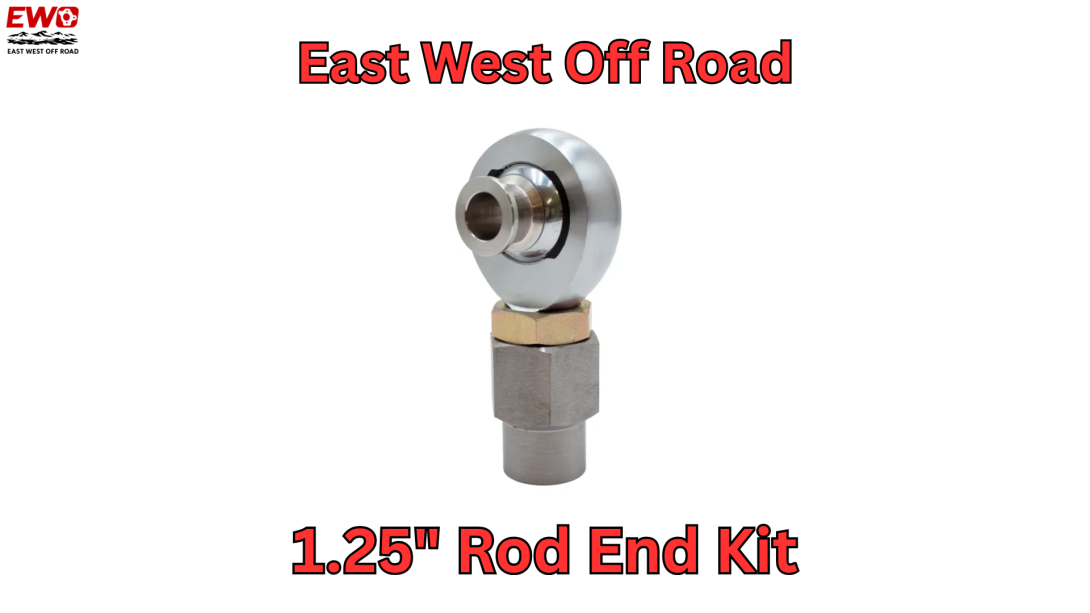
Before any fabrication begins, thorough planning and verification are essential. Carefully review all 1.25 heim joint specs provided by the manufacturer, including thread pitch, load ratings, and dimensional drawings. Verify that all components in your system are compatible—ensuring, for instance, that your weld in bung 1.25 has the correct thread (right-hand or 1.25-12 left hand thread) to match your chosen rod ends. Lay out the entire 1.25 rod end kit and confirm you have all necessary hardware, including high misalignment spacers 1.25 and appropriate fasteners. For complex systems like a 4 link suspension kit, having a clear diagram of the intended geometry is paramount before cutting any tubing.
Critical Welding Procedures for Weld-In Adapters
The integrity of the connection between the adapter and the tubing is foundational. When preparing to weld a hex head tube adapter, first ensure the DOM tubing is cut square and deburred. Use the hex head to screw the adapter into the tube to the desired depth, taking advantage of this feature for precise adjustment. Crucially, never weld with the rod end installed. The intense heat will permanently damage the bearing's Teflon lining and chrome plating. Tack-weld the adapter in place, check alignment, then complete a continuous, full-penetration weld around the circumference. Always start your arc on the tube wall, not the adapter, to ensure proper fusion into the thicker material. Allow the assembly to cool completely before threading in the chromoly heim joint.
Torquing, Securing, and Setting Preload
Once the weld-in adapters are installed and cooled, the rod ends can be threaded in. For joints that will see high dynamic loads, consider using a thread-locking compound designed for high-strength fasteners, following the manufacturer's instructions. Secure the joint with a jam nut, torquing it to the manufacturer's specification to prevent loosening under vibration. In applications like a rock crawler 4 link kit, it's important to set the suspension at its normal ride height before fully tightening the jam nuts at the chassis and axle brackets. This ensures the joints are not operating under a constant pre-load or bind at static ride height, which can accelerate wear and affect handling.
Integration and Final System Checks
After all components of your heavy duty steering kit or suspension links are installed, a comprehensive system check is mandatory. Cycle the steering from lock to lock and articulate the suspension through its full travel (using a jack or hoist) while observing all linkages. Check for any binding, interference with other components (like brake lines, shock bodies, or the differential), and ensure there is adequate clearance at full bump and droop. Verify that high misalignment spacers 1.25 are properly installed and allowing smooth, unrestricted movement at the joints. This step is especially critical after a 1 ton steering upgrade, as incorrect geometry can lead to dangerous bump steer or handling issues.
Establishing a Proactive Maintenance Routine
Even the most robust rock crawler suspension parts require regular inspection. Establish a pre- and post-trip routine. Before any outing, visually inspect all joints, welds, and fasteners for cracks, deformation, or looseness. Grasp each link and attempt to move it laterally and vertically to check for undesirable play in the rod ends. After trips through mud or water, clean the joints thoroughly. Chromoly heim joints with Teflon liners require periodic lubrication with a compatible grease; refer to the manufacturer's guidelines for the specific product and interval. A well-maintained heavy duty off road steering kit will provide reliable service for years.
Recognizing and Addressing Common Wear Issues
Understanding failure modes helps prevent them. If a joint feels "notchy" or binds, it may be contaminated, dry, or operating at an angle beyond its capacity (indicating a need for spacers). Excessive radial or axial play means the joint is worn and must be replaced immediately. Regularly check the condition of the high misalignment spacers 1.25 for deformation. Cracking in the paint around a weld could indicate a failing weld and should be investigated by grinding back the paint and inspecting the metal. Never ignore changes in steering feel or new noises from the suspension; these are early warnings that demand inspection.
For detailed installation manuals, torque specifications, and maintenance guides specific to your components, please visit:
https://www.eastwestoffroad.com/product/1.25%22-rod-end-kit
Frequently Asked Questions
How tight should the jam nut be on a heim joint?
There is no universal torque value, as it depends on the thread size and material. A general rule for large, fine threads is to use a significant amount of torque—often several hundred foot-pounds—to ensure the nut will not back off. The goal is to deform the threads slightly to create a mechanical lock. Consult the manufacturer's recommendation if available. Always use a high-quality jam nut, not a standard nut.
Can I re-use a heim joint after it has been in a crash or major impact?
It is not recommended. Even if no play is detectable, a severe impact can cause micro-fractures in the heat-treated material or deform the bearing race in a way that compromises its heim joint load rating. For safety-critical components in steering and primary suspension links, replacing impacted joints is a cheap insurance policy.
What is the proper way to lubricate a Teflon-lined rod end?
First, clean any old grease and debris from the joint. Use a grease gun with a needle adapter to inject grease into the small gap between the ball and the race until you see fresh grease purging from the edges. Use only a grease specified by the manufacturer as compatible with PTFE (Teflon) liners, as some additives can degrade the lining.
How do I check for proper weld penetration on a tube adapter?
Visual inspection is the first step: the weld should form a smooth, consistent fillet around the base of the adapter. For critical welds, a non-destructive testing method like dye penetrant inspection can reveal surface-breaking cracks. The most confident method is to practice on scrap material, then cut through the weld to examine the cross-section and ensure fusion into both the adapter and tube wall.
My steering feels stiff after installing a new heavy-duty kit. What could be wrong?
Stiffness can have several causes: insufficient use of high misalignment spacers 1.25 causing the joint to bind at operating angles; a joint installed under pre-load due to incorrect link length; interference between components; or in rare cases, an overly tight or defective rod end. Re-check the entire system with the weight on the wheels at ride height and cycle the suspension to identify the source of the binding.