

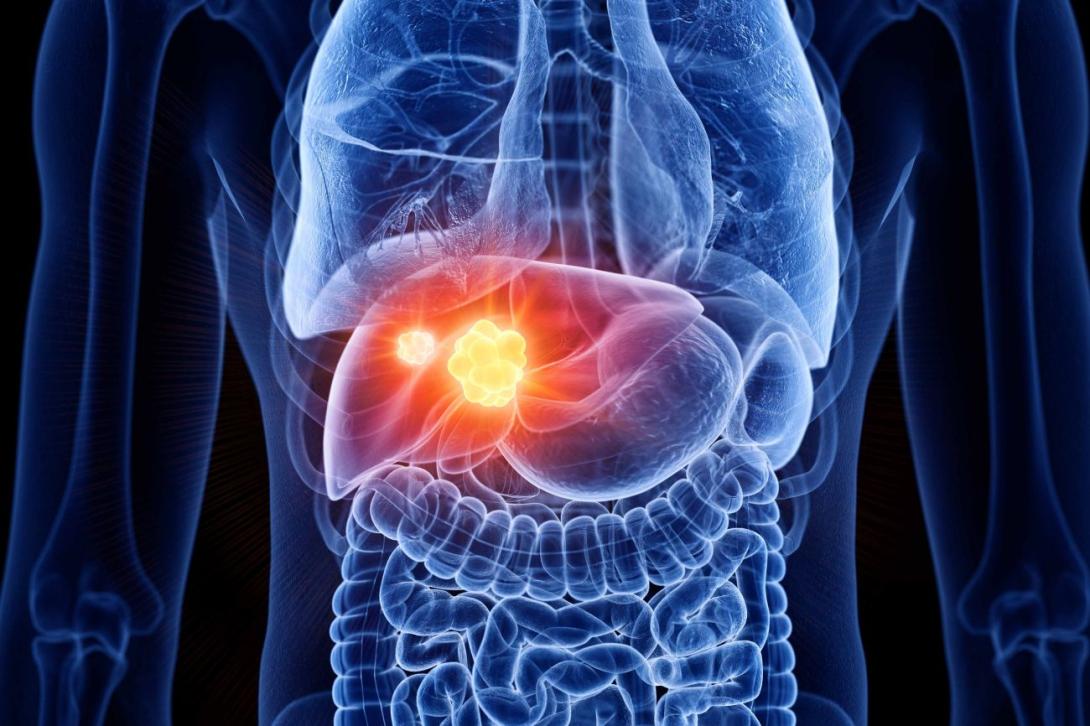
When diagnosed with primary liver cancer, most patients are naturally anxious to learn about the severity of their disease—in other words, the stage of liver cancer they have. The cancer stage provides an indication of the disease's outcome and the types of treatment that may be necessary. Being well-informed about liver cancer stages can help patients prepare for what is to come physically, mentally and emotionally. It is also important to know about the severity of background liver disease, which is often present in conjunction with cancer.
Staging
The most common staging system for primary liver cancer in the United States follows the American Joint Committee on Cancer (AJCC) staging manual. The 8th edition remains applicable to liver cancer within the AJCC staging system.
The clinical stage is the stage given regardless of the type of treatment. It is based on physical examinations, imaging tests, diagnostic tests and biopsies.
The pathological stage is the stage given after surgical resection of the tumor or liver transplantation, if these treatments are carried out. It is based on information obtained from the surgery, together with any tests done before surgery. The pathological stage tends to be more reflective of the patient’s outlook than the clinical prognosis stage, as it is based on more accurate information on the size and spread of cancer.
Both the clinical stage and pathological stage are based on:
- Size of primary tumor
- Nodal involvement
- Presence of distant metastases
TNM Staging System
The size of the primary tumor, nodal involvement and presence of distant metastases are described using the AJCC TNM system.
Primary Tumor (T)
This category is based on the size of the tumor, the number of tumors and whether or not the cancer has spread to nearby structures such as the veins in the liver. It is described with the letter ‘T’ followed by ‘X’, 0, 1a, 1b, 2, 3 or 4.
TX: The primary tumor cannot be assessed.
T0: No evidence of a primary tumor.
T1a: A single tumor 2 cm (⅘ of an inch) or smaller, with or without vascular invasion.
T1b: A single tumor larger than 2 cm (⅘ of an inch), without vascular invasion.
T2: Either a single tumor larger than 2 cm (⅘ of an inch) with vascular invasion OR multiple tumors with none over 5 cm (about 2 inches).
T3: Multiple tumors with at least one being more than 5 cm (about 2 inches).
T4: Any size of tumor or multiple tumors growing into a major branch of a large vein of the liver (portal or hepatic) OR any size of tumor or multiple tumors directly invading adjacent organs (other than the gallbladder), or perforating the visceral peritoneum.
Nodal Involvement (N)
This category looks at whether the cancer has spread to nearby lymph nodes. It is described with the letter ‘N’ followed by ‘X’, 0 or 1.
NX: The lymph nodes cannot be assessed.
N0: No cancer has spread to the neighboring lymph nodes.
N1: Cancer has spread to the neighboring lymph nodes.
Distant Metastases (M)
This category determines if the cancer has spread to more distant parts of the body, such as the lungs or bones, after imaging tests, physical examination or biopsy. It is described with the letter ‘M’ followed by 0 or 1.
M0: Cancer has not spread to distant parts of the body.
M1: Cancer has spread to distant organs.
Breakdown of Primary Liver Cancer Stages
Depending on the TNM assessment, the cancer is staged according to the categories below.
Stage T N M
IA T1a N0 M0
IB T1b N0 M0
II T2 N0 M0
IIIA T3 N0 M0
IIIB T4 N0 M0
IVA Any T N1 M0
IVB Any T Any N M1
These classifications describe how far the cancer has developed or spread. However, the stage alone does not determine treatment decisions. Liver function, overall health and other clinical findings are also important.
For further information about the classification, see the liver cancer staging explanation.
Other Staging Systems for Primary Liver Cancer
While the TNM system is widely used, it does not account for damage to the liver other than the presence of the tumor(s).
As such, other staging systems, such as the Barcelona Clinic Liver Cancer (BCLC) system, have been developed to account for other factors, such as liver function, to give more information about treatment options and survival outlook.
In such staging systems, the Child-Pugh score is used to measure liver function, especially in people with cirrhosis. It looks at factors such as:
- Blood bilirubin levels
- Blood albumin levels
- Presence of fluid in the abdomen
- How quickly the blood clots
- Whether liver disease is affecting brain function
Different staging systems have different names for the stages. The BCLC staging system, for example, has five stages:
- Stage 0: Very early
- Stage A: Early
- Stage B: Intermediate
- Stage C: Advanced
- Stage D: End-stage
Different countries and medical institutions may use different systems to stage liver cancer. In the United States, physicians may use both AJCC TNM staging and BCLC classification to help evaluate disease severity and treatment options.
If you are unsure which classification applies to your diagnosis, it is best to clarify this with your doctor.
Understanding Your Liver Cancer Diagnosis
Learning your liver cancer stage can be a challenging and emotional experience, but it is an essential part of your cancer journey.
Understanding the stages of liver cancer can give you a greater sense of control and help you feel more prepared for what lies ahead.
It's natural to feel a range of emotions after receiving a diagnosis, and having a strong support system to lean on throughout the process can provide some comfort.
Your healthcare team can answer your questions and provide guidance as you navigate your treatment.
About Paragon Cleanse
Paragon Cleanse is a United States-based dietary supplement brand operated by Apex Black Label LLC. The company offers products for general digestive, nutritional and liver wellness, including herbal supplement capsules, Activated Charcoal Binder, TRACE Essential Minerals and TNM Liver Support.
Its TNM Liver Support contains TUDCA, NAC, Milk Thistle, Zinc and Selenium and is marketed for general liver wellness.
Important: TNM Liver Support is not a treatment for liver cancer, cirrhosis or other liver diseases. Its safety and effectiveness in people undergoing cancer treatment have not been established. Patients with liver cancer should not start supplements without approval from their oncology or hepatology team because ingredients may interact with treatment or be unsuitable for impaired liver function.
Paragon Cleanse offers online ordering with shipping to customers in the USA, UK and Canada.
Official Website: www.paragoncleanse.com
Customer Support: info@paragoncleanse.com
USA/Canada Toll-Free: +1 (800) 917-4461
Business Address: 30 N Gould St, STE R, Sheridan, Wyoming 82801, USA
Medical Disclaimer: This article is for educational purposes only and does not replace professional medical advice. Liver cancer requires diagnosis, staging and treatment by qualified healthcare professionals. Dietary supplements are not substitutes for cancer treatment.