
Keeping your aquarium clean is essential for maintaining healthy fish and good water quality. The right aquarium cleaner, regular water changes, and proper maintenance tools help remove algae, uneaten food, and waste without disturbing the beneficial bacteria in your tank. Whether you are a beginner or an experienced fish keeper, choosing suitable aquarium cleaning supplies can make aquarium maintenance easier and more effective.
In this guide, you will learn which cleaning tools you need, how to use an aquarium cleaning kit, and how to maintain a clean, healthy fish tank.
Why Is Regular Fish Tank Cleaning Important?
Aquariums collect fish waste, leftover food, plant debris, and algae over time. If these materials accumulate, they can affect water quality and make the aquarium less suitable for fish.
Regular cleaning helps you:
- Remove uneaten food and visible debris.
- Control excessive algae growth.
- Reduce waste accumulation in the substrate.
- Maintain clear viewing panels.
- Support a stable aquatic environment.
- Identify equipment or water-quality problems early.
However, cleaning an aquarium does not mean removing every trace of bacteria or changing all the water. Beneficial bacteria living on filter media, substrate, and other surfaces help process fish waste. Preserving these bacteria is important for a healthy aquarium.
Essential Aquarium Cleaning Tools Every Fish Owner Needs
The best aquarium cleaning supplies depend on your tank size, substrate, decorations, and the type of fish you keep. Start with basic tools that address everyday maintenance.
1. Aquarium Glass Cleaner or Algae Scraper
An aquarium glass cleaner helps remove algae from the inside of the tank. Depending on the model, it may use a cleaning pad, scraper, or magnetic cleaning system.
When choosing an aquarium cleaner, consider the following:
- Tank material: Confirm whether the tool is suitable for glass or acrylic.
- Cleaning surface: Choose a material that will not scratch your aquarium.
- Reach: Longer handles can help clean deeper tanks.
- Ease of use: Select a design that allows you to clean corners and hard-to-reach areas.
Avoid using household cleaning sprays, soaps, or detergents inside an aquarium. Residues can harm aquatic animals.
2. Aquarium Gravel Vacuum
A gravel vacuum helps remove waste and debris from the substrate during a water change. It is especially useful for aquariums with gravel, where uneaten food and fish waste can collect between the pieces.
To use a gravel vacuum:
- Place the appropriate end in the aquarium.
- Start the siphon according to the manufacturer's instructions.
- Move the vacuum over the substrate to collect debris.
- Remove waste while draining an appropriate amount of aquarium water.
- Refill the tank with properly treated water at a suitable temperature.
For sand or fine substrates, use a technique and tool appropriate for the material to avoid removing too much substrate.
3. Aquarium Cleaning Brush
A cleaning brush can help remove algae and debris from decorations, tubing, and other aquarium-safe equipment.
Choose brushes designed for aquarium use. Keep separate tools for different aquariums when possible, especially if you care for fish with different health needs.
Do not use brushes that have been exposed to soap, household chemicals, or other potentially harmful residues.
4. Aquarium Siphon and Water-Changing Tools
A siphon makes partial water changes easier by helping remove old water and accumulated waste.
Some aquarium cleaning kit options include a siphon, hose, and attachments for different cleaning tasks. Before purchasing, check the hose length, tank compatibility, and ease of operation.
Always prepare replacement water with a suitable water conditioner when required, and match its temperature reasonably closely to the aquarium water to reduce stress on fish.
5. Aquarium Bucket and Maintenance Accessories
A dedicated bucket can be useful for aquarium water changes. Use it only for aquarium maintenance and never for cleaning with household detergents or chemicals.
Other helpful accessories may include algae pads, filter brushes, towels, and water test kits. Organizing these items together makes routine cleaning easier.
Explore the Kwik Pets Aquarium Clean-Up collection to find cleaning products for your aquarium maintenance routine.
How to Choose the Best Aquarium Cleaning Kit
An aquarium cleaning kit can save time by bringing several useful tools together. However, the best kit is one that matches your aquarium rather than simply containing the most accessories.
Consider Your Aquarium Size
Small aquariums may need compact scrapers and shorter siphons, while larger or deeper tanks may benefit from long-handled tools and longer hoses.
Check product dimensions before buying to make sure the tools can reach the areas you need to clean.
Check Your Tank Material
Glass and acrylic aquariums can require different cleaning tools. A scraper that is suitable for glass may scratch acrylic.
Always confirm the tool's intended use and follow its instructions.
Match Tools to Your Substrate
Gravel vacuums are useful for removing waste from gravel, while fine sand often requires gentler cleaning. Consider your substrate type before choosing a siphon attachment.
Look for Easy Maintenance
Cleaning tools themselves need to be rinsed and dried after use. Simple, durable designs are often easier to maintain than complicated tools with many parts.
Avoid Unnecessary Chemicals
A basic aquarium maintenance kit generally focuses on physical cleaning and water changes. Avoid products that introduce unapproved chemicals or residues into the aquarium.
Use water conditioners and other treatments only for their intended purpose and according to their labels.
Step-by-Step Guide to Cleaning a Fish Tank
Following a consistent cleaning routine helps maintain water quality without unnecessarily disturbing your fish.
Step 1: Check the Aquarium
Observe your fish, equipment, and water before starting. Look for unusual behavior, cloudy water, damaged equipment, or excessive algae.
If fish appear unwell or water quality is poor, test the water and address the underlying problem instead of relying on cleaning alone.
Step 2: Clean the Aquarium Glass
Use an aquarium-safe algae pad or scraper to remove algae from the glass. Move carefully around gravel and decorations to avoid scratching the surface.
For acrylic tanks, use only tools specifically approved for acrylic.
Step 3: Remove Debris from the Substrate
Use a gravel vacuum or suitable siphon attachment to remove visible waste and uneaten food. Work gradually, especially in planted aquariums or tanks with sensitive fish.
Avoid disturbing the entire substrate at once if doing so could disrupt the aquarium's biological balance.
Step 4: Perform a Partial Water Change
Remove an appropriate portion of aquarium water and replace it with clean, properly prepared water.
The amount and frequency depend on stocking levels, filtration, tank size, and water test results. Many aquariums benefit from regular partial water changes, but there is no single schedule that suits every setup.
Step 5: Clean Decorations When Necessary
Remove decorations only when they need cleaning. Rinse aquarium-safe items with water and use a dedicated brush to remove debris.
Avoid soap, detergents, and household disinfectants. If decorations require more intensive treatment, use only a method known to be safe for the material and aquatic animals, and make sure the items are completely safe before returning them.
Step 6: Check the Filter
Inspect the filter for reduced flow or visible blockage. Follow the manufacturer's maintenance instructions.
If filter media needs rinsing, use removed aquarium water or another method recommended for preserving beneficial bacteria. Avoid replacing all biological filter media at once unless there is a specific reason and a plan to maintain biological filtration.
Step 7: Refill and Check Water Conditions
Refill the aquarium with appropriately conditioned water at a suitable temperature. Confirm that the filter and heater are operating correctly.
Use water test kits when appropriate, particularly after unusual water changes, during aquarium cycling, or if fish show signs of stress.
How Often Should You Clean a Fish Tank?
Cleaning frequency depends on the aquarium's conditions. A heavily stocked tank may accumulate waste more quickly than a lightly stocked aquarium with effective filtration.
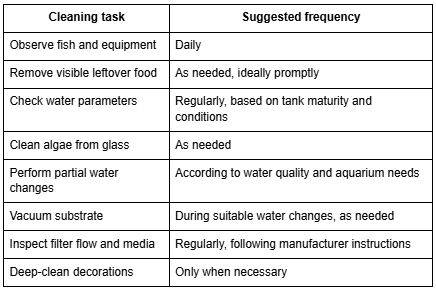
Use this table as a starting point, not a rigid schedule. Water testing and observation help you determine whether your aquarium needs more frequent maintenance.
Common Fish Tank Cleaning Mistakes to Avoid
Even well-intentioned cleaning can create problems if it disrupts the aquarium's biological balance.
Avoid these common mistakes:
- Changing all the water unnecessarily: Large, sudden changes can stress fish and alter water conditions.
- Cleaning everything at once: Excessive cleaning can remove beneficial bacteria from important surfaces.
- Using household cleaners: Soap and chemical residues can be dangerous to aquatic animals.
- Using the wrong algae scraper: Inappropriate tools can scratch glass or acrylic.
- Overcleaning filter media: This can disrupt biological filtration.
- Adding untreated tap water: Chlorine or chloramine may harm fish and beneficial bacteria.
- Ignoring water tests: Clear water can still contain harmful ammonia or nitrite.
The goal is to remove waste while preserving the stable environment your fish need.
Frequently Asked Questions
1. What should an aquarium cleaning kit include?
A useful aquarium cleaning kit may include an algae scraper or pad, gravel vacuum, siphon hose, and cleaning brush. Choose tools based on your aquarium size, substrate, and tank material.
2. What is the best aquarium cleaner for algae?
An aquarium-safe algae pad, magnetic cleaner, or suitable scraper can remove algae from tank walls. The right option depends on whether your aquarium is glass or acrylic and how much algae has accumulated.
3. How often should I clean my fish tank?
Check fish and equipment daily, remove visible debris as needed, and perform water changes according to water quality and aquarium conditions. Regular testing helps you develop a suitable maintenance schedule.
4. Can I use soap to clean aquarium decorations?
No. Soap and household detergents can leave residues that are harmful to fish. Use aquarium-safe cleaning methods and rinse decorations thoroughly before returning them to the tank.
5. Do I need to remove fish before cleaning the aquarium?
For routine maintenance, it is generally better to leave fish in the aquarium while working carefully. Removing them can cause unnecessary stress. Follow safe procedures if a particular repair or treatment requires moving them.
6. Why is my fish tank dirty even after cleaning?
Excess food, overstocking, insufficient filtration, algae growth, or an immature biological filter may contribute to recurring problems. Check feeding amounts, filter performance, stocking levels, and water parameters to identify the cause.
Final Thoughts
A clean aquarium depends on the right tools, good water quality, and consistent maintenance. Choosing a suitable aquarium cleaner, an effective aquarium cleaning kit, and reliable aquarium cleaning supplies can make routine care easier while helping protect your fish.
Focus on removing debris, controlling algae, performing appropriate partial water changes, and preserving beneficial bacteria. Avoid unnecessary chemicals and aggressive cleaning methods.
Ready to organize your aquarium maintenance routine? Explore the Kwik Pets Aquarium Clean-Up collection to find tools and supplies for caring for your fish tank.