

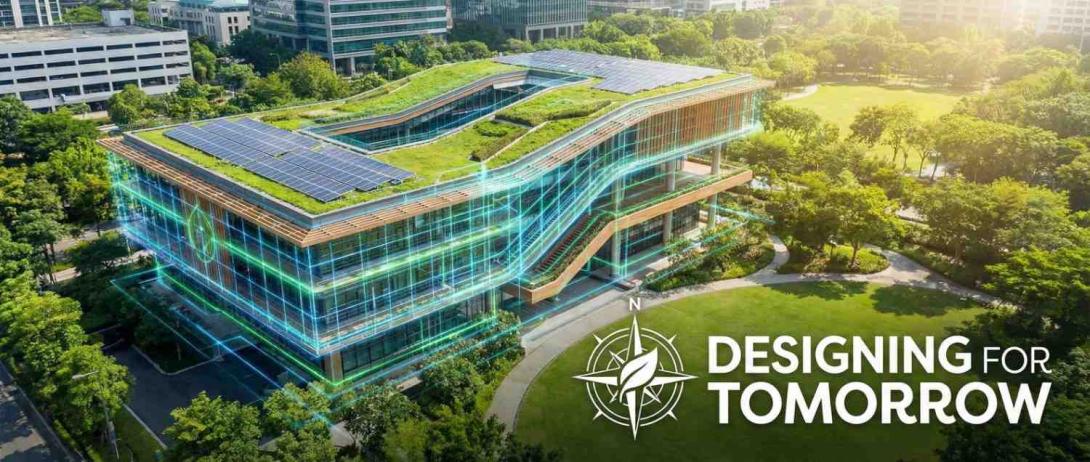
The Critical Pivot: From Inert Shells to Active Ecosystems
In 2024, energy-related CO₂ emissions hit an all-time high of 37.8 gigatonnes, a stark reminder that our current trajectory is insufficient. With the built environment responsible for approximately 37% of these global emissions, the architecture, engineering, and construction (AEC) industry faces an existential ultimatum: evolve or obsolete. The buildings of tomorrow cannot merely be "less bad," they must be actively regenerative.
For decades, architecture treated buildings as static consumers of resources, isolated islands of concrete and glass. Today, we are witnessing a paradigm shift in which structures are reimagined as living parts of their ecosystems. The question is no longer “How much energy will this building use?” but rather “How much value ecological, social, and economic can this building generate?”
This article explores the transformative role of architecture in the sustainability movement, dissecting the convergence of passive strategies, material innovation, and the digital backbone, Building Information Modeling (BIM), that enables it.
- The Renaissance of Passive Design: Efficiency Before Technology
Before we implement AI-driven climate control or smart sensors, the most sustainable decision an architect makes is often the first line on a sketchpad. Passive design using natural forces such as sunlight, wind, and thermal mass to regulate indoor environments is experiencing a high-tech renaissance.
According to recent data, integrating passive strategies during the conceptual phase can reduce a building's operational energy demand by up to 70%. This isn't just about placing windows; it's about a fundamental respect for the site's physics.
- Orientation & Massing: Aligning a structure to maximize winter solar gain while minimizing summer heat load is a zero-cost strategy with life-long dividends.
- Natural Ventilation: Techniques like stack ventilation, where warm air naturally rises and exits through high openings, can eliminate the need for mechanical cooling in many climates.
- Daylighting optimization: Beyond aesthetics, maximizing natural light through clerestory windows and light shelves drastically cuts electricity usage, a critical factor given that lighting often accounts for 15-20% of building energy.
Key Insight: Passive design is not a rejection of technology but a prerequisite for it. A poorly oriented building filled with smart tech is just an efficient disaster.
- Materiality and the Embodied Carbon Challenge
While operational carbon (energy used to run a building) has long been the focus, embodied carbon, the emissions from extracting, manufacturing, and transporting materials, is the new frontier. With the global building stock expected to double by 2060, the materials we choose today will lock in carbon emissions for decades.
The industry is moving away from energy-intensive concrete and steel toward regenerative alternatives:
- Bio-based Materials: Hempcrete and bamboo are gaining traction not just for their aesthetics but for their ability to sequester carbon.
- Mass Timber: Cross-laminated timber (CLT) offers structural strength comparable to steel but with a fraction of the carbon footprint.
- Circular Economy Principles: The focus is shifting to "design for disassembly," ensuring materials can be recovered and reused at a building's end of life.
However, selecting these materials requires data. This is where Environmental Product Declarations (EPDs) become critical. A 2025 industry report noted that 83% of AEC professionals now say EPDs significantly influence their material choices, marking a shift toward data-driven sustainability.
- The Digital Backbone: How BIM Enables Sustainability
Sustainability is no longer a guessing game; it is a calculation. This is where Building Information Modeling (BIM) transforms from a drafting tool into a sustainability engine.
You cannot manage what you cannot measure. BIM allows architects and engineers to simulate a building’s performance before a single shovel hits the ground.
- Energy Modeling & Simulation: Tools integrated into BIM workflows allow for real-time analysis of solar heat gain, airflow, and thermal performance, enabling iterative design improvements.
- Clash Detection & Waste Reduction: Construction waste is a major contributor to landfill waste. By digitally identifying clashes between structural and MEP systems, BIM prevents on-site errors and material waste.
- Lifecycle Assessment (LCA): Advanced BIM services can now integrate LCA data, giving teams a dashboard view of the project's total carbon footprint from cradle to grave.
For firms navigating this complex landscape, partnering with specialized BIM service providersenables high-level sustainability analysis without burdening internal design teams.
- Architecture as a Tool for Social and Ecological Resilience
True sustainability extends beyond carbon metrics to social and ecological resilience. The architect’s role has expanded to that of an "Agent of Change," advocating for spaces that heal both the planet and the community.
- Regenerative Design: Moving beyond "net-zero" to "net-positive," where buildings treat their own water, generate surplus energy, and increase local biodiversity.
- Resilient Infrastructure: Designing for the reality of climate change, floodable landscapes, raised plinths, and disaster-resilient housing is now a standard requirement, not a niche specialty.
- Social Equity: Sustainable architecture must be accessible. Projects like Elemental’s housing in Chile demonstrate how design can address poverty and housing insecurity while remaining environmentally conscious.
- Actionable Takeaways for AEC Professionals
To stay competitive and compliant in this rapidly evolving landscape, firms must take immediate action:
- Mandate Early-Stage Energy Analysis: Do not wait until design development. Use BIM tools to run energy simulations during the concept phase when changes are cheapest and most impactful.
- Demand EPDs: Make Environmental Product Declarations a requirement in your specifications. If a manufacturer cannot provide carbon data, look for one who can.
- Invest in Digital Literacy: The gap between sustainable intent and execution is often a digital skills gap. Upskill your team in BIM and parametric design or outsource to specialized partners who can deliver these insights.
- Adopt a "Retrofit First" Policy: The greenest building is the one that already exists. Prioritizing adaptive reuse over demolition significantly reduces embodied carbon.
Conclusion: Designing the Future, Today
The "Sustainability Movement" is no longer a movement; it is the market standard. With regulations tightening and clients demanding ESG (Environmental, Social, and Governance) compliance, the architects who will lead the next decade are those who marry ancient passive wisdom with cutting-edge digital precision.
We are building the world of 2050 today. Every design choice is a vote for the kind of future we want to inhabit. Let us design one that is resilient, regenerative, and enduring.
This article draws on insights from BIM Services India’s deep dive into sustainable architecture. For a more detailed look at specific strategies like passive design and green certifications, read their full analysis: Designing for Tomorrow – Architecture’s Role in the Sustainability Movement.