

When building or upgrading an off-road vehicle, attention often focuses on large components like axles, tires, and shock absorbers. However, the reliability of the entire system often hinges on much smaller, yet critically important, connection points. The spherical rod ends, or heim joints, that link suspension arms and steering linkages are among the most highly stressed components on any off-road rig. Understanding their function, specifications, and proper application is essential for anyone seeking to build a vehicle that is not only capable but also durable and safe in extreme conditions. This article explores the engineering behind these vital off road suspension parts and their pivotal role in vehicle dynamics.
What Are Rod Ends and Why Do They Matter?
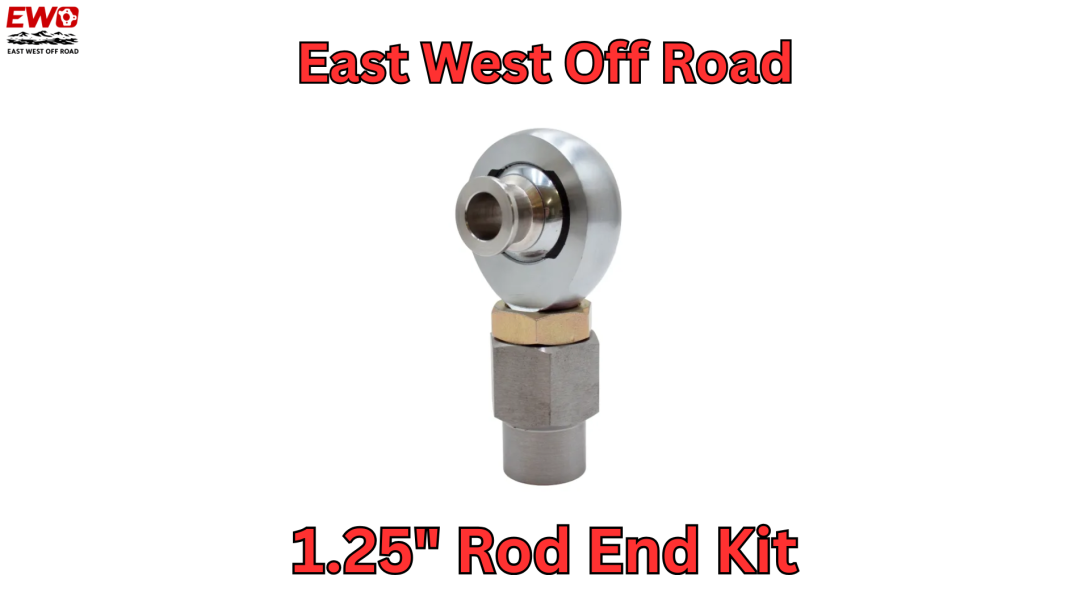
A rod end is a mechanical spherical bearing that allows for angular rotation in multiple directions. In off-road applications, they are used at the ends of suspension links, tie rods, and drag links to accommodate the constant articulation and misalignment that occurs when navigating rough terrain. Unlike a simple bushing or a factory tie rod end, a high-quality rod end provides a precise, low-friction pivot point with a known and consistent load capacity. When these components are undersized or of poor quality, they become the weakest link, leading to sloppy handling, premature wear, and potential catastrophic failure. For builders looking for a complete, matched solution, a comprehensive 1.25 rod end kit provides all the necessary components for a reliable installation.
Material Science: The Unmatched Advantage of Chromoly
The material from which a rod end is constructed directly determines its strength, wear resistance, and overall service life. Standard steel joints may suffice for light duty, but the intense shock loads of rock crawling and high-speed desert running demand a superior alloy. This is where the chromoly heim joint stands apart. Chromium-molybdenum steel (chromoly) is known for its excellent strength-to-weight ratio and exceptional toughness. When this alloy is properly heat-treated, it achieves a hardness and durability far beyond that of standard carbon steel. This material science translates directly to a higher heim joint load rating and the ability to withstand repeated impacts without deforming, making it the undisputed choice for serious rock crawler suspension parts.
Decoding Load Ratings and Thread Specifications
Understanding a rod end's technical specifications is non-negotiable for proper selection. The most critical spec is the 76,200 lb load rating, which indicates the radial static load the joint can withstand before permanent deformation. This rating provides a crucial safety margin for dynamic off-road shocks. Equally important are the thread specifications. A 1 1/4 heim joint typically features a 1.25"-12 thread. The inclusion of a 1.25-12 left hand thread on one end of a linkage, paired with a standard right-hand thread on the other, creates an adjustable turnbuckle system. This allows for precise length adjustment, which is vital for dialing in the geometry of a 4 link suspension kit or setting the toe alignment on a steering system. Ignoring these 1.25 heim joint specs can lead to improper fitment and compromised safety.
Primary Applications in Off-Road Vehicle Systems
These robust components serve two primary, critical functions. In suspension systems, they are the pivot points for every link in a rock crawler 4 link kit, managing the complex forces of axle articulation and vehicle weight. In steering systems, they form the foundation of a true heavy duty off road steering kit, replacing fragile factory tie rod ends to handle the leverage of large tires and direct impacts from obstacles. Whether for a precision 4 link suspension kit or a robust 1 ton steering upgrade, the rod end is the common element that must translate engineering design into reliable, real-world performance. Their use, in conjunction with high misalignment spacers 1.25, ensures smooth operation even at the extreme angles encountered in off-road travel.
Fabrication and Integration: The Weld-In Adapter System
To harness the strength of a chromoly rod end, it must be connected to the vehicle's linkage in the strongest way possible. This is accomplished using a weld in bung 1.25. This weld-in tube adapter is welded inside the end of DOM tubing, creating a permanent, threaded socket. The hex head tube adapter design is a key feature, allowing the installer to use a wrench to adjust the adapter's depth and orientation before welding—a critical step for achieving precise link lengths. This complete system—high-strength tube, precision adapter, and chromoly rod ends—is what separates a professional-grade linkage from an amateur assembly. Proper welding technique, which involves never welding with the joint installed and allowing for full cooling, is essential to preserve the integrity of the components.
Maintenance and Longevity: Preserving Your Investment
Even the strongest components require attention. Chromoly heim joint assemblies are serviceable and require regular inspection for wear and contamination. A proactive maintenance routine includes checking for radial and axial play, cleaning joints after exposure to mud and grit, and lubricating them with a compatible grease to protect the Teflon-lined bearing race. Visual inspections of the weld-in tube adapter and surrounding tubing for cracks or stress marks are also crucial. By integrating these checks into a regular pre- and post-trip routine, you ensure that your heavy duty steering kit or custom suspension continues to perform safely and reliably for the long term.
For complete technical data, installation guidelines, and detailed specifications on these critical components, please visit:
https://www.eastwestoffroad.com/product/1.25%22-rod-end-kit
Frequently Asked Questions
How does a rod end differ from a standard ball joint?
A rod end (heim joint) is a mechanical bearing with a metal-on-metal or metal-on-PTFE spherical interface, offering high strength and precise articulation with minimal compliance. A standard automotive ball joint is a sealed, pre-loaded assembly with a rubber or polyurethane boot, designed for quiet operation and long service life with minimal maintenance. The rod end is preferred for custom off-road applications for its strength, adjustability, and range of motion.
Can I use a left-hand thread rod end by itself?
A left-hand thread rod end is designed to be used in a paired system. By itself, it functions identically to a right-hand thread joint. Its purpose is to allow adjustment when paired with an opposite thread; turning the link tube will then adjust the overall length. Using one alone requires a left-hand thread jam nut and does not provide the turnbuckle adjustment feature.
What causes a rod end to fail prematurely?
Premature failure is typically caused by one of four factors: 1) Exceeding the load rating through improper sizing or extreme impact, 2) Operating at angles beyond the joint's capacity without using high misalignment spacers 1.25, leading to edge-loading and race damage, 3) Contamination from dirt and water due to lack of maintenance or boots, and 4) Improper installation, such as cross-threading or welding with the joint installed.
How do I choose the correct rod end size for my vehicle?
Sizing is based on calculated loads and industry standards for vehicle weight. For a full-size truck or heavy SUV, a 1 1/4 heim joint is common for primary steering and suspension links. For lighter vehicles, a 3/4" or 1" joint may be sufficient. The most reliable method is to consult the specifications of proven rock crawler 4 link kit designs or heavy duty steering kit manufacturers for vehicles similar to yours, and to always choose a joint with a load rating that provides a significant safety margin.
Are there any downsides to using rod ends on a street-driven vehicle?
The primary downsides for street use are increased maintenance and potential for noise. Rod ends require more frequent inspection and lubrication than sealed OEM joints. They can also transmit more vibration and noise into the chassis. For a dual-purpose vehicle, many owners accept these trade-offs for the gained strength and performance off-road, but they are not typically considered a "install and forget" component for a daily driver.