

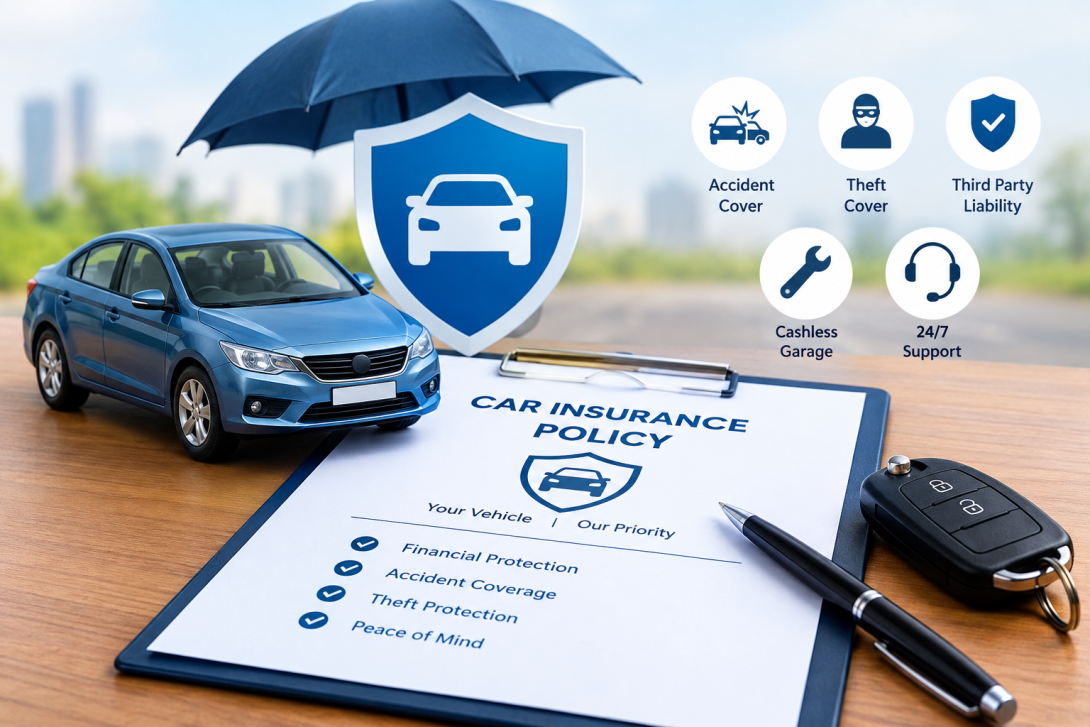
If you bought a new car recently, your insurance may be split across two separate policies with different expiry dates, and that mismatch causes genuine confusion for first-time owners. Understanding how a standalone own damage car insurance policy interacts with a separate third-party cover, and what happens when one expires before the other, is worth getting clear on before either lapses.
Why New Cars Have Two Different Policies
New vehicles in India are sold with long-term mandatory third-party cover bundled in at purchase, running several years from registration. Own damage cover, which protects your own vehicle, is typically sold as a separate annual policy.
This structure exists because regulators unbundled the two components, letting buyers renew own damage cover annually, and shop for a better rate, while the mandatory third-party portion stays locked in for its longer term. The result is two policies with genuinely different expiry dates on the same car.
What Each Policy Actually Covers
Third-party cover is the legally mandated component of a car insurance policy. It pays for injury, death or property damage your vehicle causes to someone else. It pays nothing toward repairing your own car.
Own damage cover is optional under law but practically essential for many vehicle owners. It covers accidental damage to your vehicle, theft, fire, and natural calamities. Buying a standalone own damage policy without valid third-party cover is not a legal substitute for the mandatory component of a car insurance policy.
What Happens If Third-Party Expires First
This is where the confusion becomes consequential. If your long-term third-party cover expires while your own damage policy is still running, your vehicle is no longer legally compliant, even though part of it remains insured.
Two distinct problems follow. Legally, driving without valid third-party insurance is an offence under the Motor Vehicles Act, attracting penalties regardless of whether own damage cover is active. Practically, your own damage policy generally requires valid third-party cover to remain in force, so a lapse on the mandatory side can complicate or invalidate an own damage claim depending on your policy wording.
The reverse case is less severe: if own damage expires while third-party remains valid, you stay legally compliant but lose all protection for your own vehicle. Repairs after an accident become entirely out-of-pocket.
Why the Dates Drift Apart
Most owners assume both policies renew together because they were purchased together. In practice, if you renew own damage a few weeks late one year, or switch insurers mid-cycle, the dates separate further. Over several years the gap can widen enough that owners genuinely lose track of which expires when.
Checking Both Dates Reliably
The most reliable check is your policy documents themselves, which state each component's period of insurance separately. For an independent verification, the government's vehicle records system holds your registered insurance details, and looking up your vehicle through parivahan sewa lets you confirm what the official record shows rather than relying on memory or an insurer's renewal reminder.
This independent check matters because renewal reminders come from your insurer, and if your third-party cover sits with a different insurer or was bundled at purchase by the dealer, no one may be reminding you about it at all.
Aligning the Two Policies
If your dates have drifted, you can usually realign them. Some insurers allow a short-term own damage policy to bridge the gap so both components expire together going forward. Others will adjust the own damage term at renewal for a pro-rated premium.
The advantage of alignment is straightforward: one renewal date, one reminder, and no risk of a partially lapsed vehicle. If alignment is not practical, set separate calendar reminders for each expiry, at least a month ahead.
What First-Time Owners Should Do Now
Pull out both policy documents and write down each expiry date. If you cannot find documentation for the third-party component because it was arranged by the dealer at purchase, contact the dealer or check your vehicle's official records directly.
Then set reminders for both. The most common way owners end up uninsured is not a deliberate decision to skip cover; it is simply losing track of a date on a policy they did not realise was separate.
What This Means When Buying a Used Car
The split-policy structure creates a specific trap for used car buyers. A seller may accurately say the vehicle is insured while only the long-term third-party component remains active, with own damage cover having lapsed some time ago.
Before purchase, ask for both policy documents rather than one, and verify what each actually covers and when each expires. Checking the vehicle's official record independently is more reliable than accepting a verbal assurance, since the registration database reflects what is formally recorded rather than what the seller believes.
Renewal Planning Around Two Dates
Because the own damage component renews annually while third-party runs multi-year, your renewal workload is uneven. Most years you renew only own damage. Then, once every few years, the third-party component comes due as well, usually at a higher cost because it covers several years at once.
Owners who are not expecting that larger renewal sometimes delay it, which is precisely how a vehicle ends up legally non-compliant. Noting the third-party expiry year in advance avoids the surprise.
Third-party cover keeps you legal. Own damage cover keeps you financially protected. You need both active at the same time for the arrangement to work as intended, and a lapse on the mandatory side can undermine the optional side as well.