

For owners of heavy-duty pickups and full-size SUVs, the factory steering system often becomes a liability when adding larger tires and tackling rugged terrain. The increased leverage, weight, and impact forces can quickly overwhelm stock components, leading to dangerous play or failure. A comprehensive 1 ton steering upgrade is not just about adding strength—it's about engineering a system that restores and enhances control, durability, and safety for your heavy-duty vehicle. This process involves replacing the entire steering linkage with a purpose-built heavy duty steering kit designed to handle the specific demands of a large, modified off-road truck.
Why Factory Steering Falls Short on Modified Heavy-Duty Trucks
OEM steering systems on one-ton trucks are designed for unloaded highway driving and moderate towing. When these trucks are fitted with larger, heavier tires, a suspension lift, and additional armor, the steering geometry changes and the forces involved multiply. The stock tie rods and drag links, often relatively thin and using smaller joints, become bending and failure points. Upgrading to a heavy duty off road steering kit addresses these weaknesses by using larger diameter DOM tubing, significantly stronger pivoting joints, and a design that corrects or accommodates the altered angles from a lift. This transformation turns a vulnerable system into one of the most reliable components on the truck.
Core Components of a Heavy-Duty Steering System Upgrade
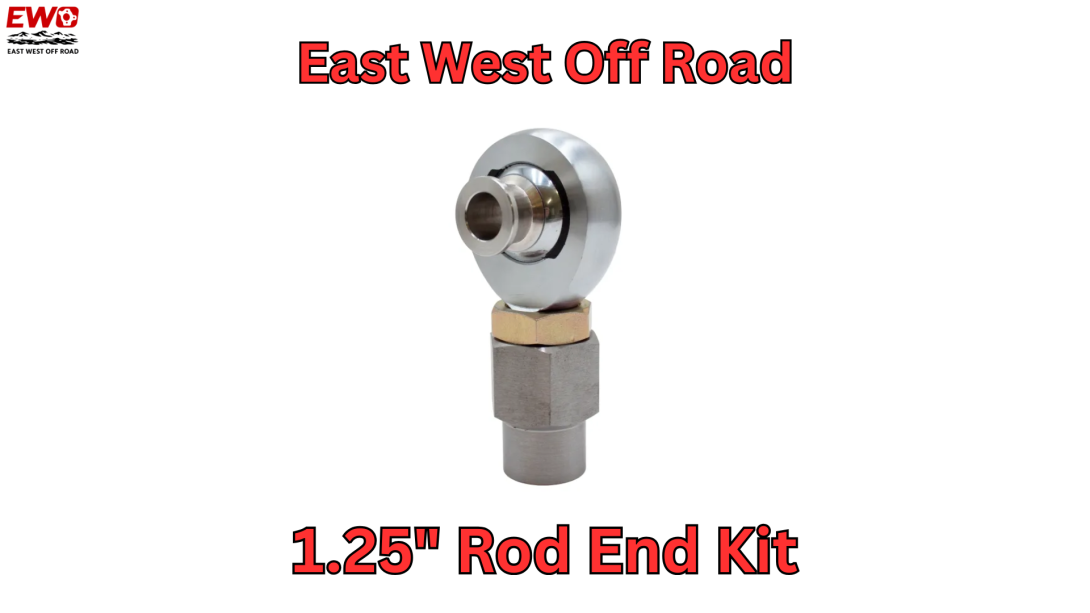
A proper upgrade involves a complete replacement of the steering linkage. The centerpiece is a solid tie rod and drag link, typically fabricated from 1.5” to 2” diameter DOM tubing for maximum resistance to bending. The connection points, however, are the most critical. This is where the heim joint vs tie rod end decision is made. For ultimate strength and articulation, a chromoly heim joint is the preferred choice. A joint with a verified 76,200 lb load rating provides an astronomical safety margin, far exceeding the capability of even heavy-duty OEM ends. For a complete and compatible set of these essential components, many builders start with a matched 1.25 rod end kit designed for such high-load applications.
Fabrication and Integration: The Role of Weld-In Adapters
To connect these robust heim joints to the steering linkage, a permanent and secure method is required. This is achieved with a weld in bung 1.25. This weld-in tube adapter is welded inside the end of the DOM tubing, creating a solid threaded anchor. The hex head tube adapter design is a key feature, allowing the use of a standard wrench to adjust the adapter's depth and orientation in the tube before the final weld. This ensures perfect alignment and the ability to fine-tune the overall assembly length. To allow the joint to operate smoothly at the steeper angles of a lifted truck, high misalignment spacers 1.25 are used at the knuckle and pitman arm connections, preventing binding and premature wear.
Correcting Geometry and Avoiding Bump Steer
A lift kit changes the factory steering geometry, often inducing bump steer—an unwanted steering change when the suspension articulates. A well-designed heavy duty steering kit addresses this by relocating tie rod mounts or adjusting the drag link angle. Many kits for lifted trucks utilize an over-the-knuckle (OTK) configuration, which raises the tie rod for better clearance and improved geometry. Proper planning ensures the new steering system works in harmony with other modified rock crawler suspension parts and the suspension's arc of travel, providing predictable handling both on and off the road.
Technical Specifications and Build Planning
Success requires attention to technical details. Builders must review 1.25 heim joint specs including thread size and direction. Using a 1.25-12 left hand thread adapter on the passenger side of the tie rod (paired with a standard right-hand thread on the driver side) creates an adjustable sleeve for precise toe alignment. It is crucial to ensure all components, such as chromoly rod ends, have the appropriate heim joint load rating for the vehicle's weight and use. Consulting detailed diagrams and specifications, like those found in a comprehensive heavy duty off road steering kit, is essential for correct fitment and performance.
Professional Installation Practices for Lasting Reliability
The strength of the components is only realized with proper installation. When welding the weld-in tube adapter, it is imperative to never have the heim joint installed, as the heat will destroy its internal bearing. The adapter should be welded with a full-penetration bead around its entire circumference to the DOM tubing. After welding and cooling, the chromoly rod ends can be installed and torqued with high-quality jam nuts. The entire steering system must be cycled through its full range of motion (lock-to-lock steering and full suspension travel) to check for any interference before the vehicle is driven. This meticulous approach ensures a 1 ton steering upgrade that delivers confidence and longevity.
For technical drawings, component specifications, and detailed application guides for your truck's steering upgrade project, please visit:
https://www.eastwestoffroad.com/product/1.25%22-rod-end-kit
Frequently Asked Questions
Will a heavy-duty steering kit fix death wobble?
A robust heavy duty steering kit eliminates flex and play from worn factory components, which is a common contributor to death wobble. However, death wobble is a harmonic oscillation often caused by a combination of factors, including worn track bar bushings, unbalanced tires, and improper alignment. While a steering upgrade is a critical step, all potential causes in the front end should be inspected and addressed.
Can I use a heim joint-based steering system on my daily driver?
Yes, but with the understanding that heim joints require more frequent inspection and maintenance than sealed OEM tie rod ends. They are exposed to road salt, grime, and moisture. For a daily-driven truck, you must commit to regular checks for play and lubrication. Many owners accept this trade-off for the significant gain in strength and durability.
What is the advantage of an over-the-knuckle (OTK) steering configuration?
An OTK design moves the tie rod from below the knuckle to above it. This provides significantly improved ground clearance, reducing the risk of the tie rod striking rocks. It also often improves steering geometry on lifted vehicles by reducing the angle of the drag link, minimizing bump steer. Most serious 1 ton steering upgrade kits for lifted applications are designed for OTK.
Do I need to upgrade my power steering pump or gearbox?
When moving to very large tires (typically 40” and above), the stock power steering pump may struggle to provide adequate fluid volume and pressure, leading to slow steering response and overheating. While the heavy duty steering kit itself doesn't require it, a complementary upgrade to a high-flow pump or a full hydraulic assist system is often recommended for larger rigs.
How do I choose the correct tie rod diameter for my truck?
The choice is based on vehicle weight, tire size, and intended use. For a heavy one-ton truck on 37”+ tires, 1.5” or 2” OD DOM tubing is standard. A larger diameter tube dramatically increases its resistance to bending (moment of inertia). Consulting proven kit specifications for similar vehicles is the best way to determine the appropriate size.