

Choosing the right game engine is an important decision that can influence a game's visual quality, development process, platform compatibility, and long-term performance. Unreal Engine and Unity 3D are two widely used technologies, each offering different capabilities for creating interactive gaming experiences. However, the right choice depends on more than graphics or popularity. Businesses need to consider their project requirements, target platforms, development budget, expected performance, and future expansion plans. Understanding these differences can help businesses select an engine that supports their gaming vision and production goals.
Understanding How Game Engine Selection Impacts Business Outcomes
A game engine influences how a project is designed, developed, optimised, and maintained. It determines the tools available to developers, the visual capabilities of the game, and how efficiently features can be implemented.
For businesses, selecting an engine that aligns with the project scope can help manage development resources, reduce technical limitations, and support a smoother production workflow. The decision should be based on the intended gameplay, target audience, platform requirements, and expected project complexity rather than choosing a technology based only on its popularity.
Unreal Engine: Building High-Fidelity Games with Advanced Visual Capabilities
Unity 3D: Supporting Flexible Development Across Multiple Platforms
Unity 3D offers a flexible development environment for businesses creating games across mobile, desktop, web, and other supported platforms. Its development tools, asset ecosystem, and scripting workflows help teams build different types of interactive experiences while adapting production to project requirements.
Unity is particularly useful for projects that prioritise mobile accessibility, lightweight performance, rapid prototyping, and broad platform reach. Businesses planning casual games, 2D experiences, multiplayer titles, or mobile-first products can evaluate its capabilities based on their intended gameplay and technical needs. Working with a Unity 3D Game Development Company can also help businesses plan platform-specific development, optimize performance, and build features that align with their product objectives.
Comparing Development Costs, Performance, and Production Timelines
Matching Game Engine Capabilities with Your Project Type and Target Audience
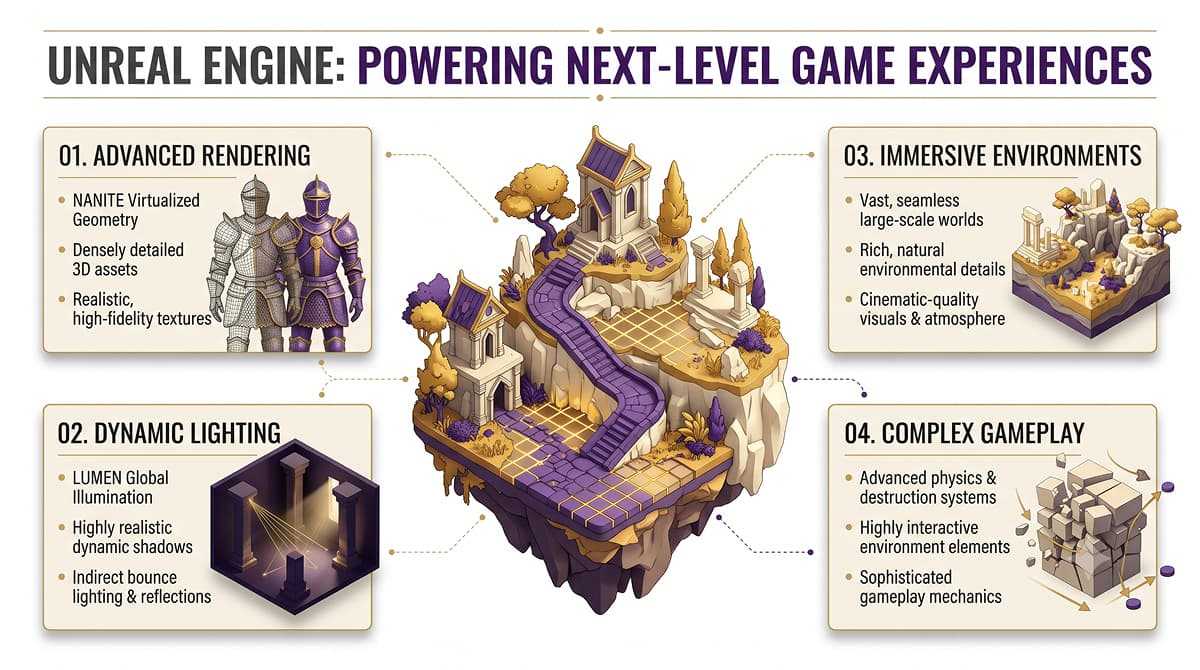
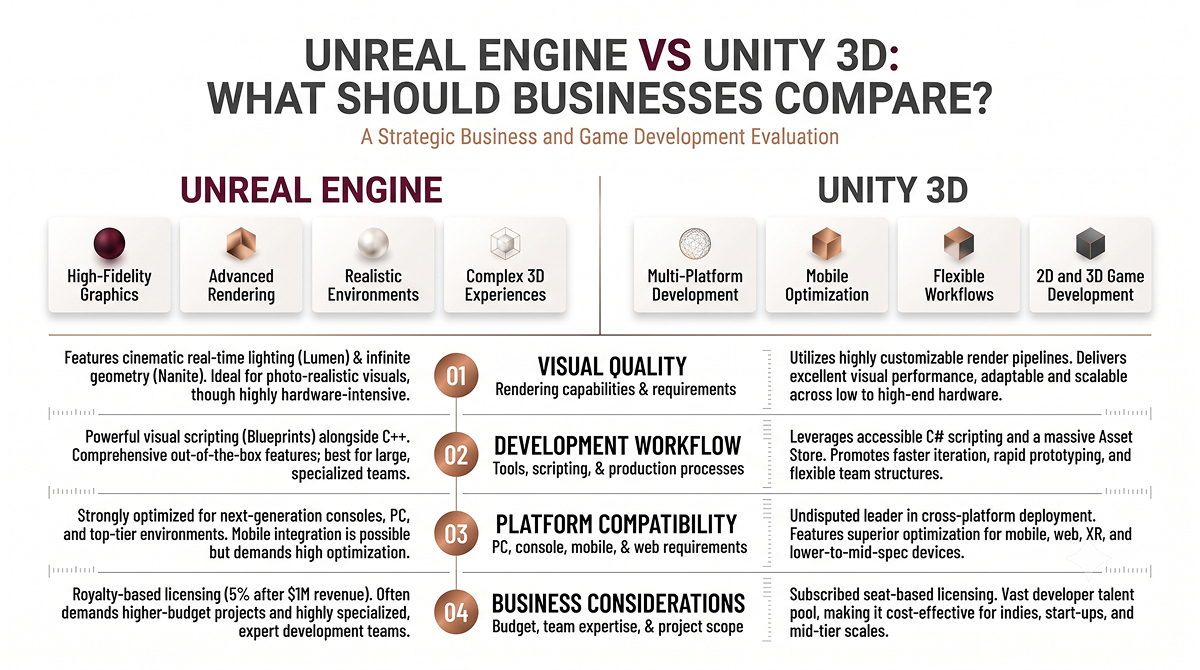
The type of game being developed plays a major role in engine selection. Unreal Engine can be a suitable choice for high-end 3D games, realistic simulations, and projects that demand advanced visual effects. Unity 3D can support mobile games, casual experiences, 2D titles, and projects that require flexible deployment across multiple platforms. Businesses should also consider their target audience and expected gameplay experience. A visually intensive PC game may have different technical requirements from a mobile puzzle game or a multiplayer casual title. Matching engine capabilities with these requirements helps establish a practical development direction.
Scalability, Updates, and Long-Term Support: What Businesses Should Evaluate
Game development does not end with the initial launch. Regular updates, performance improvements, new content, and compatibility requirements can influence a game's long-term success. Both Unreal Engine and Unity provide development ecosystems that support ongoing improvements and platform expansion. However, businesses should evaluate how easily their chosen engine can accommodate new gameplay features, backend integrations, content updates, and increasing player activity. It is also important to consider developer availability, documentation, community support, and the long-term maintenance requirements of the project. These factors help businesses plan a sustainable development process beyond the first release.
Making the Right Engine Decision for Your Next Game Development Project
There is no universal winner between Unreal Engine and Unity 3D. The better option depends on the game's visual expectations, technical complexity, target platforms, available resources, and future business objectives. Businesses should define their project requirements before selecting an engine and evaluate how each technology supports those priorities. Reviewing prototypes, assessing development workflows, and discussing technical requirements with experienced developers can help reduce uncertainty and establish a more effective production strategy.
Conclusion
Selecting the right game engine requires a clear understanding of your project's creative vision, technical requirements, and long-term business goals. While Unreal Engine supports visually advanced and immersive experiences, Unity 3D offers flexibility for projects targeting different platforms and gameplay styles. The right decision comes down to choosing technology that aligns with your development priorities. As an experienced Unreal Engine Game Development Company, Osiz Technologies focuses on building customized gaming solutions that bring business ideas to life through the right development approach and technology.