
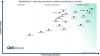
QKS Group’s SPARK Matrix™: Cloud ERP for Enterprises research provides a comprehensive analysis of global market trends, emerging technologies, competitive dynamics, and future market opportunities. The research helps technology vendors understand the evolving competitive landscape while enabling enterprise buyers to assess vendor capabilities, differentiation, and market positioning.
Download free sample report here: https://qksgroup.com/download-sample-form/spark-matrix-cloud-erp-for-enterprises-q4-2025-10304
Key Trends Shaping the Cloud ERP for Enterprises Market
1. AI-Powered Enterprise Resource Planning
Artificial intelligence is transforming ERP platforms from traditional systems of record into intelligent business management solutions. AI-enabled ERP software can analyze operational data, identify patterns, generate insights, and automate selected business tasks.
Generative AI copilots allow users to interact with enterprise data through conversational interfaces, making it easier to retrieve information, summarize reports, and understand business performance. Emerging AI agents can also support specific workflows, helping organizations reduce manual effort and improve productivity.
For enterprises managing complex operations, AI-enabled ERP capabilities can support faster decisions across finance, supply chain, procurement, and manufacturing. However, organizations should assess AI accuracy, data security, governance, and human oversight before deploying automated processes at scale.
2. Cloud ERP and Enterprise Digital Transformation
Many enterprises continue to modernize legacy ERP infrastructure to improve agility, reduce technical complexity, and support changing business requirements. Cloud ERP platforms provide flexible deployment models and centralized access to business information across departments, subsidiaries, and geographic locations.
Modern cloud ERP systems can help organizations standardize processes, improve collaboration, and connect business functions through shared data. Successful modernization, however, requires careful planning around data migration, integration, customization, and change management.
3. Real-Time Analytics and Data-Driven Decision-Making
Enterprises generate large volumes of data across finance, manufacturing, logistics, procurement, and customer operations. Disconnected systems can make it difficult to obtain a consistent view of business performance.
Cloud ERP platforms consolidate information and provide reporting and analytics capabilities that help leaders monitor financial performance, identify operational bottlenecks, and improve resource allocation.
Predictive analytics can further support demand forecasting, inventory planning, financial projections, and risk identification. These capabilities are increasingly important for organizations seeking to make timely, evidence-based business decisions.
4. Intelligent Automation and Autonomous Workflows
Enterprise operations often involve complex approval processes, repetitive transactions, and coordination across multiple departments. ERP automation helps streamline activities such as invoice processing, financial reconciliation, procurement approvals, and supply chain planning.
AI-powered automation extends these capabilities by supporting exception detection, recommendations, and context-aware workflows. As agentic ERP capabilities mature, enterprises may increasingly automate selected multi-step processes while retaining human oversight for sensitive or high-impact decisions.
Click Here: https://qksgroup.com/market-research/spark-matrix-cloud-erp-for-enterprises-q4-2025-10304
The objective is to improve process consistency, reduce manual intervention, and enable employees to focus on higher-value activities.
5. Integration Across Enterprise Applications
Large organizations frequently rely on a broad technology ecosystem that includes CRM, human capital management, supply chain applications, analytics platforms, and industry-specific software.
Cloud ERP platforms must integrate with these systems to maintain consistent data and streamline cross-functional processes. APIs, integration platforms, and standardized data models can help enterprises connect applications while reducing information silos.
Strong interoperability is particularly important for multinational businesses managing multiple entities, currencies, regulatory environments, and operating models.
Why Are Enterprises Investing in Cloud ERP Software?
Organizations are adopting cloud ERP solutions to improve operational efficiency, strengthen business visibility, and establish a scalable technology foundation.
Key benefits include:
- Unified business management: Connect finance, procurement, supply chain, manufacturing, and other core business functions.
- Improved operational visibility: Access consolidated information and monitor performance across business units.
- Greater productivity: Automate repetitive workflows and simplify routine business activities.
- Scalability and flexibility: Support business expansion, additional entities, and changing operational needs.
- Data-driven planning: Use analytics and forecasting to support financial and operational decisions.
- Simplified technology management: Reduce dependence on maintaining extensive on-premises infrastructure.
- Enhanced collaboration: Improve information sharing across departments and geographic locations.
The benefits depend on selecting an ERP platform that aligns with enterprise complexity, integration requirements, governance needs, and long-term business objectives.
Cloud ERP for Enterprises: Leading Vendors and Competitive Landscape
The enterprise cloud ERP market includes established software providers offering broad business management capabilities alongside vendors with specialized industry expertise. Their offerings differ in functionality, deployment options, scalability, integration, AI capabilities, and industry alignment.
Organizations evaluating the best cloud ERP software for enterprises should consider more than the number of available features. They should assess how well a solution supports their operating model, business processes, data requirements, and future transformation plans.
QKS Group’s SPARK Matrix™ analysis includes the following Cloud ERP for Enterprises vendors: Cegid, Deltek, Epicor, IFS, Infor, Microsoft, Oracle, Plex by Rockwell Automation, QAD, Ramco, SAP, Unit4, and Workday.
These vendors serve different enterprise requirements, from broad enterprise resource planning to industry-focused business processes. The most suitable solution depends on factors such as organizational scale, sector-specific functionality, global operations, deployment strategy, and total cost of ownership.
How Does the SPARK Matrix Help Evaluate Cloud ERP Vendors?
Selecting an enterprise ERP platform is a major technology decision that can affect business continuity, financial performance, operational efficiency, and long-term digital transformation.
QKS Group’s proprietary SPARK Matrix™ provides a structured competitive assessment of leading Cloud ERP for Enterprises vendors. The framework evaluates and positions vendors based on Technology Excellence and Customer Impact.
Future Outlook for the Cloud ERP for Enterprises Market
The future of the Cloud ERP for Enterprises market will be shaped by AI-driven business management, intelligent automation, enterprise-wide integration, and real-time analytics.
Organizations will increasingly seek platforms that connect complex business operations, support global scalability, and provide reliable insights across departments. AI copilots and agentic workflows are expected to influence how employees interact with enterprise applications and complete routine business tasks.
At the same time, ERP modernization will require careful attention to legacy integration, data migration, cybersecurity, regulatory compliance, and implementation complexity. Enterprises must balance innovation with operational stability and long-term value.
Vendors that combine strong core ERP functionality with practical AI capabilities, interoperability, scalability, and effective governance will be well positioned to address evolving enterprise requirements.
Understanding market trends and vendor differentiation is therefore essential for organizations planning their next phase of ERP modernization.
Become a client: https://qksgroup.com/become-client
Frequently Asked Questions (FAQs)
1. What is Cloud ERP for Enterprises?
Cloud ERP for Enterprises is enterprise resource planning software delivered through cloud infrastructure to connect and manage core business functions such as finance, procurement, manufacturing, supply chain, and reporting.
2. What are the benefits of cloud ERP for large organizations?
Cloud ERP can improve operational visibility, automate workflows, connect business units, support scalability, and provide more timely information for financial and operational decisions.
3. Which vendors provide cloud ERP solutions for enterprises?
Vendors covered in QKS Group’s research include Cegid, Deltek, Epicor, IFS, Infor, Microsoft, Oracle, Plex by Rockwell Automation, QAD, Ramco, SAP, Unit4, and Workday.
4. How is AI transforming enterprise ERP software?
AI supports predictive analytics, conversational interfaces, automated reporting, intelligent workflows, and recommendations. Emerging AI agents can assist with selected business processes under appropriate governance.
5. What should enterprises consider when selecting cloud ERP software?
Key considerations include core functionality, scalability, AI capabilities, integration, customization, security, regulatory requirements, implementation complexity, and total cost of ownership