
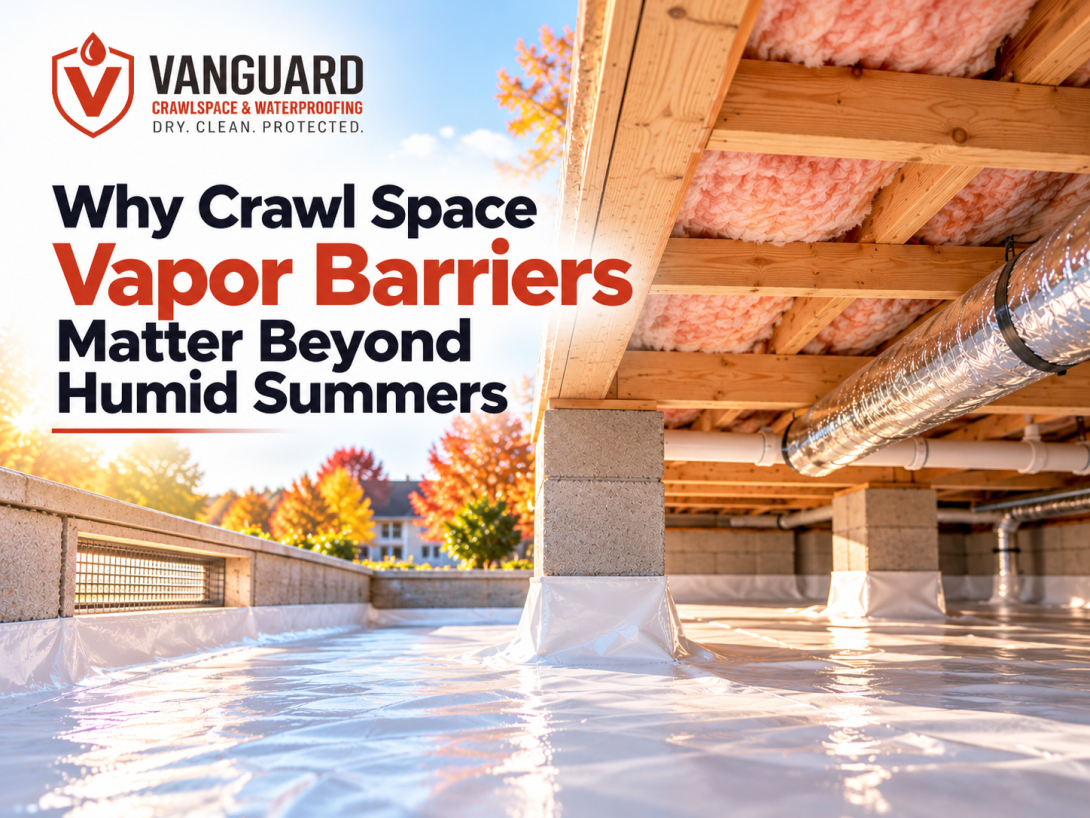
When homeowners consider crawl space moisture, summer humidity is often the first thing that comes to mind. Warm weather can make the air under a home feel damp, create condensation on pipes, and contribute to musty odors. However, moisture issues don't disappear when summer ends. Ground moisture protection affects crawl spaces throughout the year, making long-term moisture control vital for maintaining a healthy and structurally sound home.
A crawl space vapor barrier is one of the most effective ways to address this often-overlooked source of moisture. By restricting water vapor from the soil underneath, it helps create a drier environment beneath the home and reduces the risk of problems that could develop over time.
Understanding how vapor barriers work, why they matter in every season, and when installation may be necessary can help homeowners make informed decisions about protecting their homes.
What Is a Crawl Space Vapor Barrier?
A crawl space vapor barrier is a moisture-resistant membrane installed over exposed soil to reduce the amount of water vapor entering the space from the ground. It is typically made from polyethylene plastic, with thicker, more durable materials often used in professional moisture-control systems.
Although soil may appear dry on the surface, it naturally contains moisture that can evaporate into the air. When this water vapor accumulates in an enclosed space, humidity levels can rise and create conditions favorable for mold growth, wood deterioration, and unpleasant odors.
Without a barrier between the soil and the crawl space, moisture can continuously enter the environment beneath the home. A properly installed vapor barrier helps interrupt this process, making it easier to control humidity and protect nearby building materials.
However, a vapor barrier is not a complete waterproofing system by itself. Homes experiencing groundwater intrusion, standing water, plumbing leaks, or significant drainage problems may require additional measures to address the source of moisture.
Why Moisture Control Matters Beyond Summer
Mold growth is one of the most common problems associated with excessive crawl space moisture. Mold needs moisture and a suitable surface to grow, and crawl spaces often contain plenty of organic materials, including wood framing, paper-backed insulation, and accumulated dust.
If water vapor continuously rises from the soil, it can increase humidity levels and cause mold to grow. Over time, this may lead to visible mold, musty odors, and deterioration of vulnerable materials.
Installing a vapor barrier helps reduce the amount of moisture entering the crawl space from the ground, creating better conditions beneath the home. This can be especially beneficial when combined with proper drainage, humidity control, and water leak repairs.
It should be noted that installing a vapor barrier will not eliminate existing mold growth or prevent all future mold growth.
How a Vapor Barrier Helps Prevent Mold and Mildew
Mold growth is one of the most common problems associated with excessive crawl space moisture. Mold needs moisture and a suitable surface to grow, and crawl spaces often contain plenty of organic materials, including wood framing, paper-backed insulation, and accumulated dust.
If water vapor continuously rises from the soil, it can increase humidity levels and cause mold to grow. Over time, this may lead to visible mold, musty odors, and deterioration of vulnerable materials.
Installing a vapor barrier helps reduce the amount of moisture entering the crawl space from the ground, creating better conditions beneath the home. This can be especially beneficial when combined with proper drainage, humidity control, and water leak repairs.
It should be noted that installing a vapor barrier will not eliminate existing mold growth or prevent all future mold growth.
Protecting Wooden Supports and Structural Components
Underneath your home, floor joists, supports, sill plates, and subflooring provide vital support for the entire structure. These components can last a long time when properly maintained, but excessive moisture can cause deterioration.
Fungi responsible for wood rot can damage wood when it remains damp. The result can be weakened supporting structures and, consequently, costly repairs.
A crawl space vapor barrier can help prevent moisture from entering directly from the soil and reduce one potential source of moisture that may cause decay. Combined with proper drainage and humidity control, it can help protect the wooden structures beneath the home.
Homeowners should monitor potential warning signs, such as musty odors, weak flooring, discoloration on wood, or high indoor humidity. These symptoms do not automatically indicate structural damage, but they are good reasons to schedule an inspection.
Improving Indoor Air Quality and Home Comfort
The condition of your crawl space can influence the environment inside your home. Air moves between different areas of a building through small openings around plumbing, electrical wiring, ductwork, and flooring. As a result, moisture and odors beneath the house can sometimes affect the rooms above.
If a crawl space remains damp, homeowners may notice a persistent earthy smell even when the visible living areas are clean. Elevated humidity can also make indoor spaces feel less comfortable, particularly during warm weather.
By reducing moisture evaporation from the ground, a vapor barrier can help control one source of excess humidity and odors. However, persistent smells may also originate from hidden mold, leaking plumbing, or water entering through the foundation, so identifying the actual cause remains important.
A dry crawl space is one part of a broader strategy for maintaining comfortable indoor conditions and protecting the home from moisture-related problems.
Can a Vapor Barrier Help Lower Energy Costs?
Moisture control can also affect household energy efficiency. When excessive humidity enters the living space, air conditioning systems may need to remove additional moisture while maintaining comfortable temperatures.
Damp insulation can create another problem. Insulation that becomes wet may perform less effectively, allowing unwanted heat transfer and making indoor temperatures harder to maintain.
A properly installed vapor barrier helps limit ground moisture, which may support better humidity control and help protect insulation from damp conditions. Depending on the home's construction and existing moisture problems, these improvements can contribute to more consistent indoor comfort.
Energy savings are not guaranteed, however. Results depend on factors such as insulation quality, air leakage, HVAC performance, and whether other moisture sources have been corrected.
What Makes Professional Installation Important?
Installing a vapor barrier involves more than spreading plastic over the ground. The condition of the crawl space must first be evaluated to determine whether additional moisture-control measures are needed.
A professional evaluation can identify exposed soil, standing water, damaged insulation, drainage deficiencies, and signs of wood deterioration. If water is entering the crawl space, that issue must be addressed before relying on a vapor barrier alone.
Installation generally includes preparing the area, laying the appropriate moisture-resistant material over exposed soil, and carefully managing seams and edges. In a complete encapsulation system, the barrier may also extend up the foundation walls and be sealed around relevant penetrations, depending on the design.
Material thickness, installation methods, and the need for wall coverage vary by property. Choosing the right approach helps create a more reliable moisture-control system rather than a temporary covering that could shift, tear, or leave gaps.
When Should You Consider a Crawl Space Vapor Barrier?
Some crawl spaces show obvious signs of moisture, while others may have elevated humidity without visible standing water. Understanding the warning signs can help homeowners determine when an inspection is worthwhile.
Consider investigating further if you notice:
- A persistent musty smell inside your home.
- Damp soil or standing water beneath the floor.
- Condensation on pipes or ductwork.
- Mold-like growth or discoloration on wooden components.
- Insulation that appears wet or damaged.
- Recurring moisture problems after heavy rainfall.
These signs can have different causes, so the right solution depends on the conditions beneath the home. A vapor barrier may be sufficient for limiting ground moisture in some crawl spaces, while others require drainage improvements, a sump pump, encapsulation, or structural repairs.
Protect Your Home With Long-Term Moisture Control
A crawl space vapor barrier is valuable for more than managing humid summer conditions. By reducing moisture rising from the soil, it can help control humidity, limit conditions that encourage mold growth, protect wooden components, and support a healthier environment beneath your home throughout the year.
The key is to address moisture before it causes lasting damage. Combining a properly installed vapor barrier with effective drainage and other necessary maintenance provides a more comprehensive approach to crawl space protection.
At Vanguard Crawlspace & Waterproofing, we specialize in protecting homes from moisture intrusion and structural issues beneath the foundation. Our solutions are tailored to each property's needs, from crawl space encapsulation and drainage upgrades to moisture control and structural support.
If you're concerned about damp soil, recurring musty odors, or excess humidity beneath your home, a professional assessment can help identify the source and determine the most appropriate solution. For homeowners seeking reliable vapor barrier installation in Owens Cross Roads, investing in the right moisture protection can help preserve the home's structure, comfort, and long-term value.
The Article “Why Crawl Space Vapor Barriers Matter Beyond Humid Summers” was originally posted here.