

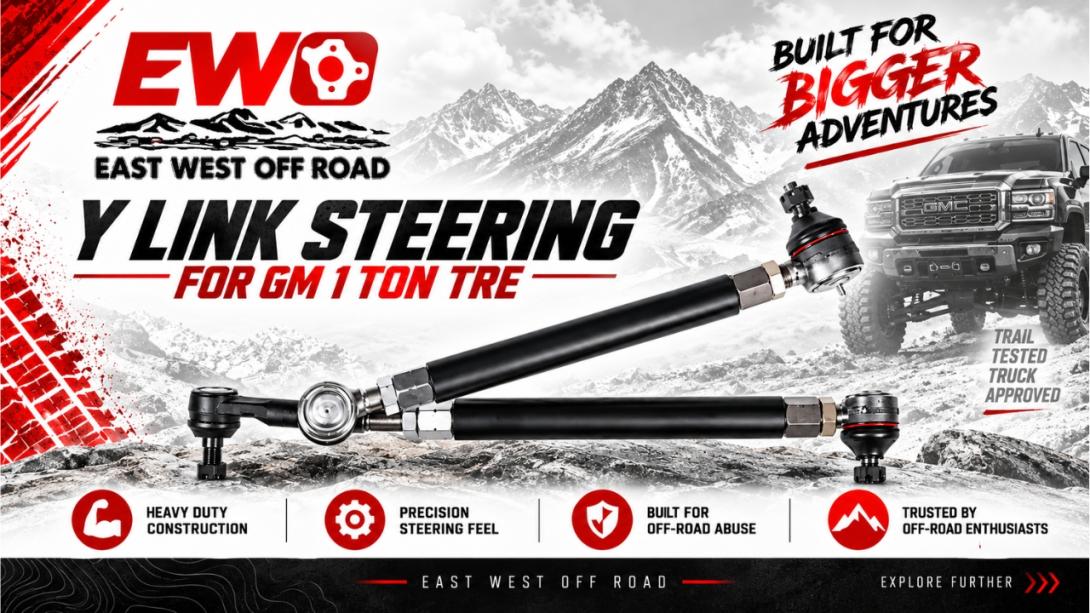
Buy Now: GM 1-Ton Y-Link Steering Kit
An under the knuckle steering kit is an option for 4x4 truck owners looking to upgrade steering linkage while retaining a lower mounting arrangement at the steering knuckles. For Chevy and GMC trucks, solid-axle builds, and custom off-road vehicles, selecting the right steering system requires careful attention to axle compatibility, steering-end specifications, suspension lift, and available clearance.
Under-the-knuckle steering can be suitable for certain factory-style and modified steering configurations. However, the best setup depends on the vehicle's design and intended use. Before purchasing an upgrade, it is important to understand how under-the-knuckle steering works, how it differs from over-the-knuckle steering, and which components are needed for a dependable installation.
What Is an Under the Knuckle Steering Kit?
An under-the-knuckle steering kit uses a steering-linkage mounting arrangement below the upper steering-arm mounting area of the knuckle. The exact layout varies by axle and steering system.
Depending on the vehicle, the configuration may retain a factory-style linkage position or use replacement components designed for the existing mounting arrangement.
The goal is to provide compatible steering components without automatically converting the vehicle to an elevated high-steer configuration.
An under-the-knuckle system should not be selected based on appearance alone. Steering-arm position, linkage angles, wheel clearance, and suspension movement all affect whether a particular setup is appropriate.
Why Choose an Under the Knuckle Steering Kit?
Not every off-road vehicle needs an over-the-knuckle or high-steer conversion. Some builds are better suited to retaining a lower steering-linkage position.
Retaining a Suitable Steering Layout
For vehicles whose existing steering geometry works well with the factory mounting position, an under-the-knuckle configuration may provide a straightforward path to replacing worn or upgrading compatible steering components.
The replacement parts must still match the vehicle's axle, knuckles, steering ends, and linkage dimensions.
Compatibility With Certain Lift Heights
Suspension lift changes the relationship between the axle, steering box, pitman arm, and steering linkage.
Some lifted vehicles can use an under-the-knuckle arrangement when the resulting steering angles and clearance remain appropriate. Other builds may require geometry corrections or a different steering configuration.
Lift height alone is not enough to determine which arrangement will work best.
Practical Steering Component Upgrades
An under-the-knuckle steering system may be paired with appropriately designed heavy-duty tie rods, drag links, and steering ends.
These components can improve durability when correctly matched to the vehicle, although their actual strength depends on material, construction, connections, and installation.
Under-the-Knuckle vs. Over-the-Knuckle Steering
Understanding the difference between these configurations can help you select the correct steering kit.
Under-the-Knuckle Steering
In an under-the-knuckle arrangement, the linkage remains in a lower mounting position relative to the knuckle's upper steering-arm mounting area.
Potential advantages include:
- Retaining a suitable existing steering layout
- Avoiding an unnecessary high-steer conversion
- Using components designed for the intended mounting position
- Keeping the steering system matched to the vehicle's existing geometry
The main considerations are ground clearance, steering angles, and possible contact with trail obstacles.
Over-the-Knuckle Steering
An over-the-knuckle configuration moves compatible linkage higher using a purpose-designed mounting arrangement.
This can provide additional clearance from certain obstacles and may suit some lifted solid-axle vehicles.
However, it can also introduce wheel-clearance issues or require additional steering-geometry corrections.
Which Steering Arrangement Is Better?
Neither option is universally better.
An under-the-knuckle system may be appropriate when the existing steering layout provides adequate clearance and suitable geometry. An over-the-knuckle setup may be more suitable when a properly engineered elevated linkage arrangement is needed.
The correct choice depends on the axle, steering arms, suspension lift, tire size, wheel backspacing, and intended terrain.
Heavy-Duty Steering for Chevy and GMC Trucks
Classic Chevy and GMC 4x4 trucks are frequently modified for larger tires, suspension lifts, and off-road use.
These modifications can increase the demands placed on the original steering components. Choosing an appropriate steering upgrade starts with identifying the actual front axle and steering configuration.
GM 1-Ton Steering Components
GM 1-ton-style steering components are commonly considered for heavy-duty truck builds. These systems may use larger steering ends and linkage designed for their intended applications.
However, the term "1-ton" does not guarantee that a component will fit every GM vehicle.
Before ordering, verify the steering box, pitman arm, steering-end tapers, threads, knuckle configuration, and linkage dimensions.
For GM truck owners researching steering upgrades, the East West Off Road GM 1-ton Y-link steering kit is worth reviewing for its stated application. Confirm that the product's configuration matches your intended under-the-knuckle arrangement before purchasing.
Classic Truck Fitment
Older Chevy and GMC trucks can have different steering layouts depending on their model year and axle configuration. Previous axle swaps or suspension modifications can further affect compatibility.
Identify the components currently installed on your vehicle rather than relying only on the truck's model name.
Under-the-Knuckle Steering for Dana 44 and Dana 60 Axles
Dana 44 and Dana 60 axles are used across a wide range of trucks, Jeep builds, and custom 4x4 projects. Their steering requirements vary by axle version and knuckle design.
Dana 44 Steering Configuration
A Dana 44 steering upgrade may involve replacement linkage, steering ends, or other compatible steering components.
Before selecting a kit, check the knuckle mounting points, steering-arm arrangement, steering-end tapers, and brake and wheel clearance.
Some Dana 44 builds use factory-style steering positions, while others are configured for crossover steering or high steer.
Dana 60 Steering Configuration
A Dana 60 may require steering components designed for its particular knuckles and steering-arm arrangement.
Do not assume that a steering kit advertised for one Dana 60 configuration will fit another. Confirm the exact axle application and any required supporting hardware.
For both axles, the intended linkage position must be compatible with the complete steering and suspension system.
What Components Should You Check Before Buying?
An under-the-knuckle steering upgrade may involve several components, depending on the kit design.
Tie Rod
The tie rod connects the steering knuckles across the axle. Its length, construction, adjustment range, and end connections must match the vehicle.
Drag Link
The drag link transfers steering input from the pitman arm to the steering linkage or knuckle, depending on the steering layout.
Its angle and mounting points influence how the steering system behaves as the suspension moves.
Tie Rod Ends and Drag Link Ends
Steering ends must match the specified taper, thread, load capacity, and articulation requirements.
Using an incompatible steering end can compromise the connection even when the rest of the linkage appears to fit.
Pitman Arm and Steering Box
The pitman arm connects the steering box to the drag link. Its spline configuration, drop, and geometry must suit the steering box and vehicle setup.
Do not select a pitman arm based solely on suspension lift height.
Mounting Hardware
Check the specified bolts, nuts, clamps, studs, and other mounting components. Use the hardware required by the manufacturer and maintain the prescribed torque and thread engagement.
How to Choose the Right Under the Knuckle Steering Kit
Before buying, evaluate the entire vehicle rather than focusing on a single steering component.
1. Confirm the Axle and Vehicle
Identify the truck model, model year, front axle, knuckles, steering box, and current linkage arrangement.
2. Consider Tire Size and Vehicle Use
Larger tires and heavy accessories can increase steering loads. A vehicle used for technical rock crawling may face different demands from a mostly street-driven truck that occasionally visits trails.
Select components designed for the intended application.
3. Check Suspension Geometry
The drag link and suspension must operate through compatible arcs. If the truck has been lifted or modified, verify the geometry at ride height and throughout suspension travel.
4. Evaluate Ground and Wheel Clearance
A lower linkage position may be more exposed to rocks and trail obstacles. Also check for interference with the differential housing, wheels, tires, springs, shocks, and frame.
5. Confirm Product Contents
Review whether the kit includes the tie rod, drag link, steering ends, mounting hardware, and any required tubing.
Some products require additional parts or fabrication. Check the current listing and consult the manufacturer if the vehicle has a custom axle or steering arrangement.
Installation and Safety Considerations
Steering components are safety-critical, so installation must follow the manufacturer's instructions.
Before driving, confirm that:
- All steering components match the intended axle and mounting position.
- Fasteners are installed and torqued to the specified values.
- Steering ends have the correct tapers and adequate thread engagement.
- The steering moves smoothly from lock to lock.
- The linkage clears the wheels, tires, differential, springs, shocks, and frame.
- Adequate clearance remains throughout suspension compression and droop.
- The steering wheel is centered and alignment is checked after installation.
If the upgrade requires knuckle machining, welding, or custom steering-link fabrication, use a qualified professional. Do not operate the vehicle if the linkage binds, contacts another component, or has uncertain mounting integrity.
Common Mistakes When Selecting Under-the-Knuckle Steering
Assuming Every Kit Fits Every Axle
Similar-looking axles and steering components may have different mounting dimensions, tapers, and configurations. Verify compatibility before ordering.
Ignoring Ground Clearance
Keeping the linkage lower may leave it more exposed to rocks and obstacles. Consider the actual terrain and how the linkage sits relative to the axle and tires.
Choosing a Pitman Arm Without Checking Geometry
A pitman arm changes the drag link's position and angle. Select one based on the complete steering configuration, not lift height alone.
Expecting Stronger Parts to Fix Bump Steer
Stronger linkage can improve resistance to bending, but bump steer is primarily a steering-geometry issue. Correct geometry requires the steering and suspension to move through compatible arcs.
Skipping the Final Inspection
Check for loose fasteners, worn steering ends, binding, and interference after installation. Reinspect the system regularly, particularly after demanding off-road use.
Frequently Asked Questions (FAQs)
What is an under the knuckle steering kit?
It is a steering system designed to keep the linkage in a lower mounting position relative to the knuckle's upper steering-arm mounting area. Exact designs vary by axle and vehicle.
Is under-the-knuckle steering good for off-road use?
It can work well when the steering geometry and ground clearance are suitable for the vehicle and terrain. Builds that encounter frequent rocks may need a different linkage arrangement.
Is under-the-knuckle steering better than over-the-knuckle steering?
Neither is best for every vehicle. The correct choice depends on suspension lift, axle design, wheel clearance, steering geometry, and intended use.
Can I use an under-the-knuckle steering kit on a Dana 44?
Some Dana 44 configurations support under-the-knuckle steering arrangements. Confirm the axle version, knuckles, steering ends, and mounting configuration before buying.
Can an under-the-knuckle setup work on a Dana 60?
Some Dana 60 applications can use steering components designed for a lower linkage position. Fitment must be confirmed for the specific axle and knuckles.
Does under-the-knuckle steering eliminate bump steer?
No. Bump steer depends on the relationship between the steering linkage and suspension movement. A suitable geometry must be established for the particular vehicle.
What is the difference between a tie rod and a drag link?
The tie rod connects the steering knuckles across the axle. The drag link transfers steering input from the pitman arm to the steering linkage or steering knuckle, depending on the system.
Can I install the kit myself?
An experienced builder may be able to install a compatible bolt-on kit using the manufacturer's instructions. Machining, welding, and custom steering fabrication require appropriate expertise and equipment.
What should I inspect after installation?
Check the fasteners, steering ends, thread engagement, steering-wheel position, alignment, full steering movement, and clearance throughout suspension travel. Resolve any binding or interference before driving.
Final Thoughts
An under the knuckle steering kit can be a practical option for certain 4x4 builds that benefit from retaining a lower steering-linkage position. The correct system must match the vehicle's axle, steering box, knuckles, steering ends, suspension geometry, and intended use.
For Chevy and GMC truck owners researching heavy-duty steering components, East West Off Road offers products that can be evaluated against the vehicle's actual configuration. Review the current product specifications and confirm compatibility before ordering.
Ultimately, dependable steering comes from selecting compatible parts, installing them correctly, checking the complete steering geometry, and maintaining the system throughout the vehicle's service life.