

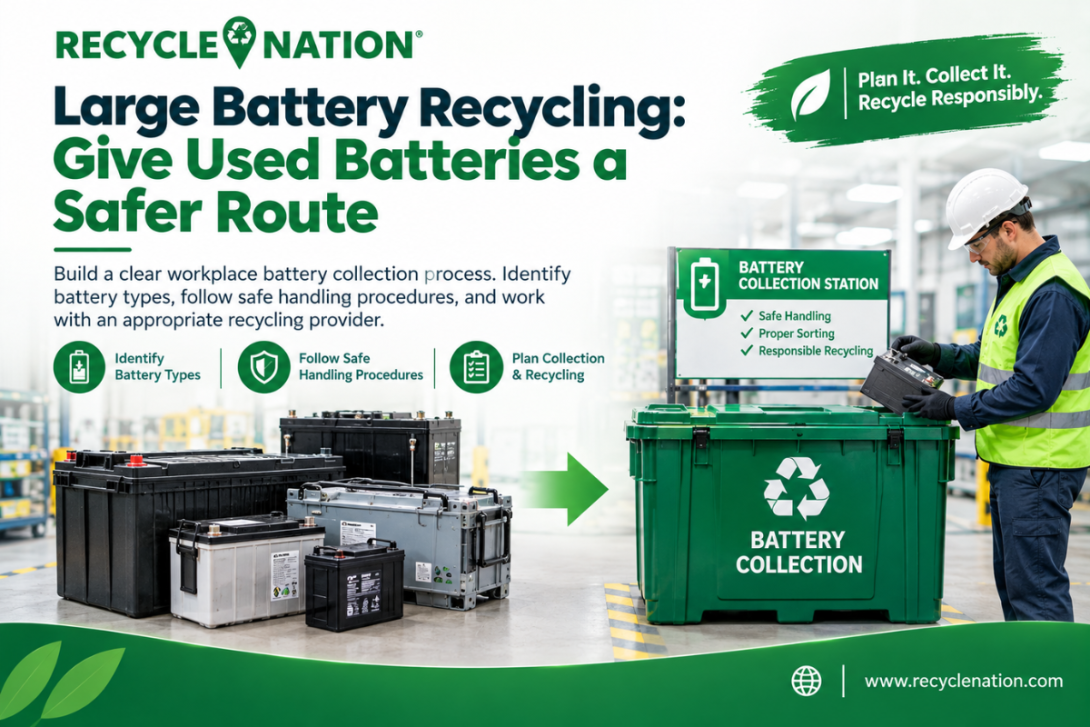
When companies update their technology or power systems, the used batteries tend to be neglected when they become one of the elements of corporate waste. It can happen that maintenance services remove batteries from machines, IT department takes out the backup power systems, while facilities services collect batteries from various kinds of equipment. In such a situation, without any planning of this process, batteries stay in storage for a couple of months as workers do not know who should take care of recycling of this kind of waste and which type of batteries can be collected together.
The large battery recycling gives an opportunity to solve this problem with the help of a well-organized process. Companies can estimate what kind of batteries they have and plan their collecting. The first step will be the estimation of batteries' types, places where they were used and the possibility of acceptance of these batteries by a recycling provider.
It is a widespread mistake to think that all batteries can be collected and recycled in one manner. However, the chemical composition, size, condition, and intended purpose of the battery could have some implications for the recommended disposal method. In some cases, the batteries might be suitable for recycling by specialized recyclers, but in other situations, the company needs to arrange for different solutions. In any case, it is necessary to check the relevant recommendations before deciding on material mixing and transportation.
Proper storage is an equally crucial part of the process. Employees have to observe the relevant guidelines provided by the workplace and the service in terms of preventing damage, short circuits, and any other potential risks. Leaking batteries should not just be added to the common collection container; employees need to know how to handle them properly and what actions to take. Batteries' terminals have to be protected depending on their type and the specifics of the receiving program.
Such aspects as assigning one person or department in charge, training employees, keeping the records of collection, and regularly evaluating the program will help to facilitate the process of battery disposal.