

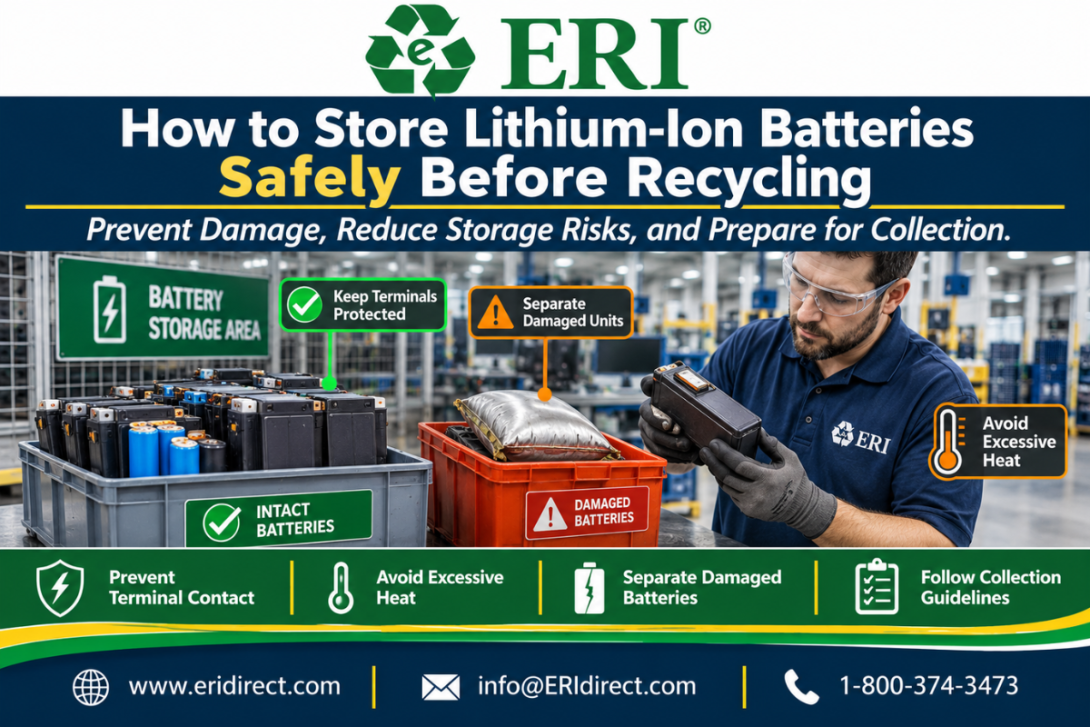
Lithium-ion batteries must be handled properly prior to their disposal to prevent overheating, short-circuits, and thermal runaway since lithium-ion batteries that are damaged may cause fires. Questions usually arise when the time comes for storing batteries – whether the batteries can be stored together, where to put them, what to do with batteries that are swollen, leaking, or damaged. In all cases, the best method is to assess the condition of the battery and follow the advice of the battery recycler or local fire safety authorities.
When it comes to good condition and removable batteries, they must be stored in a dry and ventilated area out of reach of sunlight and heat sources like heaters and open flames. Keep terminal contacts apart from any metal object. Wherever possible, cover the terminals with non-conductive tape or put the batteries in individual bags. Protect them from crushing, punctures, impact, dropping, and stacking. Avoid storing batteries near anything flammable and where kids and unapproved people can reach them.
Not all types of lithium ion batteries can be collected and packaged in the same way. Chemistry of the battery, its size, quantity, packaging and conditions can influence the requirements. Take into account recommendations of the manufacturer and of the recycler, local regulations on collection and transportation of batteries. Pay attention that it is forbidden to put loose batteries in regular recycling containers or waste unless the local authority tells you to do it.
A battery which is swollen, hot, leaking, smoking, punctured or otherwise damaged should be treated differently. It cannot be charged, used, punctured and repaired. If it is hot, smoking or shows some signs of fire – move away from it, prevent other people from approaching it and contact local emergency services. Do not transport or touch hazardous battery yourself unless emergency personnel or specialists give you instructions.
When preparing how to recycle lithium ion batteries, contact a certified collection site or a specialist recycler before moving them. Explain what kind of batteries you have and ask for proper packaging and collection requirements.