
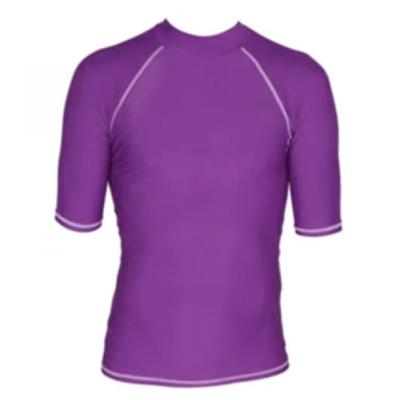
Most athletes discover the value of a good rash guard the hard way. A mat burn that takes two weeks to heal. A surf session that ends with raw skin across the shoulders. A training drill where synthetic turf does more damage than the drill itself. These are the moments that turn casual interest into genuine appreciation for what the right garment can do. Rash Guards Manufacturers in USA who understand athletic use have developed products that go well beyond basic skin protection, and companies like DRH Sports have been part of raising that standard across multiple sports and training environments. The hidden edge athletes keep coming back to is not just what the garment prevents. It is what it actively enables.
Protection That Does Not Get in the Way of Performance
The oldest criticism of protective athletic wear is that it trades mobility for coverage. Early rash guards earned that criticism fairly. They were thick, restrictive, and uncomfortable enough that athletes would skip wearing them despite knowing the alternative. That trade-off no longer exists in well-made modern versions. Four-way stretch fabric construction now allows a full range of motion in every direction without the garment pulling, riding up, or creating pressure points during dynamic movement. A wrestler shooting for a takedown, a surfer paddling through a set, or a BJJ athlete working from guard all need unrestricted movement. The rash guard has to move with the body so completely that the athlete stops thinking about it within the first few minutes of training.
The Skin Benefits Go Deeper Than the Surface
Abrasion protection is the obvious function. But athletes who train regularly in rash guards report benefits that go beyond keeping the skin intact. Compression from a well-fitted garment reduces muscle oscillation during impact-heavy training, which contributes to reduced fatigue over a long session. Here is what consistent rash guard use delivers across a full training block that most athletes do not anticipate when they first start wearing one:
- Reduced friction against training surfaces means fewer micro-abrasions that accumulate into soreness over a weekly training load.
- Compression support around the core and torso improves proprioceptive awareness, which affects technique in ground-based sports.
- Moisture management keeps the skin drier during extended sessions, reducing the irritation that comes with prolonged contact between wet skin and training surfaces.
What Sublimation Printing Changed for the Category
For a long time, rash guards came in limited colour options with basic screen-printed designs that cracked and faded after repeated exposure to chlorine, salt water, and frequent washing. The visual side of the garment was an afterthought. Sublimation Rash Guards Manufacturers in USA changed that picture by bringing full-colour, edge-to-edge printing technology to a garment that previously had no real design language worth talking about. The colour becomes part of the fabric rather than sitting on top of it, which means it does not crack, peel, or fade regardless of how many times the garment goes through a wash cycle or gets exposed to harsh water conditions.
How Other Sports Are Paying Attention
The rash guard's rise in credibility has not gone unnoticed in sports that did not traditionally use them. Football codes, rugby, and field sports have started incorporating them as base layers for players who train on artificial surfaces where abrasion risk is higher than on natural grass. The thinking that drives rash guard development shares a lot with what goes into other performance apparel categories. Soccer Jersey Manufacturers in USA face similar challenges around fabric recovery, moisture management, and colour durability across repeated washing and outdoor use. The technical solutions developed in one category tend to migrate into others as manufacturers apply what they have learned across their full product range.
The Fit Question That Determines Everything Else
A rash guard that fits incorrectly undermines every benefit the garment is supposed to deliver. Too loose and it bunches during movement, creating friction rather than eliminating it. Too tight across the shoulders and it restricts the arm range that most combat and water sports demand. Here is what proper fit assessment looks like when selecting a rash guard for athletic use:
- The garment should feel snug without creating pressure points at the shoulders, underarms, or collar.
- Length at the hem should be sufficient to stay tucked during full extension without pulling the neckline down.
- Sleeve length should allow complete arm extension without the cuff riding up during overhead or reaching movements.
Final Thoughts
The athletes who train in well-made protective garments consistently tend to train more often and recover faster than those who do not. That outcome does not come from any single feature. It comes from the accumulation of small protections and supports that compound across a full training week, a full month, and eventually a full season. The garment that prevents one mat burn prevents a week of irritated skin. The compression that reduces fatigue by five percent across a session adds up to something meaningful over a year of training. Small edges, chosen deliberately, become large ones over time.