

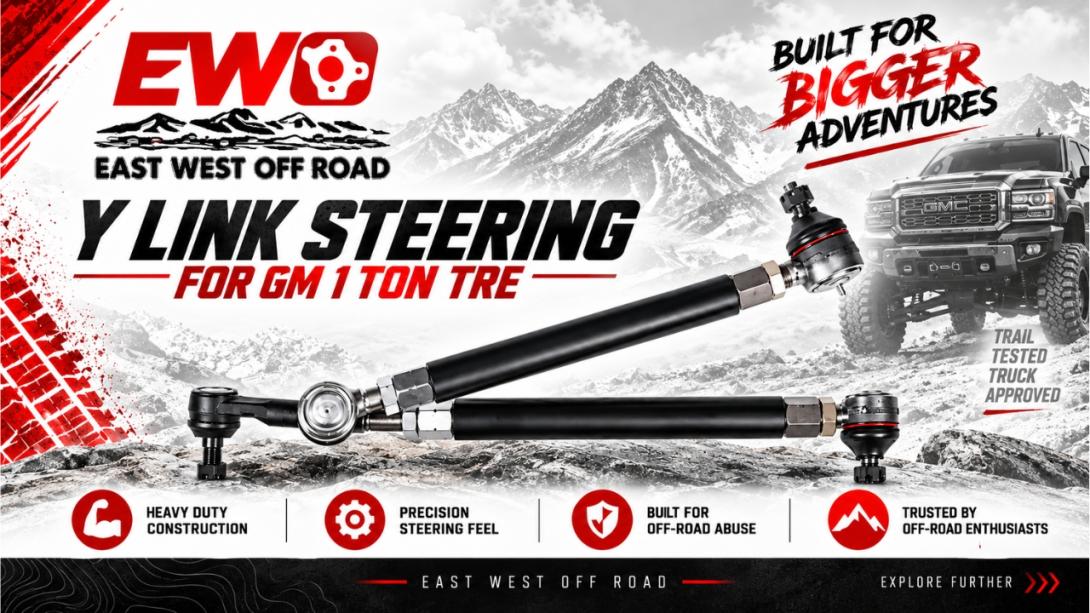
Buy Now: GM 1 Ton Y Link Steering Kit with Tie Rod Ends
A GM 1 ton steering kit is a popular option for truck owners and off-road builders looking for heavy-duty steering components for compatible solid-axle vehicles. Whether you're upgrading a classic Chevrolet truck, building a custom 4x4, or preparing a trail rig for larger tires and challenging terrain, choosing the right steering linkage is essential for predictable steering and dependable operation.
GM 1-ton-style steering components are commonly used in aftermarket steering systems because they offer an established category of steering ends and linkage components for custom builds. East West Off Road offers a Y Link Steering for GM 1 Ton TRE product for builders considering a Y-link steering configuration. Before purchasing, it is important to understand how the system works, what fitment details matter, and how to evaluate steering geometry for your particular vehicle.
What Is a GM 1 Ton Steering Kit?
A GM 1 ton steering kit is an aftermarket steering setup designed around compatible GM 1-ton-style steering components. Depending on the product, the system may use tie rod ends, tie rod and drag link connections, or a specific steering-linkage arrangement.
The term “1 ton” refers to the steering-component category, not the truck's payload capacity. It also does not mean that every GM 1-ton steering component fits every Chevrolet, GMC, Jeep, Dana 44, or Dana 60 application.
How GM 1-Ton Steering Works
The steering box converts steering-wheel movement into motion at the pitman arm. The drag link transfers that movement to the steering linkage, while the tie rod connects the steering knuckles in the intended configuration.
Every component must work together through the steering system's full range of movement. Correct joint articulation, steering angles, mounting interfaces, and clearance are necessary for reliable operation.
Why Upgrade to Heavy-Duty Steering?
Factory steering components are designed for the original vehicle configuration. Larger tires, suspension lifts, added equipment, and off-road impacts can change the loads placed on the steering system.
A properly selected GM 1-ton steering kit can offer an alternative to worn or undersized linkage on a compatible modified vehicle. However, the complete steering system—including the steering box, axle, steering ends, and suspension geometry—must be evaluated.
Benefits of a GM 1 Ton Steering Upgrade
A heavy-duty steering upgrade should address the needs of the complete vehicle rather than focusing on a single component's advertised size.
Heavy-Duty Steering Ends
Steering ends are critical connections between the linkage and the knuckles or other designated mounting points. Their taper, thread size, articulation range, and attachment method must match the application.
GM 1-ton-style tie rod ends are used in many custom steering builds, but compatibility must be confirmed before assembly.
A More Suitable Linkage for Modified Trucks
Modified trucks often run larger tires, aftermarket suspension, and accessories that place additional demands on steering components. A suitable heavy-duty system can provide linkage designed around those requirements.
The appropriate configuration depends on the truck's weight, tire size, axle strength, steering-box capacity, and intended use.
Serviceability for Off-Road Driving
Trail use can expose steering components to impacts, mud, water, and repeated suspension movement. Builders should choose a system that allows inspection and maintenance of the steering ends and mounting hardware.
Check replacement-part availability and verify that the specified steering ends can be sourced for future maintenance.
GM 1 Ton Y Link Steering: Understanding the Layout
Not every GM 1 ton steering kit uses the same linkage design. A Y-link arrangement is one option for certain custom solid-axle applications.
In a typical Y-link layout, the drag link joins the tie rod at a shared connection point, creating a Y-shaped steering arrangement. The precise geometry and connection locations depend on the system's design.
When Is Y-Link Steering Considered?
A Y-link configuration may be considered when builders need a particular linkage route around leaf springs, axle components, or other suspension hardware.
The design must be compatible with the vehicle's steering box, knuckles, and suspension movement. A Y-link system should not be selected solely because it is described as heavy-duty.
Y-Link Steering vs. Crossover Steering
Y-link steering connects the drag link to the tie rod at a shared point. Crossover steering generally routes the drag link across the axle to a steering arm on the opposite knuckle.
Neither arrangement is universally better. The right choice depends on steering geometry, packaging, axle configuration, and the vehicle's intended use.
For a product-specific option, review the GM 1-ton Y-link steering setup from East West Off Road and confirm the listed configuration before ordering.
GM 1 Ton Steering Kit for Chevrolet and GMC Trucks
Classic Chevrolet and GMC 4x4 trucks are common platforms for custom steering and suspension upgrades. However, older trucks may have undergone axle swaps, suspension changes, or steering modifications over their lifetime.
Classic Chevy 4x4 Builds
A classic Chevy truck may need a steering setup that accommodates its front axle, steering box, suspension type, and wheel-and-tire combination.
Before buying a GM 1 ton steering kit, identify the actual components installed on the truck rather than relying only on the original model or year.
GMC Truck Steering Upgrades
GMC builds face the same general considerations. The correct linkage must fit the installed axle and steering interfaces, and it must operate without binding through the full suspension range.
A kit intended for one GM application should not be assumed to fit another without verification.
Dana 44 and Dana 60 Compatibility
GM 1-ton-style steering components may be considered for builds using Dana 44 or Dana 60 axles, but the axle model alone does not establish fitment.
Axle configurations can differ in knuckle design, steering-arm interface, dimensions, and suspension layout.
Dana 44 Steering
Before selecting a steering kit for a Dana 44, confirm the steering-end taper, knuckle configuration, mounting points, and linkage dimensions. Some builds may require compatible steering arms or other application-specific components.
Dana 60 Steering
Dana 60 axles are used in a variety of truck and custom off-road builds. The correct steering system depends on the specific axle, knuckles, vehicle weight, steering box, and suspension geometry.
For builders comparing GM 1-ton steering components for custom axle applications, confirm with the manufacturer whether the product fits the exact Dana 44 or Dana 60 configuration.
Over-the-Knuckle vs. Under-the-Knuckle Steering
The position of the steering linkage affects clearance and geometry. Over-the-knuckle and under-the-knuckle configurations are not interchangeable in every application.
Over-the-Knuckle Steering
An over-the-knuckle arrangement places the relevant steering connection higher relative to the knuckle. On some builds, this can improve linkage clearance or accommodate a modified steering layout.
However, raising the connection changes the steering-linkage position and may require other geometry corrections. It does not automatically eliminate bump steer.
Under-the-Knuckle Steering
An under-the-knuckle arrangement keeps the connection below the knuckle's upper mounting area. This may suit vehicles designed around that position or builds where a higher connection creates clearance issues.
Always confirm the kit's intended mounting position and required hardware before purchase.
How to Choose the Right Heavy-Duty Steering Kit
When comparing steering systems, evaluate the complete assembly instead of choosing based on a “1 ton” label alone.
Confirm Axle and Vehicle Fitment
Identify the vehicle year, front axle, steering knuckles, steering box, pitman arm, and existing linkage. Ask the manufacturer to confirm compatibility if any components have been modified.
Verify Steering-End Specifications
Check thread size and direction, taper, articulation, and mounting style. Matching one specification does not guarantee that a steering end will fit the rest of the system.
Evaluate Steering Geometry
The drag link and suspension must move through compatible arcs. Poorly matched geometry can contribute to unwanted steering movement as the suspension compresses or extends.
A steering upgrade should be evaluated as part of the entire suspension and steering system.
Check Clearance at Full Travel
Inspect the linkage around the differential housing, leaf springs, frame, shocks, wheels, and tires. Check at full steering lock and through the usable suspension compression and droop range.
Review What the Product Includes
Before ordering, confirm which steering ends, linkage components, mounting hardware, and other parts are supplied. Do not assume tubing, adapters, or fabrication materials are included unless the current listing explicitly confirms them.
Installation and Maintenance Considerations
Steering is a safety-critical system, so correct installation is essential.
Follow Manufacturer Instructions
Use the specified hardware and manufacturer-recommended torque values. If installation requires custom fabrication, welding, or machining, use a qualified professional with appropriate equipment.
Inspect Steering Operation
After installation, turn the steering from lock to lock and check for binding or interference. Safely cycle the suspension and verify that all joints retain adequate articulation.
Check Alignment and Fasteners
Verify steering-wheel position and front-end alignment as appropriate. Inspect steering ends, mounting hardware, and linkage after demanding trail use or significant impacts.
A stronger steering kit cannot compensate for incorrect installation or unsuitable suspension geometry.
Frequently Asked Questions (FAQs)
What is a GM 1 ton steering kit?
It is an aftermarket steering setup that uses compatible GM 1-ton-style steering components. Exact contents, linkage layout, and fitment depend on the product.
Is a GM 1 ton steering kit suitable for off-road use?
A correctly selected and installed kit can suit a compatible off-road vehicle. Axle fitment, steering geometry, joint articulation, clearance, and intended use all need to be considered.
What is GM 1-ton Y-link steering?
It is a steering arrangement in which the drag link connects to the tie rod at a shared point, creating a Y-shaped linkage layout. The precise design and compatibility depend on the kit.
Can I use a GM 1-ton steering kit on a Dana 44?
Some aftermarket setups may be suitable for compatible Dana 44 configurations. Confirm the exact knuckle, steering-end interfaces, and product fitment before ordering.
Can a GM 1-ton steering kit fit a Dana 60?
Potentially, but not every kit fits every Dana 60. The axle configuration, knuckles, steering interfaces, and suspension layout must be verified.
Does a 1-ton steering kit increase my truck's payload rating?
No. “1 ton” refers to a category of steering components and does not change the truck's manufacturer-rated payload capacity.
Will a heavy-duty steering kit eliminate bump steer?
No. Bump steer depends on steering and suspension geometry. The drag link, axle movement, track bar where applicable, and steering-box position must work together correctly.
What should I check before installation?
Confirm vehicle and axle fitment, steering-end specifications, included components, hardware requirements, linkage clearance, joint articulation, suspension travel, and final alignment.
Final Thoughts
A GM 1 ton steering kit can be a useful option for compatible Chevrolet, GMC, and custom 4x4 builds that need a heavy-duty steering-linkage solution. A GM 1-ton-style setup should be selected based on the actual axle, steering ends, suspension layout, and intended driving conditions.
For builders considering a Y-link configuration, the EWO product provides a starting point for evaluating the required steering components. Confirm fitment and included parts before purchasing, and ensure the completed steering system is installed and inspected correctly.
Explore the product: Y Link Steering for GM 1 Ton TRE