

Visit Now - https://share.google/XqAOb0xIewhciVKCo
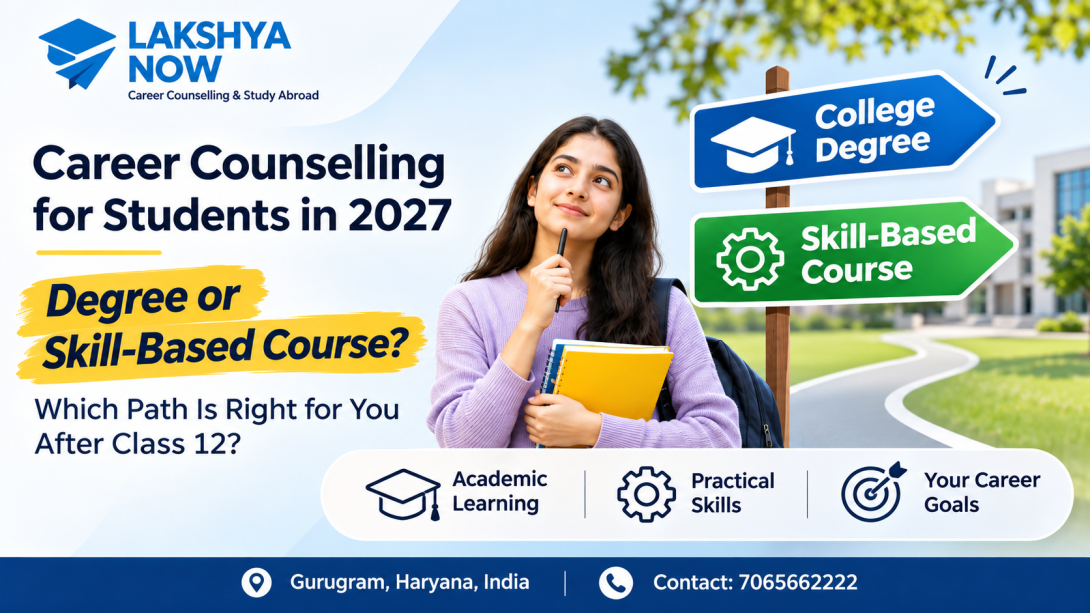
Choosing the right educational pathway after Class 12 is an important decision for students planning their future in 2027.
Traditionally, many Indian students have focused on undergraduate degrees such as B.Tech, B.Com, BBA, BA and B.Sc. However, vocational education, industry-oriented certifications and practical training programmes are also becoming important options.
This creates a common question for students and parents:
Is a traditional college degree better, or should students choose skill-based courses that focus on practical training?
The answer depends on the student's interests, educational goals, financial circumstances and the qualifications required for their preferred career.
India's National Education Policy 2020 and subsequent higher education reforms encourage greater flexibility between academic education, vocational learning and skill development.
The University Grants Commission (UGC) has introduced curriculum and credit frameworks designed to support multidisciplinary education and multiple academic pathways.
UGC
Professional career counselling for students can help students compare these options before committing to a particular degree, institution or training programme.
Lakshya Now – Career Counselling & Study Abroad, based in Gurugram, Haryana, provides educational guidance for students exploring undergraduate education, career pathways and international study opportunities.
Degree vs Skill-Based Courses: Key Differences
Factor
College Degree
Skill-Based Course
Primary focus
Broad academic education
Specific practical competencies
Typical duration
3–4 years, depending on programme
A few weeks to several years
Learning approach
Theory, assignments, research and practical work
Hands-on training and applied learning
Qualification
Recognised undergraduate degree
Certificate, diploma or vocational qualification
Admission requirements
Programme-specific
Varies by course and qualification level
Career opportunities
Broad, subject to degree and eligibility
Depends on the skill, assessment and employer requirements
Higher education progression
Usually supports postgraduate eligibility
Depends on recognition and credit arrangements
Best suited for
Students seeking academic depth and degree-based careers
Students seeking specialised practical learning
These categories are not mutually exclusive. Many degree programmes include internships, projects and skills training.
Why Is Career Planning Changing for Students in 2027?
Higher education and workplace skill requirements are evolving.
Students increasingly need a combination of academic understanding, practical abilities, communication skills and adaptability.
In August 2026, the Ministry of Education reiterated the importance of India's National Credit Framework (NCrF), which supports the integration of academic, vocational and skill-based learning.
The framework is designed to facilitate credit accumulation, transfer and recognition across different forms of education, subject to applicable rules and assessments.
Press Information Bureau
This development highlights an important point: choosing a degree does not mean students must ignore practical skills, and developing professional skills does not always require abandoning higher education.
The most effective pathway may combine both.
What Is a Traditional Undergraduate Degree?
An undergraduate degree is a structured higher education qualification offered by a recognised university or eligible institution.
Examples include Bachelor of Arts, Bachelor of Commerce, Bachelor of Science, Bachelor of Technology and Bachelor of Business Administration.
Advantages of an Undergraduate Degree
A degree provides organised academic learning, opportunities for broader subject knowledge and a recognised qualification.
It can also support eligibility for postgraduate programmes and professions that require specific educational credentials.
Limitations Students Should Consider
A degree alone does not guarantee employment.
The quality of practical exposure, curriculum, institution and student's skills can substantially affect career readiness.
Students should review the actual course structure rather than assuming that every programme with the same degree title offers identical educational value.
What Are Skill-Based Courses?
Skill-based courses focus on developing practical abilities relevant to particular tasks, industries or occupations.
These programmes may be delivered through recognised training institutions, universities, vocational centres or approved online learning platforms.
Examples of Skill-Based Learning
Skill Area
Courses or Training to Explore
Digital Marketing
SEO, Performance Marketing, Analytics
Information Technology
Programming, Web Development
Business Operations
Accounting Software, Office Applications
Creative Industries
Graphic Design, Video Editing
Hospitality
Food Production, Front Office Operations
Manufacturing
CNC Operations, Industrial Technology
Electronics
Electrical Maintenance, Technical Support
Healthcare Support
Eligible Allied Healthcare or Support Training
Data Analytics
Excel, SQL, Data Visualisation
Entrepreneurship
Business Planning, Digital Commerce
Students should verify whether a course provides a formally recognised qualification, an industry certification or only a provider-issued completion certificate.
These credentials are not automatically equivalent.
Government Skill India Initiatives Students Can Explore
The Government of India's Skill India Digital Hub provides access to learning resources, training opportunities and career-related services.
Future-Ready School Solutions | AI Labs, Robotics, Coding & Smart Classrooms | PHN Technology
Skill India Digital Hub
Helps learners explore skill development, courses, apprenticeships and career opportunities.
Official Skill India Digital Hub
National Career Service
Provides career-related information, counselling resources, job search services and access to training opportunities.
Official National Career Service Portal
The government reported in April 2026 that Skill India Digital Hub brings together different parts of the skill development ecosystem through a common digital platform.
Press Information Bureau+1
Students should check course eligibility, recognition, fees and availability before enrolling.
What Is the National Credit Framework?
The National Credit Framework is designed to provide a structured method for recognising different types of learning.
These can include academic education, vocational training, skill development and eligible work-based learning.
The framework aims to improve flexibility by supporting the accumulation and transfer of credits under approved arrangements.
Why Is NCrF Important for Students?
Students may eventually benefit from greater recognition of learning completed through different educational routes.
For example, approved skill training or practical learning may contribute towards recognised academic pathways where the relevant institution and regulations permit it.
However, students should not assume that every online certificate automatically converts into university credits.
Credit recognition depends on the applicable regulatory framework, qualification level and participating institution.
UGC+1
Can Students Combine a Degree With Skill Development?
Yes, and this can be an effective educational approach.
A B.Com student interested in finance may benefit from learning spreadsheet modelling and accounting software.
A BBA student interested in marketing can explore digital marketing, consumer research and analytics.
A B.Sc. Mathematics student may build practical programming and data analysis skills.
Similarly, students pursuing engineering or computer science can develop portfolios through appropriate projects and practical training.
Examples of Degree and Skill Combinations
Undergraduate Degree
Complementary Skills
B.Com
Excel, Accounting Software, Financial Analysis
BBA
Marketing Analytics, Business Communication
BA Economics
Statistics, Data Visualisation
B.Sc. Mathematics
Python, Data Analysis
B.Tech Computer Science
Software Development, Cloud Fundamentals
BA Journalism
Video Editing, Digital Media Production
B.Sc. Biology
Research Methods, Laboratory Skills
Bachelor of Design
Design Software, Prototyping
The goal is to create a balanced academic profile rather than collect unrelated certificates.
What Are Apprenticeships and Why Do They Matter?
An apprenticeship combines structured training with practical workplace experience under an applicable training arrangement.
It can help learners understand how professional knowledge is applied in real working environments.
The National Skill Development Corporation provides information on apprenticeship opportunities through the National Apprenticeship Promotion Scheme.
The Government of India also supports eligible graduates and diploma holders through the National Apprenticeship Training Scheme.
National Skill Development Corporation (NSDC)+1
Benefits of Apprenticeship-Based Learning
Students may gain workplace exposure, develop practical technical abilities, build professional communication skills and understand industry expectations.
However, apprenticeship eligibility, stipend arrangements, duration and training standards vary.
An apprenticeship does not automatically guarantee permanent employment after completion.
How Should Students Choose Between a Degree and Skill-Based Learning?
The decision should begin with the student's preferred career.
Career Goal
Educational Pathway to Consider
Doctor
Required recognised medical degree and licensing pathway
Engineer
Appropriate engineering degree or other eligibility-specific qualification
Chartered Accountant
Professional qualification route and applicable academic requirements
Software Developer
Computing degree or suitable alternative pathway with demonstrable skills
Digital Marketing Professional
Relevant degree plus practical marketing training
Graphic Designer
Design degree/diploma or suitable skills and portfolio route
Research Scientist
Relevant academic degree and usually advanced education
Skilled Technical Professional
Recognised vocational training or apprenticeship
Business Entrepreneur
Business education and relevant practical skills
Regulated professions often have mandatory qualifications and licensing requirements.
Students should never substitute a short-term skills certificate for a required professional degree.
Seven Questions Students Should Ask Before Choosing a Course
Choosing an educational programme requires careful evaluation.
1. What Career Am I Interested In?
Research the responsibilities of professionals working in your preferred field.
2. Does the Career Require a Specific Degree?
Check whether the profession requires a recognised qualification, licence or particular academic subjects.
3. What Are My Academic Strengths?
Consider your interests and performance in subjects relevant to the selected pathway.
4. Is the Institution Recognised?
Check the university's relevant recognition or approval status, or the training provider's applicable accreditation.
5. Will the Course Provide Practical Learning?
Review projects, laboratory work, internships, workshops and other hands-on elements.
6. What Is the Total Education Cost?
Compare tuition, training fees, accommodation, travel and other expenses.
7. What Opportunities Will Be Available Afterwards?
Understand postgraduate eligibility, apprenticeship pathways, entry-level roles and long-term career development.
Students searching for career counselling near me can use these questions as a starting point for a more structured career discussion.
Common Mistakes Students Make After Class 12
One common mistake is enrolling in a degree simply because it is popular among friends.
Another is selecting a short training programme solely because it promises a high salary or immediate employment.
Students should be cautious about advertisements claiming guaranteed placements without transparent evidence.
They should also avoid paying substantial course fees without understanding the institution's recognition status, teaching quality and refund policies.
Finally, students should not assume that a professional certificate carries the same academic value as a recognised university qualification.
Is a Skill-Based Course Enough to Get a Job?
A skill-based course can help learners develop relevant competencies, but completing the course alone does not guarantee employment.
Employers may consider practical knowledge, communication skills, portfolios, previous experience and the applicant's ability to perform the required tasks.
For certain occupations, a specific degree or professional qualification remains mandatory.
Students should therefore evaluate the actual entry requirements of their preferred industry before selecting a training programme.
What Role Does Career Counselling Play in Course Selection?
Career counselling helps students evaluate academic and vocational options systematically.
Rather than recommending one course to every student, guidance should consider individual strengths, interests, learning preferences and long-term plans.
A career counselling discussion may explore:
- Educational qualifications and academic performance.
- Interests and possible career fields.
- Relevant degree and training requirements.
- Suitable universities or training providers.
- Financial considerations.
- Alternative educational pathways.
- Opportunities for future specialisation.
Students may also benefit from appropriate aptitude or interest assessments, but assessment results should never be treated as a guarantee of future success.
How Lakshya Now Supports Career Counselling for Students in Gurugram
Lakshya Now – Career Counselling & Study Abroad provides educational guidance for students exploring their options after Class 10, Class 12 and graduation.
Students can seek assistance with identifying suitable courses, comparing undergraduate programmes and understanding how their academic choices relate to future careers.
A professional career counsellor in gurgaon can help students examine academic strengths, discuss realistic educational options and develop a structured plan.
Lakshya Now also supports students exploring undergraduate and postgraduate education abroad.
Career guidance should help students make informed decisions, without promising guaranteed admission, job placement or salary outcomes.
Conclusion: Degree or Skill-Based Course — What Should Students Choose in 2027?
The decision between a traditional college degree and a skill-based course should not be based only on trends or perceived salary opportunities.
A degree can provide broad academic knowledge and access to professions requiring recognised qualifications.
Skill-based learning can develop practical competencies and help students explore particular industries.
For many students, combining a suitable degree with relevant practical skills may offer a balanced approach.
India's National Credit Framework and growing skill development ecosystem also highlight the importance of integrating academic learning with practical education.
Students planning their future in 2027 should research recognised institutions, assess their academic strengths and consider appropriate career guidance before making a final decision.
For educational planning, university selection and personalised career counselling, contact Lakshya Now – Career Counselling & Study Abroad.
Location: Gurugram, Haryana, India
Contact: 7065662222
Frequently Asked Questions (FAQs)
Q1. What is career counselling for students?
Career counselling is a structured process that helps students understand their interests, academic strengths, educational options and potential career pathways.
Q2. Is a college degree better than a skill-based course in 2027?
Neither is universally better. The appropriate choice depends on the student's intended career, qualification requirements and learning goals.
Q3. Can students pursue skill-based courses alongside graduation?
Yes. Students can take relevant additional training alongside a degree, subject to their academic workload, programme conditions and institutional rules.
Q4. What are the best skill-based courses after Class 12?
Suitable options may include digital marketing, programming, accounting software, design, technical training and other industry-oriented programmes. The right course depends on individual interests and career plans.
Q5. What is the National Credit Framework?
The NCrF is an Indian education framework designed to support recognition, accumulation and transfer of credits across eligible academic, vocational and skill-based learning.
Q6. Do online certificates guarantee employment?
No. A certificate may demonstrate completion of training, but employment depends on the applicant's skills, the employer's requirements and other factors.
Q7. Can Commerce or Humanities students pursue vocational education?
Yes. Many vocational and skill-based programmes accept students from different academic backgrounds, although specific eligibility conditions may apply.
Q8. How can Lakshya Now help students choose the right course after Class 12?
Lakshya Now provides career counselling, educational pathway comparisons, academic profile assessment, university research and international education planning guidance.