

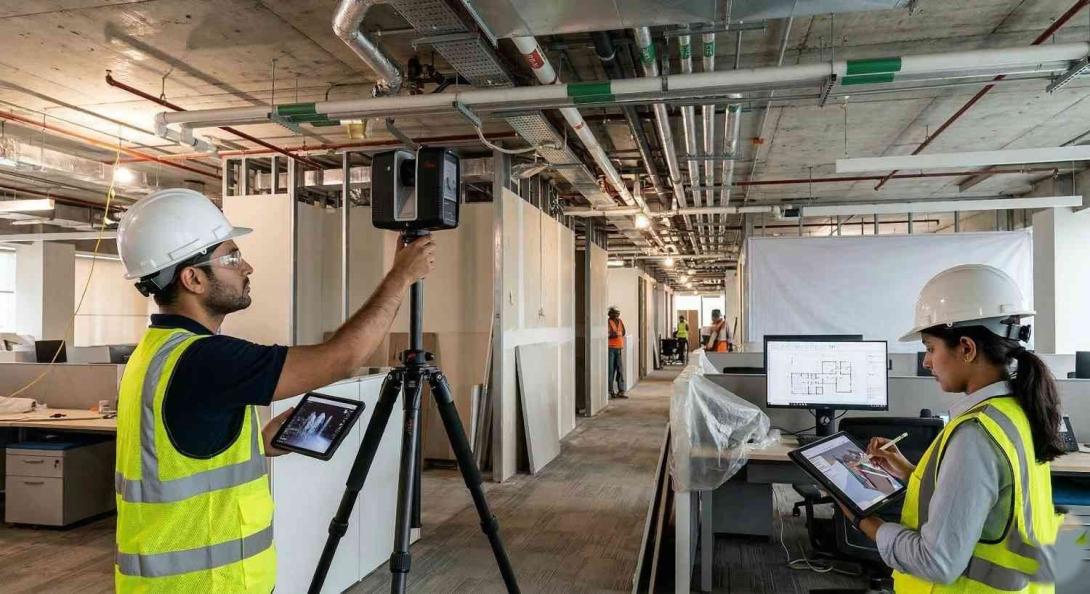
The AEC industry is finally moving past the era of "export and email." As project timelines compress and complexity rises, the shift from traditional CAD to Building Information Modeling (BIM) with real-time synchronization is no longer a competitive advantage—it is a survival requirement. We are moving from a world of fragmented snapshots to a single, living "Source of Truth."
From File Exchanges to Live Environments
In a traditional Computer-Aided Design (CAD) workflow, architects and engineers work in silos, sharing files at discrete milestones. This creates "stale data" intervals. BIM, specifically through cloud-enabled real-time sync (like Revit Cloud Worksharing or ACC), fundamentally alters this dynamic.
- Synchronized Truth: When an architect adjusts a curtain wall, the mechanical engineer’s HVAC load calculations update almost instantly. This "live" connection eliminates the lag time that typically breeds errors.
- Reduced Conflict: According to a report by Dodge Data & Analytics, firms using highly collaborative BIM workflows see a 25% improvement in labor productivity. Why? Because the team spends less time fixing mistakes and more time perfecting the design.
Breaking the "Blame Culture" with Transparency
One of the most profound impacts of real-time sync isn't technical—it's cultural. Real-time environments foster a "we" mentality rather than "us vs. them."
- Concurrent Engineering: Engineers no longer wait for a "frozen" architectural set. They can begin preliminary sizing and routing in the same space, identifying "hard clashes" months before they would have appeared in a 2D overlay.
- Automated Accountability: Cloud-based BIM platforms track every change. This isn't about "Big Brother"; it’s about understanding the why behind a design evolution. If a structural brace is moved, the team can see the impact on the MEP (Mechanical, Electrical, and Plumbing) routing immediately, facilitating a quick, informed conversation rather than a heated email chain.
The Business Case: Speed-to-Market
In a high-interest-rate environment, time is literally money. Real-time synchronization allows for Fast-Track Construction where design and construction phases overlap. McKinsey research indicates that integrated digital workflows can reduce project schedules by as much as 20% to 30%. For a commercial developer, those extra months of occupancy represent millions in early revenue.
Actionable Takeaways for AEC Leaders
- Audit Your Interoperability: Are your consultants working in the same version of the software? Small version gaps can break sync features. Standardize your BIM Execution Plan (BEP) to mandate cloud-hosting.
- Establish "Live" Communication Channels: Don't let the model be the only thing that syncs. Integrate your BIM environment with communication tools like Slack or Microsoft Teams to ensure the context of a change moves as fast as the change itself.
- Invest in Bandwidth, Not Just Software: Real-time sync requires robust infrastructure. Ensure your field offices and remote staff have the high-speed connectivity needed to handle live model synchronization without lag.