

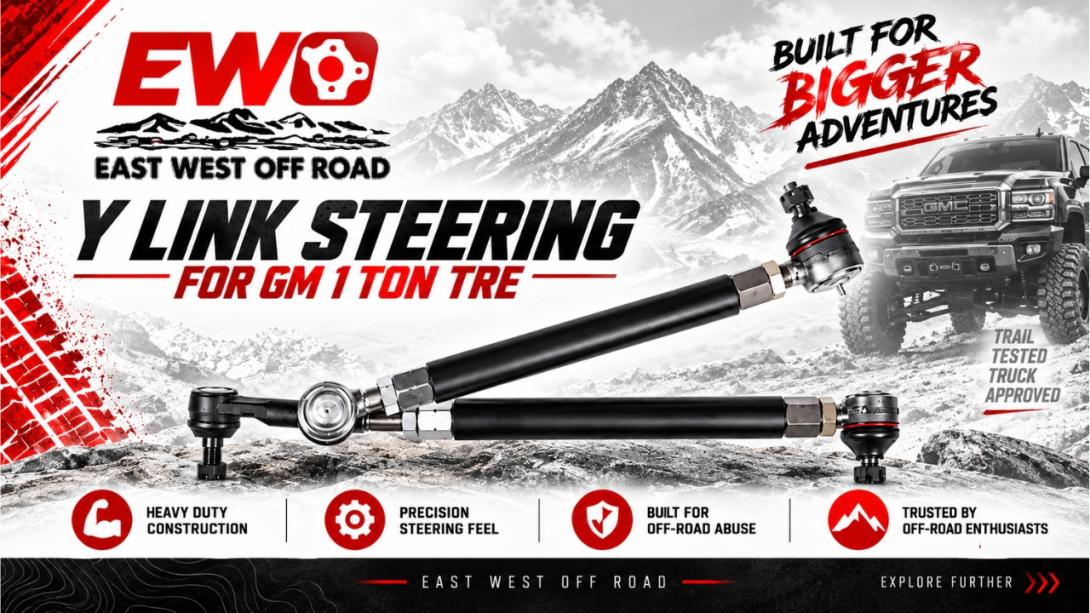
Buy Now: GM 1 Ton Y Link Steering Kit with Tie Rod Ends
A 1 ton steering kit is a popular upgrade option for modified 4x4 trucks, solid-axle vehicles, and off-road builds that need heavy-duty steering linkage. Designed around compatible steering components, these kits can help builders replace worn or undersized factory linkage with a setup better suited to larger tires, suspension modifications, and demanding trail conditions. Choosing the right kit requires careful attention to axle compatibility, steering-end specifications, linkage geometry, and installation requirements.
For truck owners comparing aftermarket steering options, East West Off Road offers a GM 1-ton Y-link steering setup with tie rod ends (TREs). Understanding how a 1-ton steering system works, what to check before buying, and how it differs from other steering layouts can help you make a more informed choice for your build.
What Is a 1 Ton Steering Kit?
A 1-ton steering kit is an aftermarket steering setup that typically uses heavy-duty steering components associated with GM 1-ton-style applications. Depending on the design, a kit may include a tie rod, drag link, steering ends, mounting hardware, or components intended for a particular linkage arrangement.
The term “1 ton” describes a category of steering components, not the payload rating of the vehicle. It also does not guarantee that every component labeled 1-ton will fit every truck or axle.
How a Heavy-Duty Steering System Works
The steering system transfers movement from the steering wheel through the steering box and pitman arm to the front steering linkage. The drag link transfers steering input, while the tie rod connects the steering knuckles so the wheels respond together.
A properly matched heavy-duty system must maintain correct steering angles, joint articulation, and clearance throughout suspension travel.
Why Upgrade Factory Steering Components?
Modified vehicles can place different demands on their steering systems than stock trucks. Larger tires increase leverage on the linkage, while off-road impacts can bend or damage exposed components.
A correctly selected 1-ton steering setup may provide a more robust linkage arrangement for a compatible build. However, the result depends on the complete system, including steering ends, mounting points, axle configuration, and installation quality.
Benefits of a 1 Ton Steering Kit for Off-Road Trucks
The main reason builders consider a 1 ton steering kit is to create a steering system appropriate for their vehicle's modifications and intended use.
Heavy-Duty Steering Components
A well-designed kit can provide larger or more robust steering components than the original equipment. The tie rod, drag link, and steering ends must work together to handle the forces encountered during driving.
Upgrading only one component may leave other parts of the steering system as potential weak points. Evaluate the complete linkage before deciding which parts to replace.
Better Suitability for Larger Tires
Larger tires can increase the forces applied to steering components, especially during low-speed maneuvering and rock crawling.
A heavy-duty steering kit can be worth considering for a truck running oversized tires, but tire size alone should not determine the purchase. Vehicle weight, axle strength, steering-box capacity, suspension geometry, and intended use also matter.
Practical Off-Road Serviceability
Off-road vehicles often require frequent inspection after difficult trail runs. A steering system with serviceable ends and accessible replacement components can make maintenance easier.
Before buying, check the exact steering-end specifications, thread direction, taper, and availability of compatible replacement parts.
GM 1 Ton Steering Kit: What Makes It Different?
A GM 1 ton steering kit generally refers to an aftermarket setup using GM 1-ton-style steering ends or linkage components. These parts are used in various custom 4x4 steering builds, but compatibility depends on the actual design.
GM 1-Ton Tie Rod Ends
Tie rod ends connect the steering linkage to the knuckles or other designated attachment points. Their taper, thread size, articulation range, and mounting orientation must match the intended application.
Never assume that two steering ends are interchangeable simply because both are described as GM-style or 1-ton components.
Matching the Steering Linkage
The steering ends need to match the tie rod and drag link dimensions and attachment methods. The finished system must also provide sufficient thread engagement and avoid binding as the suspension moves.
For a product-specific option, review the GM 1-ton Y-link steering setup from East West Off Road and verify that its configuration matches your vehicle.
Y-Link Steering vs. Crossover Steering
Not every 1 ton steering kit uses the same linkage layout. Two common approaches for solid-axle builds are Y-link steering and crossover steering.
Y-Link Steering
In a Y-link arrangement, the drag link connects to the tie rod at a shared point, creating a Y-shaped layout. This configuration may suit certain custom builds where steering-linkage packaging is an important consideration.
The geometry and attachment points must be designed for the specific vehicle. Incorrect joint positioning can cause binding or unwanted steering behavior.
Crossover Steering
Crossover steering generally routes the drag link from the pitman arm across the axle to a steering arm on the opposite knuckle. It is commonly considered for modified solid-axle trucks when the knuckles, steering arms, and suspension layout support the configuration.
Which Setup Should You Choose?
The best steering layout depends on the vehicle, not just the advertised strength of the components.
Consider:
- Front axle and steering-knuckle design
- Suspension type and lift height
- Steering-box and pitman-arm position
- Track-bar or panhard-bar arrangement, where applicable
- Tire and wheel clearance
- Suspension travel and steering-end articulation
- Street driving and off-road requirements
A qualified steering specialist can help determine which arrangement is appropriate for your build.
Dana 44 and Dana 60 Steering Compatibility
A 1-ton steering kit may be considered for builds using Dana 44 or Dana 60 axles, but axle identification alone does not establish fitment.
Both axle families have been used in different vehicle applications and configurations. Knuckles, steering-arm interfaces, axle dimensions, and suspension layouts can vary.
Dana 44 Steering Upgrade
Before choosing a Dana 44 steering kit, identify the specific axle and confirm the steering-end interfaces. Check whether the setup requires flat-top knuckles, steering arms, adapters, or other compatible components.
Dana 60 Steering Upgrade
Dana 60 builds may involve heavier vehicles, larger tires, or demanding off-road use. Evaluate the steering system alongside axle strength, steering-box capacity, suspension geometry, and vehicle weight.
For either axle, confirm fitment with the kit manufacturer rather than relying on the Dana 44 or Dana 60 name alone.
Over-the-Knuckle vs. Under-the-Knuckle Steering
Steering-linkage position can affect ground clearance, wheel clearance, and steering geometry.
Over-the-Knuckle Steering
An over-the-knuckle arrangement places the relevant steering connection higher relative to the knuckle. Depending on the vehicle, this can provide additional linkage clearance or accommodate a modified steering layout.
However, raising the connection can change steering angles and may require other geometry corrections. It should not be assumed to eliminate bump steer.
Under-the-Knuckle Steering
An under-the-knuckle arrangement retains the connection below the knuckle's upper mounting area. This may suit vehicles designed around the original linkage position or builds where an over-the-knuckle configuration creates clearance problems.
The correct choice depends on the knuckle, steering ends, suspension design, and manufacturer's instructions.
What to Check Before Buying a Heavy-Duty Steering Kit
Selecting a heavy duty steering kit involves more than comparing link diameter or the number of included components.
Confirm Vehicle and Axle Fitment
Identify the truck's year, make, model, front axle, steering knuckles, steering box, and existing linkage. Confirm that the kit's steering ends and mounting interfaces match the vehicle.
Check Steering-End Specifications
Verify thread size and direction, taper, articulation, and attachment method. Ensure that replacement ends are compatible with the actual linkage.
Inspect Wheel and Suspension Clearance
Check the tie rod and drag link against the differential housing, springs, shocks, frame, wheels, and tires. Clearance must be checked at full steering lock and throughout suspension compression and droop.
Review Included Components
Product listings can differ in what they supply. Confirm whether the kit includes steering ends, linkage tubing, mounting hardware, adapters, and other required parts. If fabrication materials are not included, determine what must be sourced separately.
Consider Intended Use
A truck used primarily on the road may have different steering requirements from a dedicated rock crawler. Consider vehicle weight, tire size, trail conditions, steering assist, and how often the vehicle is driven on pavement.
Installation and Maintenance Considerations
Steering components are safety-critical. A heavy-duty kit must be installed according to the manufacturer's specifications and checked for correct operation before the vehicle returns to service.
Verify Geometry and Clearance
After assembly, check the steering from lock to lock. Safely cycle the suspension through its usable range and inspect for contact, binding, or restricted joint movement.
Pay particular attention to the relationship between the drag link and suspension geometry.
Follow Hardware Specifications
Use the specified mounting hardware and manufacturer-recommended torque values. Do not substitute fasteners or guess at tightening specifications.
Check Alignment and Steering Operation
After installation, verify steering-wheel position and front-end alignment as appropriate. Inspect the linkage and steering ends regularly, particularly after hard trail use or significant impacts.
Professional installation or inspection is recommended when the system requires custom fabrication, machining, or geometry corrections.
Frequently Asked Questions (FAQs)
What is a 1 ton steering kit?
A 1 ton steering kit is an aftermarket steering setup that typically uses GM 1-ton-style steering ends or related heavy-duty linkage components. Exact contents and compatibility vary by product.
Is a GM 1 ton steering kit suitable for off-road use?
A properly matched kit can be suitable for a compatible off-road build. Axle fitment, steering geometry, component strength, clearance, and installation quality must all be evaluated.
Can I use a 1-ton steering kit on a Dana 44?
Some aftermarket steering configurations can be adapted to compatible Dana 44 applications. Confirm the knuckle design, steering-end interfaces, and exact product fitment before ordering.
Can a 1-ton steering kit fit a Dana 60?
Potentially, depending on the kit and axle configuration. A Dana 60 designation alone is not enough to confirm compatibility.
What is the difference between Y-link and crossover steering?
Y-link steering joins the drag link and tie rod at a shared connection point. Crossover steering typically routes the drag link across the axle to a steering arm on the opposite knuckle.
Does a 1-ton steering kit eliminate bump steer?
No. Bump steer is related to steering and suspension geometry. The linkage, axle movement, and track-bar arrangement where applicable must be correctly matched.
Does a steering kit include everything needed for installation?
Not necessarily. Included parts vary by product. Check the current listing for steering ends, tubing, mounting hardware, adapters, and any fabrication requirements.
What should I inspect after installing a heavy-duty steering kit?
Check steering-end movement, fasteners, steering-wheel position, alignment, wheel and tire clearance, suspension travel, and steering operation from lock to lock. Have the system inspected by a qualified professional if any fitment or geometry issue remains.
Final Thoughts
A 1 ton steering kit can be a useful upgrade for a compatible 4x4 build that needs heavy-duty steering linkage for larger tires, suspension modifications, or off-road use. The right setup depends on matching the steering ends, tie rod, drag link, axle, and suspension geometry as a complete system.
Before ordering, verify the exact vehicle and axle configuration, confirm what the kit includes, and plan for full-travel clearance and alignment checks. For builders considering a GM 1-ton Y-link arrangement, East West Off Road provides a product option to review for the specific requirements of the build.
Explore the product: GM 1 Ton Y Link Steering with TREs